
RFID attendance system for schools usually starts with the credential, not the software screen. Before ordering cards, wristbands, or key fobs, confirm the reader frequency, student age group, daily check-in workflow, printing and encoding data, privacy requirements, and how the school will prevent shared-card attendance. The right RFID tag should match the access points and attendance process, not just the lowest unit price.
Many schools first search for an RFID attendance solution because manual roll call is slow or gate entry is hard to reconcile with class records. That is a real problem, but RFID is only one layer. A card tap can identify a credential; it does not prove the student holding it is the correct person unless the school adds clear procedures, supervision, or another verification method where appropriate.
Where RFID fits in a school attendance workflow
RFID can support entry gates, classroom check-in stations, library access, dormitory access, transport boarding, meal programs, and visitor control. In most school projects, the credential is linked to a student or staff record in the attendance platform. When the credential is presented to a reader, the system records an event with time, reader location, and credential ID.
For product buyers, the practical question is: what credential format will survive daily use and stay compatible with the readers already selected? WXR can manufacture RFID student ID cards, RFID wristbands, and RFID key fobs, but the specification should come from the school workflow first.
Choose the credential format before requesting a quote

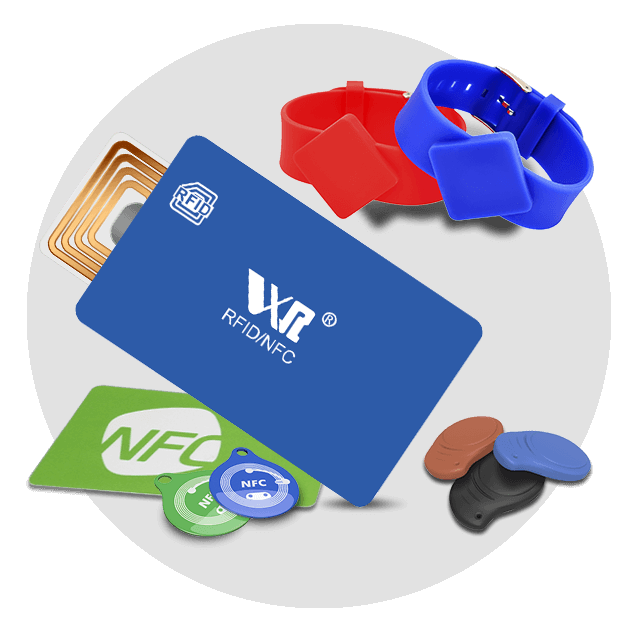
Schools often default to PVC cards because they look like normal ID cards and can carry printed student information, photos, serial numbers, QR codes, or barcodes. Cards work well for older students, staff, and multi-purpose campus credentials. They can be kept in a lanyard or wallet, but they can also be forgotten, borrowed, or damaged if students carry them loosely.
RFID wristbands are more useful when the credential must stay on the student during a short-term program, sports event, school trip, campus activity, or controlled entrance process. Silicone wristbands are more durable and reusable; paper wristbands are better for temporary identification. Key fobs are usually better for staff, dormitory managers, maintenance teams, or restricted rooms where credentials are attached to keys.
Frequency and chip selection: LF, HF, or UHF?
Most school attendance and access-control credentials use LF 125 kHz or HF 13.56 MHz. LF credentials are common in legacy access-control systems and simple close-range ID projects. HF credentials, including MIFARE and NFC-compatible formats, are common when the system needs more memory, stronger credential options, or compatibility with modern smart-card readers. UHF is usually not the first choice for classroom tap attendance, but it can be considered for longer-range gate reads, transport, or asset tracking around the campus.
If the reader system is already purchased, do not guess. Ask the integrator for the exact frequency, supported protocol, chip model, memory requirement, and encoding format. For a broader technical comparison, review WXR’s guide to LF, HF, and UHF frequency differences. If the project uses access-control credentials, also compare access control RFID tags and the existing reader requirements.
| Credential option | Best fit | Confirm before ordering |
|---|---|---|
| RFID card | Student ID, staff ID, library and campus services | Chip, print artwork, card thickness, UID or encoded data, photo/QR/serial fields |
| RFID wristband | Trips, events, temporary programs, younger users, controlled entry | Material, size, closure type, reusable or disposable use, waterproof needs |
| RFID key fob | Staff access, maintenance rooms, dormitory or office credentials | Chip compatibility, housing material, key-ring strength, numbering method |
| UHF label or tag | Campus asset tracking, transport, or special long-range read points | Reader distance, tag orientation, mounting surface, EPC/User memory plan |
Encoding and data rules matter more than the printed design
A clean card design is useful, but the attendance system depends on data consistency. Before production, prepare an encoding file with the required UID mapping, student number, serial number, class code, or other identifier approved by the software provider. Decide whether the school will use the chip UID only, write custom data to memory, or print a visible serial number that matches the database.
For low-risk attendance, a simple UID mapping may be enough. For higher-security doors or staff access, ask whether the system supports more secure HF credentials rather than relying only on a fixed number. WXR can help with card printing and encoding, but the school or system integrator should define how the credential data will be enrolled, replaced, and deactivated.
Run a pilot before mass production

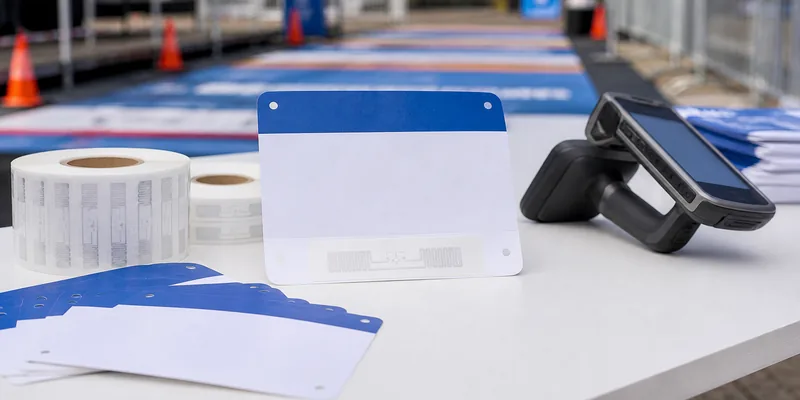
A school environment is noisy in practical ways: students queue at the same time, cards are held in phone cases or wallets, wristbands get wet, readers are mounted near metal frames, and network delays may affect check-in confirmation. A pilot should test the real entry point, not only a desktop reader in an office.
Use sample credentials to test read speed, duplicate reads, missed reads, student queue flow, reader position, and exception handling. If attendance is taken at a classroom door, test the angle and distance students naturally use. If the credential is also used for library or meal access, confirm every reader accepts the same chip and encoded data.
Privacy and proxy attendance should be planned early
RFID attendance records are student data. Schools should define what is collected, who can access it, how long it is stored, and how parents or administrators are informed. Requirements vary by country and school policy, so the hardware supplier should not decide the privacy model. Treat RFID as the credential layer and let the school, software provider, and legal or compliance team define the data rules.
Proxy attendance is another practical issue. A student can hand a card to another person unless the workflow discourages it. Depending on the risk level, schools may combine RFID with supervised gates, classroom teacher confirmation, photo display in the software, time-window rules, or exception reports. Avoid presenting RFID alone as a complete anti-fraud system.
Procurement checklist for school RFID attendance credentials

- Application: gate entry, classroom attendance, library, meals, transport, dormitory, or staff access.
- Credential type: card, wristband, key fob, label, or a mixed set for different users.
- Frequency and chip: LF, HF/NFC, MIFARE, DESFire, UHF, or another reader-supported chip.
- Encoding: UID only, custom memory data, printed serial, QR/barcode, or database mapping file.
- Printing: student photo, school logo, name field, ID number, color group, or blank reusable design.
- Durability: bending, water exposure, outdoor use, younger students, cleaning, and replacement rate.
- Security level: simple attendance, restricted access, payment, or multi-application campus card.
- Testing: sample quantity, reader models, gate/classroom locations, and pass/fail criteria.
How WXR can support a school attendance project
WXR manufactures custom RFID and NFC credentials for system integrators, distributors, and project buyers. For school attendance projects, share your reader model, frequency, chip requirement, credential format, artwork, encoding file, quantity, and testing environment. WXR can help compare cards, wristbands, key fobs, and related RFID card options, then prepare samples for pilot testing before mass production.
If the school is still deciding between card, wristband, and key fob formats, send the use case to contact WXR for custom RFID samples. The most useful quote request includes the reader system, student age group, daily usage frequency, print design, data format, and any privacy or access-control constraints.
FAQ
What is the best RFID tag for school attendance?
For most schools, an RFID card is the easiest starting point because it can double as a printed student ID. Wristbands work better for temporary programs, younger users, or controlled activities where the credential should stay attached. Key fobs are more common for staff access.
Can RFID prevent proxy attendance?
RFID alone identifies the credential, not the person. To reduce proxy attendance, combine RFID with supervision, software rules, photo verification, exception reports, or another approved verification method.
Should school attendance use LF or HF RFID?
Use the frequency supported by the installed reader system. LF is common in simple legacy access-control systems, while HF 13.56 MHz is common for modern smart cards and multi-application credentials. Confirm the chip and protocol before ordering.
Can RFID student cards be printed and encoded before delivery?
Yes, if the buyer provides approved artwork and a clear encoding file. Confirm whether the system uses UID mapping, written memory data, printed serial numbers, or a combination of these fields.
What should schools test before mass production?
Test real readers, entry points, queue flow, credential durability, missed reads, duplicate reads, database mapping, replacement workflow, and privacy handling. Samples should be tested in the same environment where students will use them.