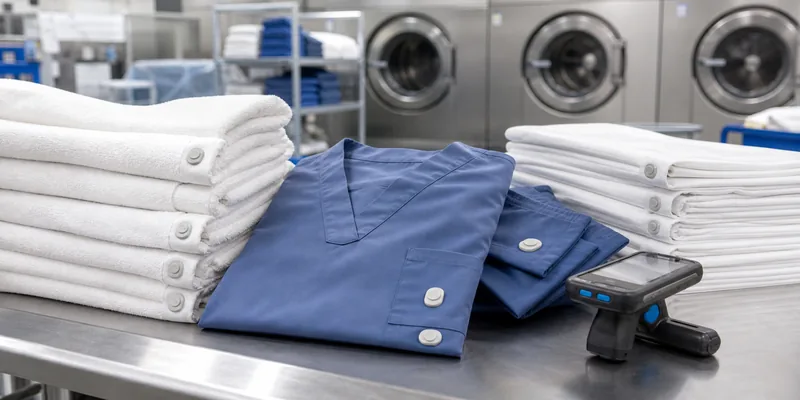
RFID laundry tags are small washable transponders attached to towels, sheets, uniforms, scrubs, gowns, mats, and other reusable textiles. For buyers, the hard part is not understanding that RFID can identify linen. The hard part is specifying a tag that survives the laundry process, reads reliably at the right checkpoints, and can be attached without damaging the textile or slowing production.
The practical short answer: choose the tag around the workflow first. UHF RFID laundry tags are usually preferred when a laundry needs bulk reading at receiving, sorting, packing, or dispatch. HF laundry tags can make sense for close-range item checks or systems already built around 13.56 MHz readers. The final choice depends on textile type, wash conditions, tag placement, reader setup, software fields, and the way the tag will be applied. Buyers should test samples through their own wash, dry, folding, and reading process before ordering bulk quantities.
Why Laundry RFID Procurement Needs More Than a Datasheet
A laundry tag may look simple, but it has to handle repeated water exposure, detergent, heat, pressure, mechanical friction, folding, sorting, and handling by different teams. A tag that reads well on a clean bench can fail when sewn too close to a thick seam, hidden inside a pouch, pressed under stacked wet towels, or read at the wrong antenna angle.
This is why a good RFQ should describe the textile journey, not just the desired chip. For example, a hotel towel project may prioritize fast bulk counts and discreet placement near the hem. A hospital uniform project may need stronger identity control, department separation, and a tag position that does not bother the wearer. A rental workwear project may need visible serialization plus RFID encoding so operators can match the physical garment to software records.
Choose the Frequency Around the Read Point
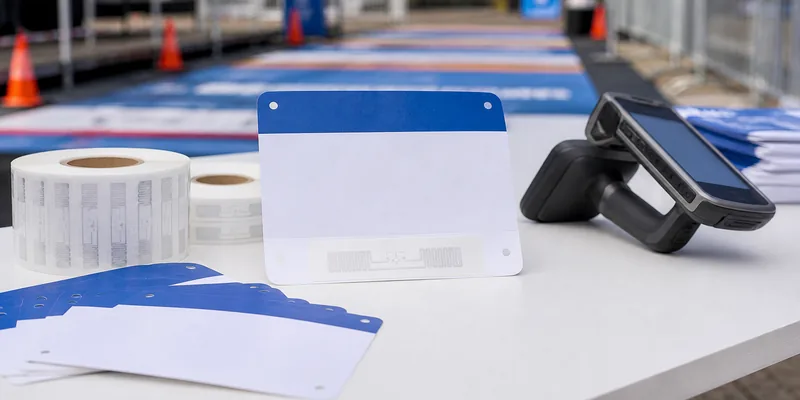
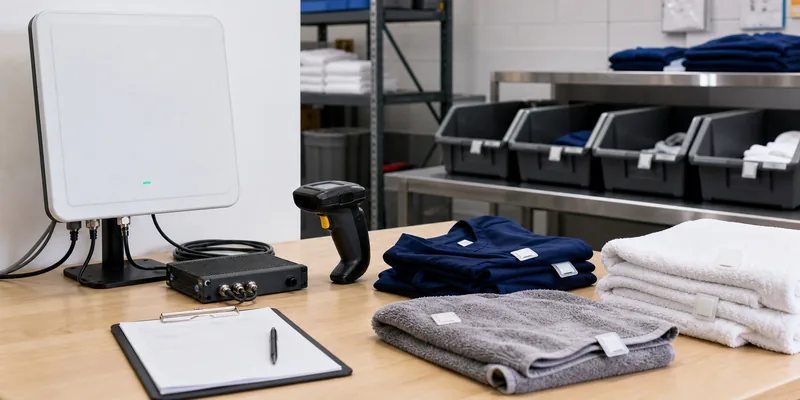
Frequency selection should start with the actual read points. UHF is commonly used when operators need to scan many textile items in a cart, bag, shelf, or conveyor area. It can support longer read zones, but performance depends on reader power, antenna placement, tag orientation, textile moisture, stacking density, and nearby metal equipment.
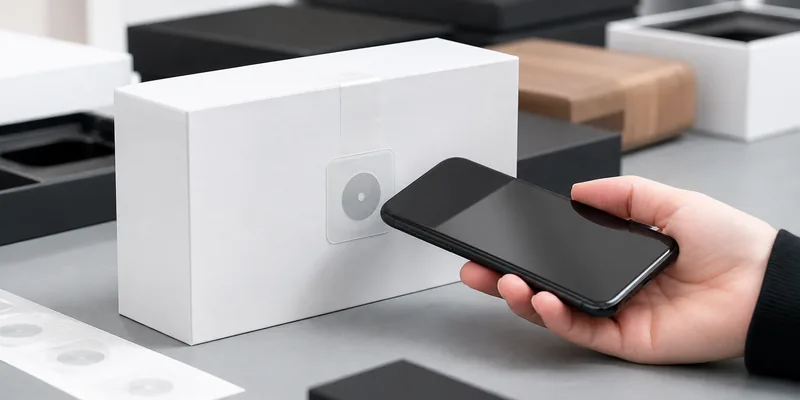
HF at 13.56 MHz is better suited to short-range item identification, controlled desktop checks, or projects already using HF infrastructure. NFC can be useful for phone-based inspection in some workflows, but phone scanning is not a replacement for high-volume laundry sorting. If the buyer already owns readers, middleware, or encoding rules, compatibility should be confirmed before choosing the tag format.
Compare Common RFID Laundry Tag Formats
| Tag format | Common textile fit | What to confirm before ordering |
|---|---|---|
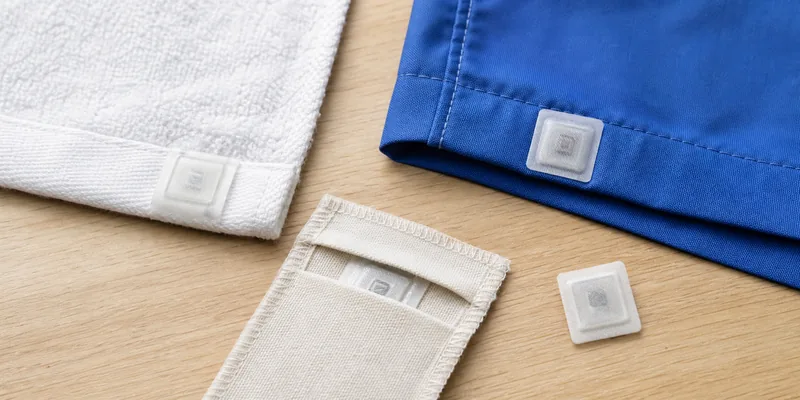
| Flexible textile or silicone tag | Towels, sheets, uniforms, scrubs, workwear | UHF or HF chip, tag size, sewing or heat-seal option, comfort, folding stress |
| PPS button-style tag | Garments, uniforms, special textiles, reusable items | Hole design, sewing method, tag thickness, heat and pressure exposure, reader distance |
| Heat-seal laundry label | Flat linens, towels, garments where sewing is slow or visible | Heat-press settings, adhesive compatibility, fabric type, edge lifting after wash cycles |
| Pouched or hem-inserted tag | Retrofitting existing textile inventories or concealed tagging | Pouch material, sewing quality, tag movement inside pouch, read consistency after folding |
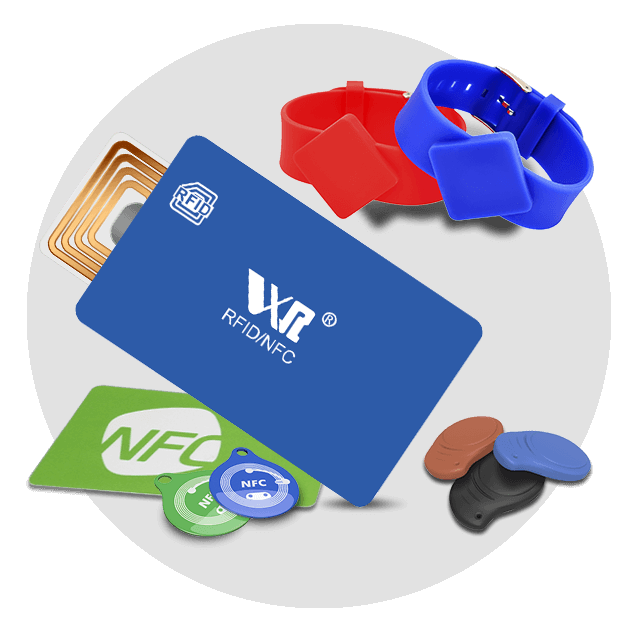
WXR supplies washable RFID laundry tags in formats such as PPS, silicone, HF, NFC, and UHF options. The right format should be matched to the textile and laundry workflow instead of selected only by appearance.
Decide the Attachment Method Before Bulk Production
Attachment is often where good tags fail in real projects. Sew-in installation is familiar and secure, but it adds labor and must avoid needle damage to the RFID structure. Heat sealing can be faster for flat textiles, but the buyer must test the adhesive, pressure, temperature, and dwell time with the actual fabric. A pouch or hem insertion can hide the tag and improve comfort, but it may change orientation or allow tag movement during washing.
Before approving a production sample, check the tag position after washing, drying, ironing, folding, and packing. The tag should remain readable in the location where operators naturally scan the item. Avoid placing tags where they are crushed by clips, folded sharply every cycle, covered by thick seams, or rubbed heavily by machinery.
Build an RFQ That a Manufacturer Can Actually Use
A useful RFQ for RFID laundry tags should include the application, textile type, frequency preference, reader model if known, tag size limit, chip or memory requirement, attachment method, encoding rules, printing or numbering needs, expected wash process, and sample test plan. If the buyer does not yet know the chip, that is acceptable; the supplier can recommend options after seeing the workflow.
For UHF systems, include the intended read zone: handheld count, tunnel reader, receiving table, conveyor, shelf, cart, or packing station. For HF or NFC systems, describe whether the tag is scanned one by one, by desktop reader, or by phone. If the laundry software requires EPC, TID, UID, user memory, printed serials, QR codes, or customer-specific numbering, include that before samples are encoded.
Sample Testing Checklist Before Bulk Orders
- Test several tag formats on the actual textile types, not only on new sample fabric.
- Run tags through the same wash, dry, press, fold, and handling steps used in production.
- Read items when dry, damp, folded, stacked, and mixed with similar textiles.
- Check whether the tag causes discomfort, visible bulges, snagging, or customer complaints.
- Verify encoding with the intended readers and software fields before ordering encoded batches.
- Inspect attachment after repeated cycles for peeling, loose stitching, pouch movement, or cracked housings.
- Document the reader distance and orientation that work consistently in the real read zone.
Common Buyer Mistakes to Avoid
Do not choose a laundry tag only because it has the smallest size or the longest stated read range. Smaller tags may be easier to hide but can reduce reading margin. A long read range on a datasheet may not transfer to wet, stacked, folded, or densely packed textiles. Read range also changes with reader power, antenna placement, textile moisture, tag orientation, and surrounding equipment.
Another common mistake is separating RFID procurement from operations. The laundry team, software team, and tagging team should all review the sample plan. If the tag is attached after the textile is already in use, operators need a repeatable retrofit process. If the tag is added during garment or linen production, the supplier needs placement instructions early.
How WXR Supports Custom Laundry RFID Projects
WXR can help buyers compare 13.56 MHz HF RFID tags, 860-960 MHz UHF RFID tags, PPS laundry buttons, flexible silicone laundry tags, and customized encoded textile tags. For buyers who are still defining the system, the most useful starting point is a clear description of the item, reader setup, wash process, tag placement, and data format.
If your project involves hotel linen, hospital garments, rental uniforms, or commercial laundry sorting, compare this checklist with WXR’s guide on how RFID improves laundry sorting. You can also review broader basics in what RFID tags are and LF, HF, and UHF frequency differences.
Conclusion
The best RFID laundry tag is the one that survives the textile process and reads reliably where the laundry team actually needs data. Start with the workflow, narrow the frequency, choose the attachment method, and validate samples under real wash and read conditions. To prepare a practical quote, contact WXR with your textile type, frequency preference, reader setup, tag size, attachment method, encoding needs, and test environment.
FAQ
What makes an RFID laundry tag washable?
A washable RFID laundry tag uses an encapsulated structure and material such as PPS, silicone, or textile-compatible housing designed for water, heat, detergent, pressure, and repeated handling. Buyers should verify the supplier’s stated durability with samples in their own laundry process.
UHF is commonly used for bulk reading in carts, shelves, receiving tables, and sorting zones. HF is useful for shorter-range controlled reading or systems already built around 13.56 MHz readers. The correct choice depends on read points, software, reader hardware, and textile conditions.
Common methods include sewing into hems or seams, heat sealing onto fabric, inserting the tag into a pouch, or integrating the tag during textile manufacturing. Each method should be tested for comfort, durability, read performance, and production speed.
Yes, many RFID laundry tags can be encoded before shipping when the buyer provides the required data structure, numbering rules, and chip requirements. Encoding should be verified with the buyer’s own readers and software before bulk production.
Test attachment strength, read consistency, tag position, wash and dry exposure, stacking, folding, damp textile performance, encoding accuracy, and operator workflow. A small sample run is safer than approving a tag only from a datasheet.