RFID cable tie tags are useful when the asset is difficult to label with adhesive, screws, rivets, or a standard hard tag. Instead of only sticking a label onto a flat surface, the tag wraps around a cable bundle, crate handle, mesh cage, pipe, tool loop, bag, or reusable container and gives that object a digital ID.
For buyers, the main question is not whether the tag can be tied to something. The real question is whether the tag will stay in the right position, read reliably in the real workflow, match the reader system, and arrive with the right printed and encoded data.
WXR can help project buyers compare RFID asset tracking tags, UHF tags, HF/NFC tags, anti-metal tags, labels, and customized tag formats. Use this checklist before ordering RFID cable tie tag samples or bulk production.

What Is an RFID Cable Tie Tag?
An RFID cable tie tag, also called an RFID zip tie tag or RFID tie tag, combines a cable tie or strap with an RFID chip and antenna. The RFID part may sit in an ABS, nylon, or other plastic housing, while the strap fastens the tag to the asset.
This format is common in asset tracking, logistics, data center cable management, returnable transport items, pallet and crate identification, industrial maintenance, waste bins, cylinders, bags, and places where the item has a handle, loop, frame, mesh, or bundle.
Some designs are disposable and tamper-evident. Others are releasable or reusable for temporary tracking. Do not assume one design fits every workflow. A reusable tag may be better for rental assets, while a one-time locking tie may be better when removal should be obvious.
Choose RFID cable tie tags when the asset does not provide a clean, stable label surface. Examples include cables, hoses, wire bundles, mesh cages, pipes, tote handles, textile bags, tools with holes, irregular industrial parts, or reusable containers that are washed, handled, or moved often.
Adhesive RFID labels are still better for flat cartons, retail packaging, documents, and many warehouse labels. Screw-mounted hard tags may be better for long-term outdoor equipment. Anti-metal RFID tags may be needed when the tag must sit directly on metal and still perform well. Cable tie tags sit between these choices: they are fast to install, visible, and mechanically attached without drilling.
Use this comparison before asking for samples:
| Tag format | Best fit | What to confirm |
|---|---|---|
| RFID cable tie tag | Cables, crates, cages, bags, pipes, handles, reusable transport items | Strap length, lock type, tag orientation, reader distance, tamper requirement |
| RFID adhesive label | Cartons, documents, plastic packaging, item labels | Adhesive, surface, roll direction, printer, encoding workflow |
| RFID hard tag | Equipment, pallets, tools, outdoor assets | Mounting holes, screws, rivets, impact, cleaning, surface material |
| Anti-metal RFID tag | Metal tools, racks, IT assets, machines | On-metal performance, thickness, fixing method, read zone |
Choose UHF, HF, or NFC Based on the Read Point
Most RFID cable tie tags used for logistics and asset tracking are UHF because buyers often want a handheld or fixed reader to capture multiple assets without line-of-sight scanning. UHF systems commonly operate in the 860-960 MHz range and are associated with RAIN RFID and EPC Gen2 / ISO 18000-6C style item identification. Exact frequency rules and reader power depend on the country or region.
Use UHF RFID tags when the project needs faster inventory, dock-door reads, handheld audits, or multi-item scanning. Use HF or NFC when the workflow is close-range, phone-readable, or based on ISO 14443A / ISO 15693 style readers. For background, see WXR’s guide to LF, HF, and UHF frequency differences.
The tag format does not override the system. If your reader is UHF, an NFC cable tie tag will not solve the problem. If your workflow needs phone interaction, a UHF tie tag will not behave like an NFC tag. Start with the read point, then choose the tag.
Mounting Details Buyers Should Specify
The strap is not a minor detail. It decides whether the tag stays attached, whether the antenna sits in a readable position, and whether the installation team can apply tags quickly.
Prepare these details for the supplier:
- Asset type: cable bundle, tote, cage, pipe, bag, cylinder, tool, pallet, cart, or reusable container.
- Mounting point: handle, loop, mesh, cable group, corner, pipe, rail, or fixture.
- Strap requirement: length, width, material, color, locking design, reusable release, or one-time lock.
- Tag head position: outside the bundle, away from crushing, and visible for handheld reading if needed.
- Environment: indoor, outdoor, wet, dusty, washable, cold storage, chemical exposure, vibration, or rough handling.
- Surface near the tag: plastic, metal, liquid, dense cable, rubber, textile, or mixed materials.
- Human-readable data: serial number, barcode, QR code, logo, color code, or batch mark.
If the asset is metal-heavy, test the sample on the real asset instead of only holding it in open air. UHF read performance can change with metal, liquid, tag angle, reader antenna, nearby tags, and cable density.

Encoding and Data Handoff
RFID cable tie tags are often bought for physical tracking, but the data plan is just as important as the plastic design. A batch can become difficult to deploy if the printed serial number, barcode, QR code, EPC, TID, or software import file does not match.
Before production, define:
- Whether WXR should ship blank tags or pre-encoded tags.
- EPC format, number range, prefix, or customer-supplied encoding file.
- Whether TID needs to be captured for anti-duplicate checks. WXR’s guide to TID memory in RFID explains why this can matter.
- Printed serial number, barcode, QR code, or color coding requirements.
- Locking rules for EPC or user memory, if the project requires them.
- Packing order by serial range, project site, asset group, color, or department.
- Readback report format for QC and receiving inspection.
Do not let the supplier guess the encoding rule. If your software already uses a numbering scheme, export a small test file and approve encoded samples before mass production.
Sample Testing Plan Before Bulk Order
A useful sample test copies the real workflow. Test the same cable tie tag design, same reader, same asset, same mounting position, same software, and same operator movement that the final project will use.

Use this test checklist:
- Install samples on actual cables, crates, cages, bags, pipes, or equipment.
- Test handheld reading from the normal operator position.
- Test fixed reader zones if the asset passes a dock door, gate, conveyor, or shelf antenna.
- Compare at least two tag positions when the asset has metal, liquid, dense cable, or curved surfaces.
- Check whether the strap loosens, rotates, breaks, or blocks handling.
- Verify printed serial numbers and encoded EPC values against one master file.
- Scan multiple assets together if the workflow needs batch reading.
- Keep failed samples and record the reason: no read, weak read, wrong number, poor mounting, damaged strap, or wrong packing order.
Advertised read range is only a starting point. The real read result depends on reader power, antenna type, tag orientation, asset surface, nearby tags, regional settings, software filters, and operator movement.
Questions to Ask an RFID Cable Tie Tag Supplier
Ask practical questions that affect deployment quality:
- Is the design one-time locking, releasable, or reusable?
- Which frequency and chip options match our reader system?
- Can the tag be printed with serial numbers, barcodes, QR codes, or color marks?
- Can each tag be pre-encoded and supplied with a readback file?
- What strap length and tag head size fit our asset?
- Should we test an anti-metal or different antenna version?
- How will encoded tags be packed so our team can install them in order?
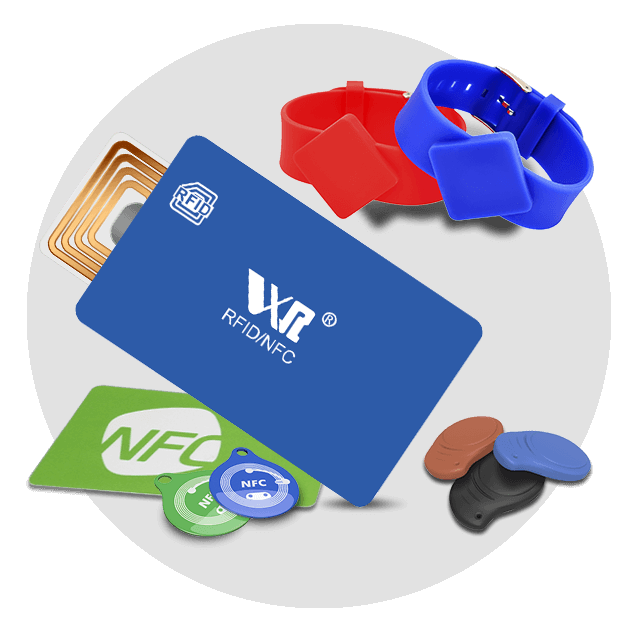
WXR can help compare cable tie-style tags with RFID stickers and labels, anti-metal tags, waterproof tags, and other custom RFID formats based on your application, chip, material, mounting method, printing, encoding, and testing environment.
Conclusion
RFID cable tie tags are a strong choice when the asset has a handle, cable bundle, loop, mesh, pipe, cage, or irregular shape that makes adhesive labels unreliable. The right tag is not chosen by read range alone. Buyers need to define the reader system, frequency, strap design, mounting point, data format, printing, encoding, packing order, and sample test method.
Planning an asset tracking project with cables, crates, cages, bags, tools, or reusable containers? Send WXR your asset photos, reader model, frequency requirement, mounting position, tag size, printing needs, encoding file, quantity, and test environment. Contact WXR to compare RFID cable tie tag samples before bulk production.
FAQ
Some RFID cable tie tags are reusable or releasable, while others are one-time locking or tamper-evident. Confirm the lock design before ordering samples because it affects cost, security, and installation workflow.
Many asset tracking and logistics cable tie tags use UHF RFID because it supports handheld audits and multi-item reading. HF and NFC versions may fit close-range or phone-readable workflows. The correct choice depends on the reader system.
Sometimes, but metal can change read performance. If the tag is close to a metal pipe, cage, rack, or machine frame, test the exact sample on the real asset. An anti-metal tag or different mounting position may be required.
What should I send before requesting RFID cable tie tag samples?
Send asset photos, mounting point, reader model, frequency, required chip, strap length, environment, printing needs, encoding rule, quantity, and sample test plan. If existing tags are being replaced, send a working sample or reader specification.
WXR can support custom RFID tag formats with chip selection, size and material customization, logo or serial printing, QR/barcode printing, and data encoding depending on the selected design. Confirm the exact artwork, data file, and sample approval process before mass production.