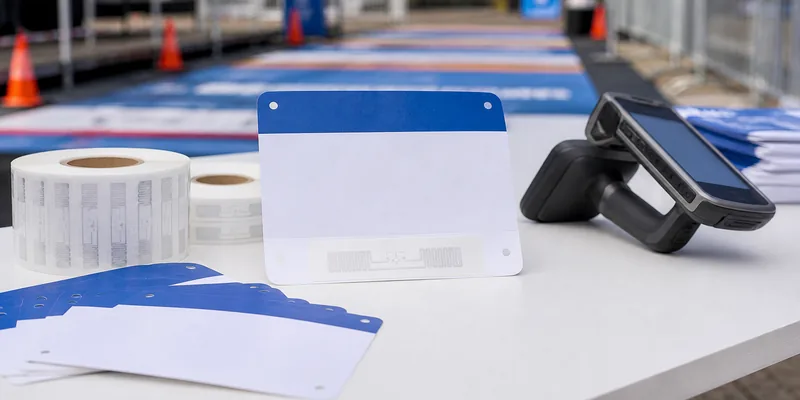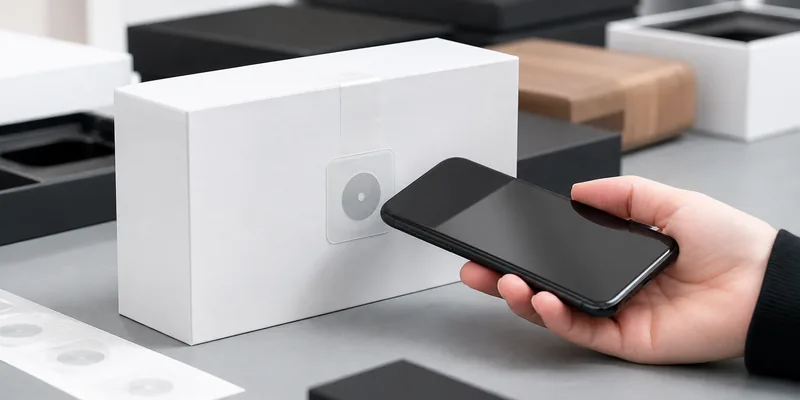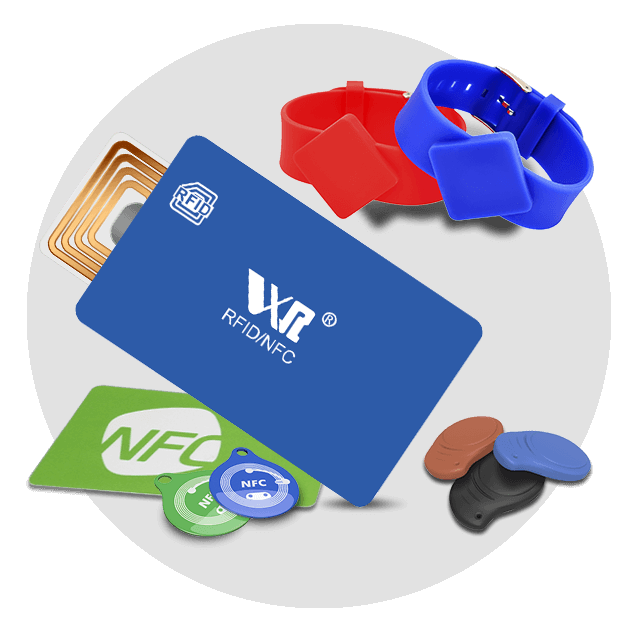
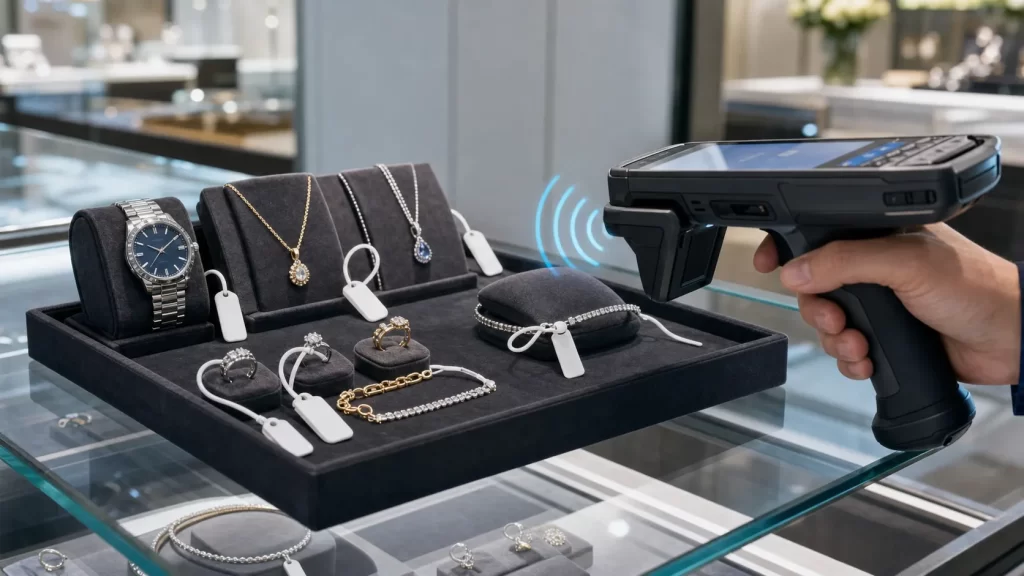
Choose RFID jewelry tags by starting with the workflow, not the tag shape. A jewelry store doing daily shelf counts usually needs compact UHF RFID jewelry tags that can be read quickly with a handheld reader. A brand authentication or customer interaction project may use HF/NFC tags instead. A high-value anti-tamper workflow may need a fragile or tamper-evident structure that stops working if removed.
Before ordering in bulk, confirm six points: frequency, chip, tag form, jewelry material, reader setup, and software workflow. Jewelry items are small, valuable, reflective, and often metal-heavy, so sample testing is not optional.
What Are RFID Jewelry Tags?
RFID jewelry tags are small radio-frequency tags attached to rings, necklaces, bracelets, watches, earrings, gemstones, or jewelry packaging. Each tag carries a unique ID that can be linked to item data such as SKU, certificate number, material, weight, purity, location, sales status, or audit history in software.
The tag itself usually does not need to store all product details. In most projects, the RFID tag stores an EPC, UID, or other identifier, while the jewelry management system stores the sensitive business data. This keeps the tag simple and makes data updates easier.
Match the Frequency to the Use Case
| Frequency option | Best fit for jewelry projects | What to confirm |
|---|---|---|
| UHF RFID | Fast inventory counts, trays, counters, safes, stockrooms, branch audits | Reader region, antenna setup, tag orientation, near-metal performance |
| HF/NFC | Close-range authentication, customer interaction, certificate links, phone-based actions | Phone compatibility, memory needs, URL/NDEF encoding, privacy requirements |
| LF RFID | Short-range ID in special legacy systems | Reader compatibility and whether LF is really required |
For most jewelry inventory projects, UHF RFID is the practical starting point because it supports faster multi-item reading than barcode scanning. RAIN RFID systems generally operate in the UHF range, but allowed bands and reader power vary by country, so project teams should confirm local reader regulations before deployment.
Choose the Right Tag Form
Jewelry RFID tags must be readable without damaging the product or hurting the display experience. Common formats include:
- Loop or flag tags: These wrap around a ring, necklace, watch, or bracelet and keep the RFID inlay slightly away from metal. This is often safer than placing a standard label flat on metal.
- Adhesive labels: Useful for boxes, trays, certificates, packaging, or non-metal surfaces.
- Tamper-evident tags: Designed for anti-transfer or anti-counterfeit workflows where the tag should fail or show damage if removed.
- Embedded cards or care tags: Useful when the RFID identity is connected to a certificate, warranty card, or luxury packaging.
- Tray or display-case tags: Suitable when the project tracks trays, boxes, or display positions rather than each jewelry item.
The best format depends on whether the business is tracking the item, the package, the tray, or the customer-facing certificate.
Plan for Metal, Gems, Glass, and Crowded Displays
Jewelry is a difficult RFID environment. Gold, silver, platinum, watch cases, dense displays, mirrors, glass cabinets, and human hands can all change read performance. A tag that reads well on a sample card may behave differently when it hangs near a metal ring inside a glass display case.
For real-world testing, place sample tags on the actual jewelry types: rings, chains, earrings, watches, bracelets, and boxed items. Test the reader from the same angle staff will use during daily counts. Also test crowded trays, stacked boxes, locked cases, and safe shelves. If the project needs exit detection, test that scenario separately with fixed antennas instead of assuming the handheld inventory result will translate.
Confirm Printing, Encoding, and Data Structure
RFID jewelry tags often need more than an invisible chip. Buyers may need logo printing, barcode or QR code printing, serial numbers, SKU text, color coding, or pre-encoded EPC values. Decide this before production because printing layout and encoding rules affect workflow.
Ask these questions early:
- Should the tag be blank, pre-printed, or pre-encoded?
- Will the RFID number match an existing SKU, serial number, or certificate number?
- Does the project need EPC memory only, or also TID/User memory?
- Will staff scan barcodes during exceptions, returns, or service?
- Does the software import encoding files from the tag supplier?
If the jewelry is high value, avoid storing sensitive value, cost, or customer data directly on the tag unless the system design specifically requires it.
Test Readers and Software Together
RFID hardware alone does not create a jewelry inventory system. The project needs tags, handheld or fixed readers, antennas, software, and a repeatable operating procedure.
A good pilot should test:
- Daily opening and closing inventory counts.
- Safe, showcase, tray, and stockroom audits.
- Missing-item and extra-item exception reports.
- Item receiving, transfers, sales, returns, and repairs.
- Read performance near metal, glass, dense trays, and staff movement.
- Label durability during handling, polishing, cleaning, and display changes.
Do not judge RFID jewelry tags only by maximum read range. In retail projects, a controlled and repeatable read zone may be more useful than the longest possible distance.
Common Mistakes to Avoid
The first mistake is buying generic RFID labels and expecting them to work on every jewelry item. Jewelry needs a tag structure designed for small, metal-heavy, high-value items.
The second mistake is choosing tags before mapping the workflow. A store count project, warehouse receiving project, exhibition security project, and product-authentication project may need different tags.
The third mistake is skipping software planning. If the tag ID is not connected to product data, staff roles, reports, and exception handling, the system becomes another spreadsheet burden.
What to Send an RFID Tag Supplier
To get useful recommendations, send the supplier:
- Jewelry types and materials.
- Target workflow: inventory, anti-tamper, authentication, transfer, display case, or warehouse.
- Frequency preference, reader model, and country/region.
- Required tag size, shape, color, and attachment method.
- Printing needs: logo, barcode, QR code, serial number, or SKU.
- Encoding format and software import requirements.
- Quantity, packaging, sample needs, and rollout timeline.
WXR provides jewelry RFID tags, 860-960MHz UHF RFID tags, and custom RFID tag production for project buyers. If you are planning a jewelry inventory project, share your jewelry type, reader setup, tag size, printing, encoding, and sample-testing requirements with WXR before mass production.
FAQ
Are UHF RFID jewelry tags better than NFC tags?
UHF is usually better for fast inventory counts and multi-item reading. NFC is better for close-range phone interaction, product storytelling, or certificate links. Some projects may use both.
Can RFID jewelry tags work near metal?
Yes, but the tag design and placement matter. Loop or flag-style tags often perform better because the RFID inlay is not pressed flat against the metal jewelry surface. Always test with real jewelry items.
Do RFID jewelry tags prevent theft?
RFID can support audits, exception reports, and exit-control workflows, but it does not guarantee theft prevention by itself. Results depend on tag type, reader placement, store procedure, and software alerts.
Should the tag store product details?
Usually, the safest approach is to store a unique ID on the tag and keep detailed product data in the software database. This makes updates, security, and reporting easier.
What should I test before ordering RFID jewelry tags in bulk?
Test tag readability, tag attachment, display appearance, reader distance, crowded trays, metal interference, software matching, barcode backup, staff workflow, and exception reports.