
RFID is not exactly the same as NFC, but the two technologies are closely related. The simplest answer is this: NFC is a specialized type of RFID, while RFID is the larger technology family.
RFID, short for radio frequency identification, uses radio waves to identify tags, cards, labels, wristbands, assets, products, animals, or credentials. NFC, short for near field communication, is a short-range 13.56 MHz technology commonly used by smartphones, payment cards, smart packaging, access cards, and tap-to-read tags.
So if someone asks, “Is NFC RFID?” the technical answer is yes. If they ask, “Can any RFID tag be read by an NFC phone?” the answer is no. That distinction matters when you are choosing tags for a real project.
RFID vs NFC: Quick Comparison
| Feature | RFID | NFC |
|---|---|---|
| Relationship | Broad technology family | Specialized branch of HF RFID |
| Typical frequency options | LF, HF, UHF, active RFID | 13.56 MHz |
| Typical reader | Dedicated RFID reader or access reader | Smartphone, NFC reader, payment terminal |
| Typical range | Near contact to many meters, depending on system | Very short tap range |
| Common use cases | Inventory, logistics, assets, access, laundry, livestock, retail | Payments, smart packaging, digital cards, phone taps, access credentials |
| Best fit | Identification at scale or in controlled workflows | Consumer-friendly close-range interaction |
NFC is designed for close, intentional interaction. Broader RFID systems may be designed for long-range scanning, high-speed inventory, rugged tracking, or closed access control environments.
What RFID Means
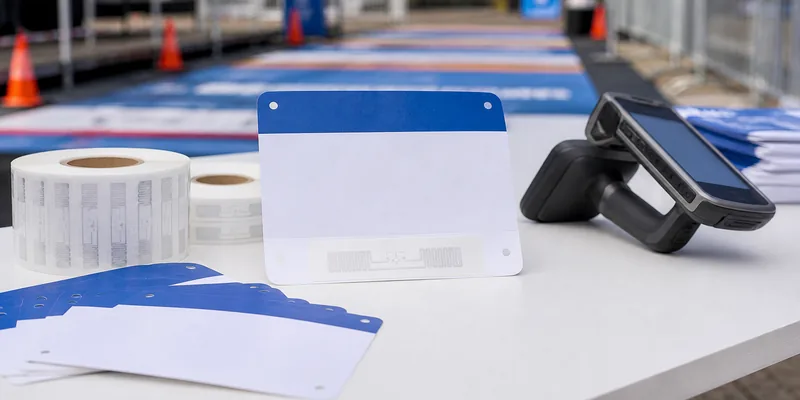
RFID is an umbrella term. A basic RFID system includes a tag, a reader, and an antenna. The reader sends radio energy or a signal to the tag, and the tag responds with stored information, usually an ID.
RFID tags are commonly grouped by frequency. LF RFID is often used for animal ID and some access systems. HF RFID operates around 13.56 MHz and includes many cards, library tags, and NFC-related tags. UHF RFID is often used for inventory, apparel, logistics, pallets, and asset tracking. RAIN RFID is the common name for passive UHF RFID based on ISO/IEC 18000-63 / GS1 UHF Gen2.
Because RFID covers many frequencies and standards, two RFID products may look similar but be incompatible.
What NFC Means
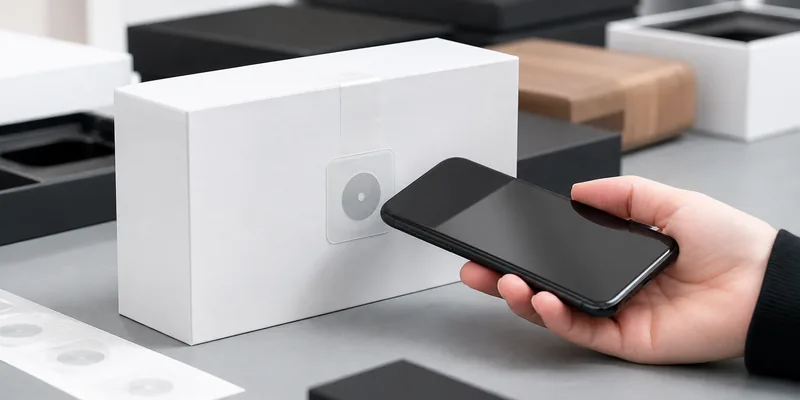
NFC is built for very short-range communication. The NFC Forum describes NFC as a contactless technology using a 13.56 MHz base frequency, with modes such as reader/writer mode and card emulation. That is why a phone can read an NFC sticker, act like a payment card, or interact with an NFC-enabled product.
NFC’s short range makes the interaction deliberate, which is useful for marketing, authentication, digital business cards, product information, and mobile app triggers.
Are NFC Tags RFID Tags?
Yes. NFC tags are RFID tags, but not every RFID tag is an NFC tag.
An NFC sticker with an NTAG213, NTAG215, or NTAG216 chip is a type of HF RFID tag that a smartphone can usually read. A UHF RFID apparel label, a 125 kHz access fob, or a cattle ear tag may also be RFID, but a normal phone NFC reader will not read it just because it says “RFID.”
This is a common buying mistake. Some buyers need phone-readable NFC tags; others need long-range UHF labels for warehouse inventory. Always confirm frequency, chip, protocol, and reader compatibility.
When Should You Choose NFC?
Choose NFC when the project needs a smartphone tap or a very close-range user action.
Good NFC use cases include smart packaging, product authentication, digital business cards, customer engagement, mobile app triggers, contactless membership cards, and access credentials.
WXR can support custom NFC tags with chip selection, material choice, printing, UID/serial/QR printing, encoding, and sample testing.
When Should You Choose RFID Instead of NFC?
Choose broader RFID when the project needs range, speed, automation, or a reader setup that is not based on consumer phones.
UHF RFID is often better for warehouse inventory, apparel retail, asset tracking, logistics labels, and high-volume item identification because a fixed or handheld UHF reader can scan multiple tags quickly.
If your goal is to count boxes, identify garments in bulk, track tools, read laundry tags, or scan pallets through a dock door, NFC is usually not the right first choice. You likely need UHF RFID tags, RFID stickers, RFID inlays, or another application-specific tag format.
Can an NFC Phone Read RFID?
An NFC phone can read many NFC Forum compatible tags and some 13.56 MHz HF tags, depending on the tag type and phone support. It generally cannot read LF 125 kHz cards, most UHF RFID labels, active RFID tags, or proprietary access cards outside its supported NFC/HF standards.
If phone reading is required, specify NFC from the start. If industrial reading is required, specify the reader, antenna, frequency, chip, and tag environment before ordering.
How to Choose the Right Tag
Before buying RFID or NFC tags, define the project in practical terms. Will the tag be read by a smartphone, a door reader, a handheld reader, or a fixed portal? Do you need one deliberate tap or many tags read at once? What frequency and protocol does the reader support? Will the tag be applied to plastic, glass, fabric, paper, metal, or liquid-filled packaging?
Also confirm whether you need printing, serial numbers, chip encoding, password protection, locked memory, or anti-metal design. The safest choice is to match the tag to the reader and environment, then test samples before mass production.
Conclusion
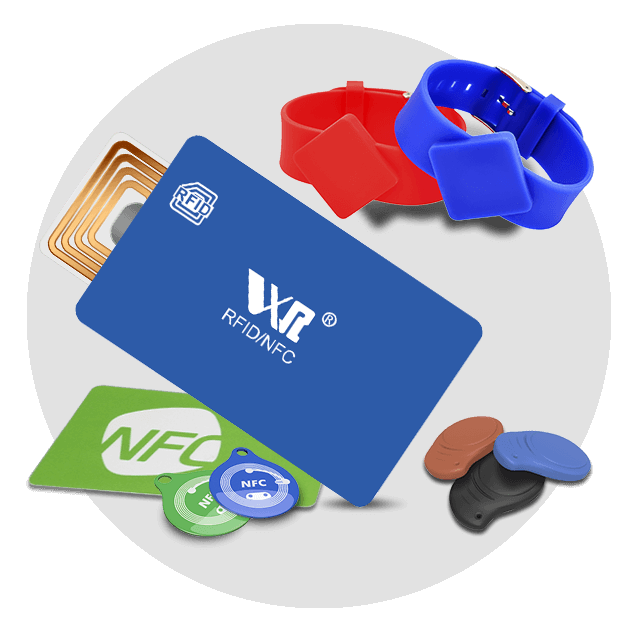
RFID and NFC are related, but they are not interchangeable terms. NFC is a short-range, 13.56 MHz, phone-friendly branch of RFID. RFID is the broader family that includes LF, HF, UHF/RAIN RFID, passive tags, cards, labels, wristbands, inlays, and industrial tracking systems.
Choose NFC for tap-based phone interactions, smart packaging, digital cards, and consumer-facing experiences. Choose other RFID formats when you need long-range reading, bulk inventory, asset tracking, livestock ID, access compatibility, or rugged industrial performance.
Not sure which tag fits your project? Send WXR your application, reader type, frequency, chip preference, material, read range target, printing, encoding, quantity, and testing environment. The team can recommend a sample plan before mass production.
FAQ
Is NFC a type of RFID?
Yes. NFC is generally considered a specialized type of HF RFID that operates at 13.56 MHz and is designed for very short-range communication.
Is every RFID tag readable by NFC phones?
No. NFC phones usually read supported NFC or certain HF tags. They do not normally read LF access fobs, UHF inventory labels, active RFID tags, or unsupported proprietary cards.
Should smart packaging use RFID or NFC?
If the customer needs to tap a package with a phone, NFC is usually the better fit. If the warehouse needs to scan many packages quickly, UHF RFID may be better.