
Quick answer: the best UHF RFID tag for warehouse asset tracking is the one that reads reliably on your real asset, at your real read point, with your actual reader and software. For cartons and paper labels, a UHF RFID label or wet inlay may be enough. For reusable plastic totes, pallets, tools, cages, metal racks, or outdoor assets, buyers often need a more durable hard tag, long-range RFID tag, or anti-metal construction.
Do not choose the tag only by chip name or advertised read range. In warehouse projects, performance depends on the asset surface, tag orientation, reader antenna, read zone design, encoding plan, attachment method, and how the item moves through receiving, storage, picking, packing, and dispatch.
Start With the Warehouse Workflow, Not the Tag
Before comparing samples, define what the RFID system must identify. A warehouse may tag individual products, cartons, pallet loads, returnable containers, tools, IT assets, bins, trolleys, or metal equipment. Each object creates a different tag requirement.
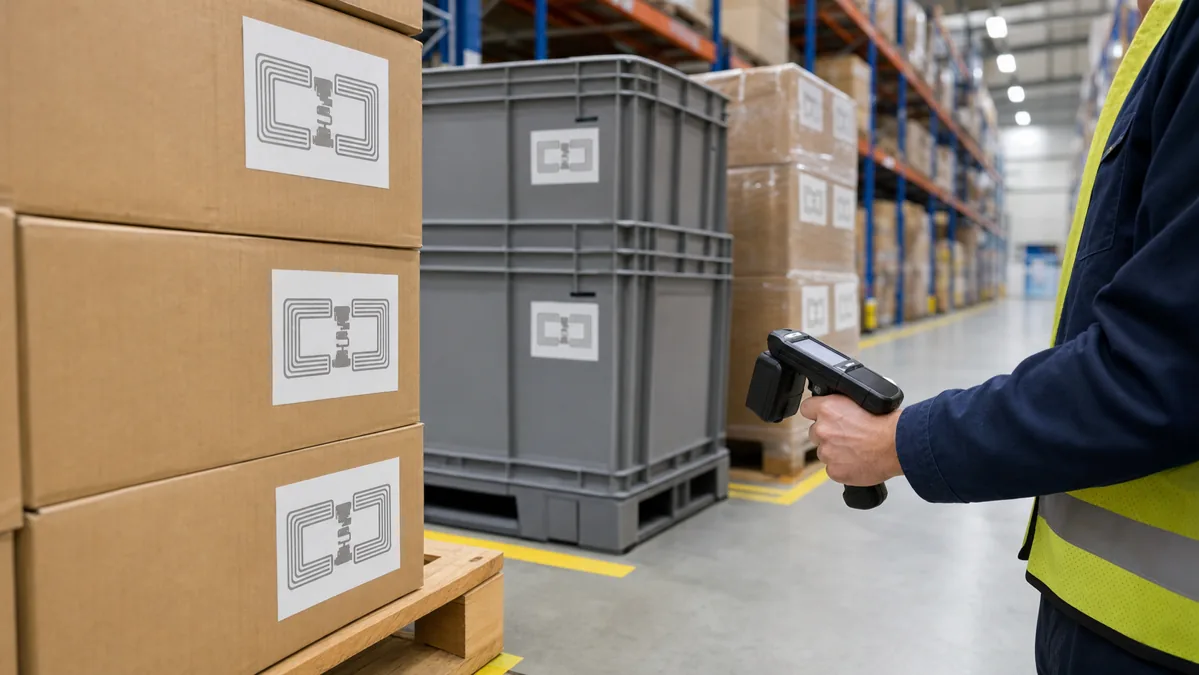
If the reader is installed at a dock door, the tag may need to read while the pallet is moving. If staff use handheld readers, the tag can be placed where scanning is easier and more controlled. If assets are stacked, wrapped, wet, or close to metal, a standard label that works on a test table may fail in daily use.
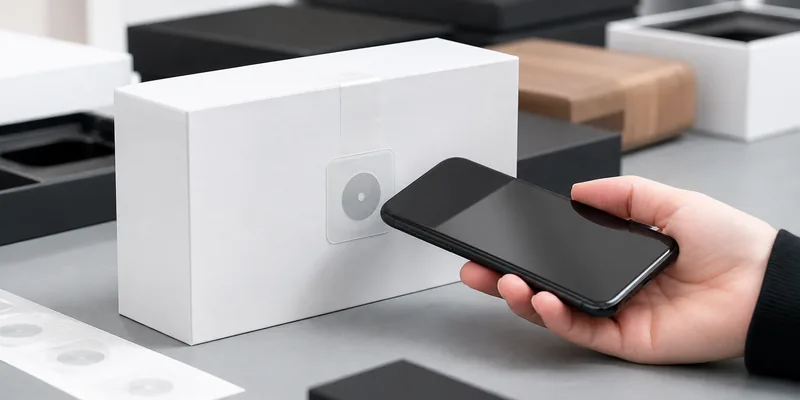
For most bulk warehouse and logistics workflows, UHF RFID tags are the practical starting point because they support longer read zones and multiple-tag reading. HF or NFC tags still have a place when the process needs close-range, one-at-a-time confirmation.
Common UHF RFID Tag Options for Warehouse Assets
| Tag option | Best fit | What to confirm before ordering |
|---|---|---|
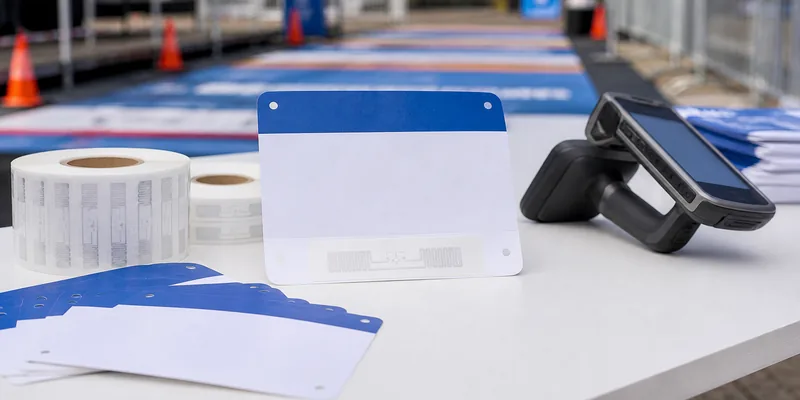
| UHF RFID label or sticker | Cartons, cases, packaging, paper labels, short-to-medium life assets | Face material, adhesive, antenna size, printer compatibility, encoding format, roll direction |
| RFID wet inlay | Label converting, custom printed labels, smart packaging, high-volume logistics labels | Dry or wet construction, antenna design, chip model, label conversion process |
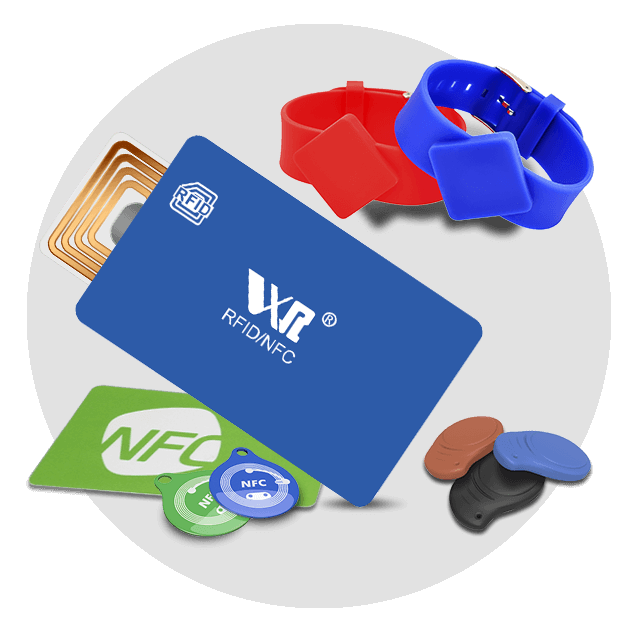
| Hard asset tag | Reusable totes, pallets, bins, tools, equipment, rough handling | Housing material, attachment method, cleaning exposure, impact and abrasion risk |
| Anti-metal RFID tag | Metal racks, cages, tools, machinery, IT assets, metal containers | Mounting surface, spacer or ferrite layer, orientation, adhesive or screw fixing |
| Long-range RFID tag | Dock doors, yards, high shelves, reusable transport items | Reader antenna layout, allowed read distance, region frequency, asset motion, missed-read tolerance |
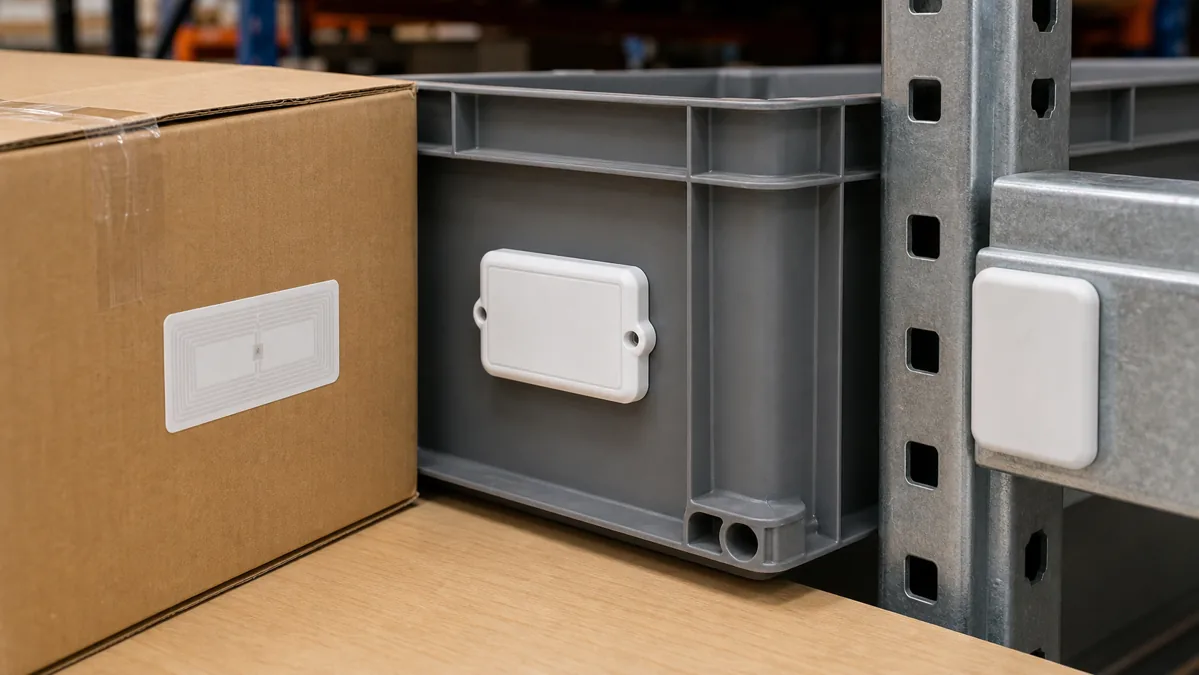
Surface Material Changes the Tag Choice
Carton, plastic, wood, metal, glass, liquid-filled packaging, fabric, and rubber do not behave the same around UHF RFID. Paper cartons are usually the easiest surface for a UHF label. Plastic totes can work well, but curved areas, ribs, stacking contact, and cleaning can affect both reading and adhesion. Metal is the most common reason a normal UHF label disappoints, because the surface can detune the antenna.
If assets include metal shelving, tools, cages, or machinery, compare anti-metal RFID tags instead of trying to make a standard label work by trial and error. If assets will be handled outdoors or cleaned frequently, review waterproof RFID tag options as part of the sample set.
Do Not Separate Encoding From Tag Selection
A warehouse RFID tag is useful only when the code on the tag matches the business record in the system. For a closed-loop warehouse, the EPC may represent an internal asset ID, carton ID, bin ID, or pallet ID. For GS1-based supply chains, teams may need EPC schemes connected to identifiers such as trade items, logistics units, locations, returnable assets, or individual assets.
The practical buyer question is simple: who creates the numbering file, who encodes the tags, who verifies every tag, and how will duplicate IDs be prevented? If printed QR codes or serial numbers are used on the same label, the printed value and encoded EPC should be checked against one master file.
For background on tag memory, see WXR’s guides to EPC memory on an RFID tag and TID memory in RFID.
Warehouse Read Zones Decide Whether the Tag Works
A good tag can still fail in a poor read zone. Dock doors, conveyors, packing benches, handheld scan routes, forklift paths, and storage aisles all create different RF conditions. Reader power, antenna polarization, antenna height, cable loss, tag orientation, item speed, nearby metal, and tag density can all change results.
This is why fixed read points should be tested with real movement, not only static samples. A tag that reads when a box is held in front of the antenna may not read when the same box is wrapped on a pallet, surrounded by other cartons, or passing quickly through a doorway.
Buyer Checklist Before Requesting Samples
- Asset type: carton, pallet, bin, tote, cage, tool, rack, equipment, or reusable transport item.
- Surface: cardboard, plastic, wood, metal, painted metal, glass, textile, rubber, or mixed materials.
- Environment: indoor, outdoor, wet, cold storage, dusty, washable, chemical exposure, or rough handling.
- Read method: handheld reader, fixed dock door, conveyor, gate, shelf antenna, or packing station.
- Data plan: EPC format, printed serial number, QR code, barcode, TID capture, lock requirement, and duplicate-control process.
- Attachment: adhesive label, cable tie, rivet, screw, embedded tag, hang tag, or protective holder.
- Production format: rolls, sheets, individual tags, pre-printed labels, pre-encoded tags, or blank tags for in-house encoding.
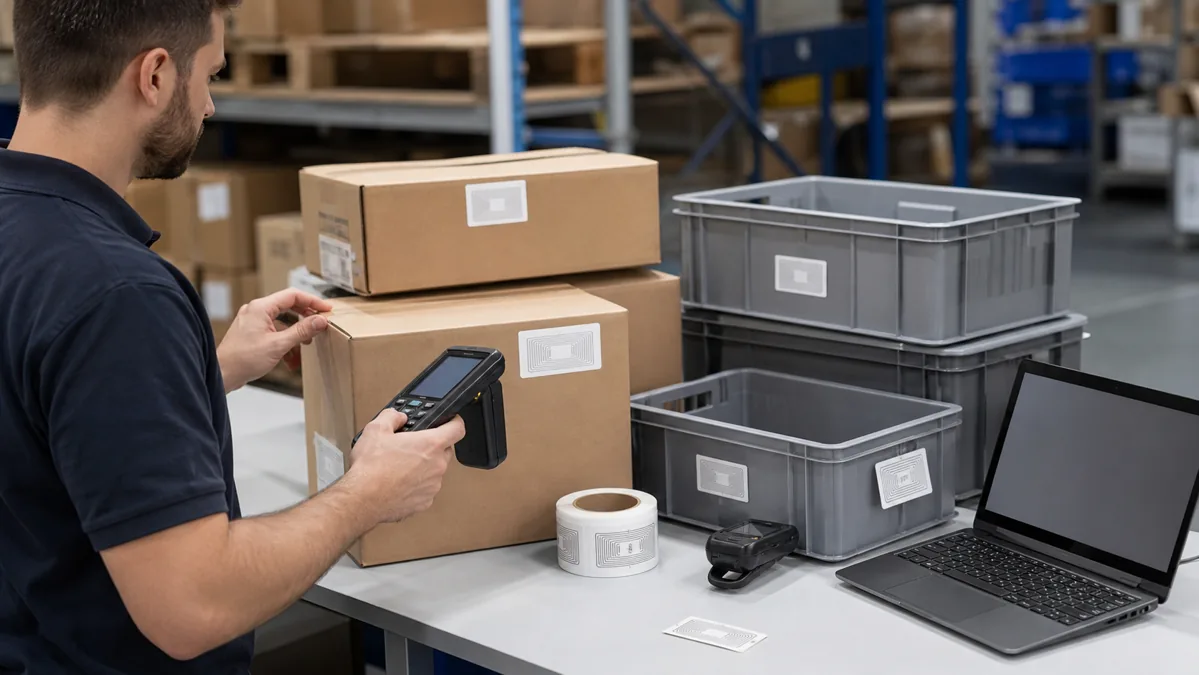
Ask for a small set of tag formats rather than one sample. For example, compare a standard UHF label, a larger antenna label, a hard tag, and an anti-metal tag if your assets include mixed materials. Apply each sample to the real asset surface and place it where staff or equipment can actually support it.
Then test the complete workflow: receiving, put-away, picking, packing, dispatch, return, cleaning, and exception handling. Record missed reads, duplicate reads, unreadable orientations, adhesive failure, damage, and any locations where operators naturally cover or bend the tag.
For high-volume projects, also test printing and encoding. Confirm that the RFID printer or encoder can write the selected chip, that the label feeds correctly, and that the exported data file matches the warehouse software import format.
How WXR Supports Warehouse Asset Tracking Projects
WXR can help project buyers compare asset tracking RFID tags, RFID stickers and labels, RFID inlays, anti-metal tags, and custom UHF tag formats based on the asset surface and read zone.
For a useful recommendation, send WXR your asset photos, dimensions, surface material, target read points, reader type, encoding format, printing requirement, quantity, and testing environment. That information is more valuable than asking for a generic long-range RFID tag without the warehouse context.
FAQ
Often yes, especially when the project needs longer read zones or multiple-tag reading. The final choice still depends on the asset surface, reader setup, regional frequency requirements, and testing results.
Can a standard RFID label work on metal warehouse assets?
Usually not reliably. Metal can detune a standard UHF label. For metal racks, tools, cages, and equipment, test anti-metal RFID tags or on-metal label constructions.
Pre-encoding can reduce setup work when the numbering file is ready and the supplier can verify each tag. In-house encoding may be better when IDs are assigned during receiving or commissioning. The key is to prevent duplicate or mismatched IDs.
What affects UHF RFID read range in a warehouse?
Read range depends on tag antenna, chip, reader power, antenna placement, orientation, asset material, nearby metal or liquid, tag density, motion, and local radio rules. Always test samples in the real warehouse workflow.
Choosing UHF RFID tags for warehouse asset tracking is not a one-line specification. Start with the object, surface, read zone, encoding plan, and attachment method. Then compare samples under real warehouse conditions before mass production.
Need help choosing warehouse RFID tags? Contact WXR with your application details, asset photos, read points, encoding needs, and sample-testing plan so the team can recommend suitable tag formats.