
Quick answer: NFC stickers can be waterproof and durable, but only when the sticker is built for that environment. A basic paper NFC sticker is usually fine for dry indoor campaigns. A PET or PVC NFC label with a protective surface is better for splashes, packaging, and light outdoor use. For repeated washing, chemicals, abrasion, or long-term outdoor exposure, buyers should compare epoxy NFC tags, anti-metal NFC stickers, or purpose-built waterproof RFID tags instead of assuming every NFC sticker is the same.
The NFC chip is rarely the only thing that decides durability. The real weak points are the face material, antenna protection, edge sealing, adhesive, printing surface, and mounting surface. That is why two NFC stickers with the same NTAG213 chip can perform very differently after rain, cleaning, or rough handling.
Waterproof vs Durable: They Are Not The Same Requirement
“Waterproof” describes how well the tag resists water ingress. “Durable” is broader. It includes scratch resistance, UV exposure, heat, cold, bending, chemicals, adhesive strength, and whether the tag still reads after weeks or months in service.
For NFC stickers, the buyer should separate three questions:
- Will water reach the inlay or chip?
- Will the adhesive stay bonded to the surface?
- Will the sticker remain readable and presentable after handling, cleaning, or outdoor exposure?
A sticker can resist splashes but still peel from a curved plastic bottle. Another tag may survive water but become unreadable on metal because it lacks a ferrite isolation layer. Good NFC sticker selection starts with the real environment, not only with the word “waterproof” in a product listing.
NFC Sticker Material Comparison
| NFC sticker type | Best use case | Water resistance | Durability tradeoff |
|---|---|---|---|
| Paper NFC sticker | Dry indoor posters, short campaigns, giveaways | Low unless laminated | Lowest cost, but weak against moisture and abrasion |
| PET or PVC NFC sticker | Product packaging, smart labels, retail, light outdoor use | Good when protected and correctly applied | More durable than paper, but adhesive and edge sealing still matter |
| Epoxy NFC tag | Key tags, equipment labels, wet handling, reusable items | Very good because the top surface is sealed | Thicker and more visible than a flat label |
| Anti-metal NFC sticker | Metal tools, equipment, shelves, cabinets, devices | Depends on surface and construction | Needs a ferrite layer; usually thicker and more expensive |
| Hard-shell waterproof RFID tag | Outdoor assets, industrial use, harsh environments | Best for heavy-duty exposure | Less sticker-like, but more reliable for demanding projects |
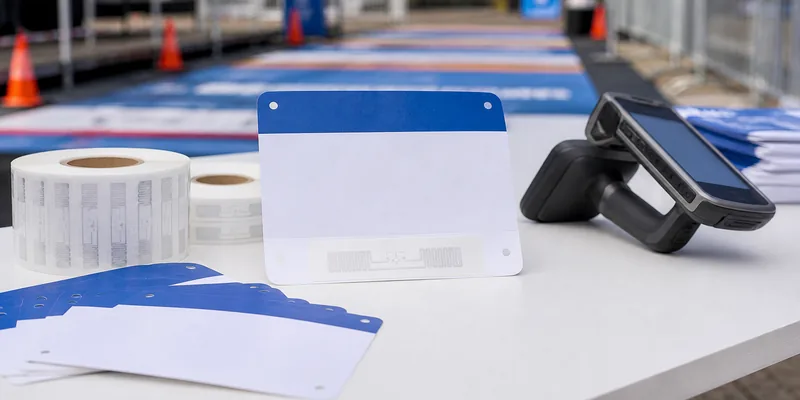
For many smart packaging and marketing projects, a custom PET or PVC NFC tag is enough. For wet assets, cleaning environments, or outdoor installations, a buyer should also inspect WXR’s waterproof RFID tags and compare whether a sticker format is still the right choice.
What Actually Makes An NFC Sticker Waterproof?
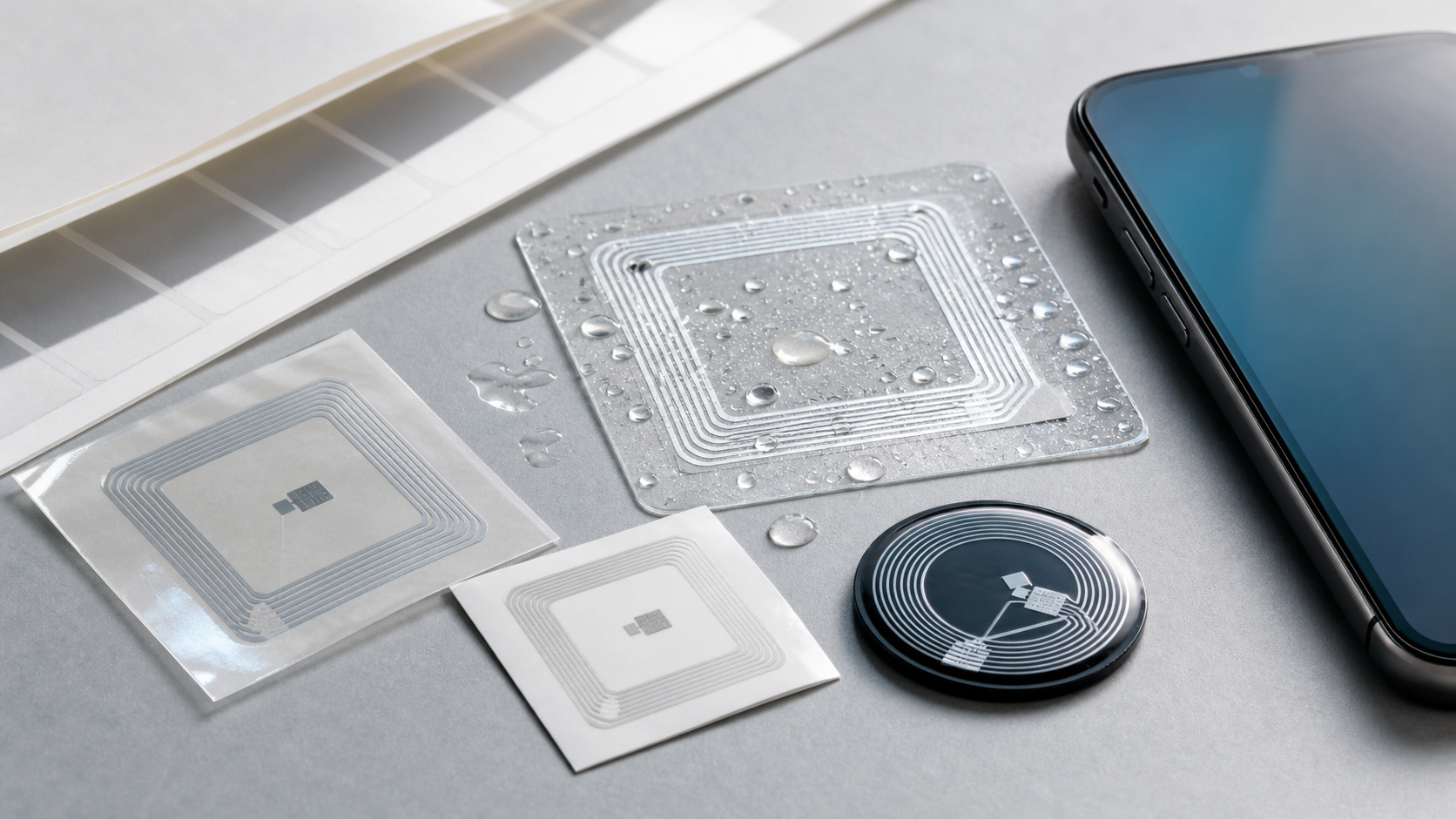
Water resistance comes from the whole construction, not from the chip alone. The face material should be water-resistant, the printed surface should be protected, and the inlay should not be exposed through weak edges or damage. PET, PVC, and similar synthetic materials usually handle moisture better than paper.
The adhesive is just as important. Glass, painted metal, rough plastic, coated paper, and curved packaging all behave differently. Humidity, dust, oil, low temperature, and cleaning chemicals can weaken the bond even when the sticker face looks fine.
When A Standard NFC Sticker Is Enough
A standard NFC sticker is usually enough for dry indoor uses where the tag is not frequently rubbed, washed, or exposed to sunlight. Examples include posters, brochures, shelf labels, product authentication cards, business cards, and short-term promotions.
For these projects, buyers should focus on phone compatibility, chip memory, print quality, adhesive, and whether the sticker will be locked after encoding. Common chip options such as NTAG213, NTAG215, and NTAG216 are often selected based on memory needs, not waterproof performance.
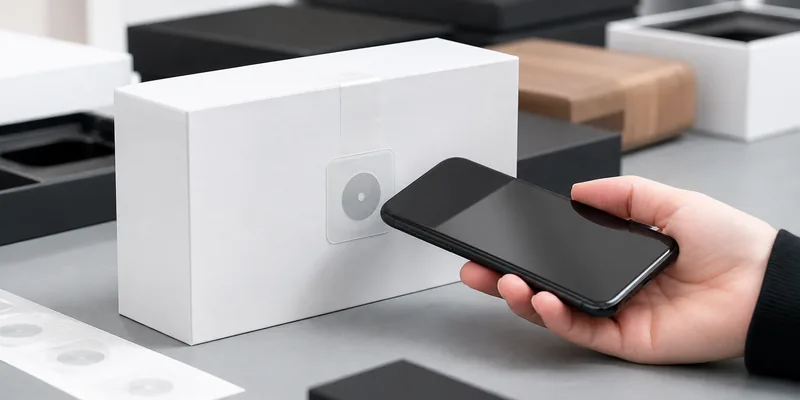
NFC itself is a short-range 13.56 MHz tap technology, so the reader experience also depends on where the user taps the phone. A durable sticker still needs a clear tap location and a surface that does not block the antenna.
When To Upgrade To Waterproof Or Anti-Metal NFC Stickers
Choose a waterproof NFC sticker when the tag may face rain, condensation, wet hands, bathroom or kitchen use, beverage packaging, outdoor signs, or frequent cleaning. In these cases, ask for PET or PVC construction, protective lamination, suitable adhesive, and sample testing on the actual product surface.
Choose an anti-metal NFC sticker when the tag will be applied to metal. Standard NFC stickers often perform poorly on metal because the surface detunes the antenna. An anti-metal RFID tag or NFC sticker uses an isolation layer to help the tag read correctly, but it may be thicker than a normal label.
Choose epoxy or hard-shell tags when the project needs a more sealed, reusable, or impact-resistant format. These may not look like thin stickers, but they can be the better procurement choice for tools, equipment, access items, and wet handling.
Buyer Checklist Before Ordering
Before ordering custom NFC stickers, send the supplier more than a size and chip name. A good specification should include:
- Application: marketing, packaging, access, asset ID, authentication, or service workflow.
- Surface: glass, plastic, metal, paperboard, fabric, or curved packaging.
- Environment: indoor, outdoor, wet, washable, chemical exposure, heat, cold, or UV.
- NFC chip and memory: NTAG213, NTAG215, NTAG216, MIFARE, or another required chip.
- Construction: paper, PET, PVC, epoxy, anti-metal, or hard-shell format.
- Printing and encoding: logo, UID, QR code, URL, vCard, product page, or locked NDEF data.
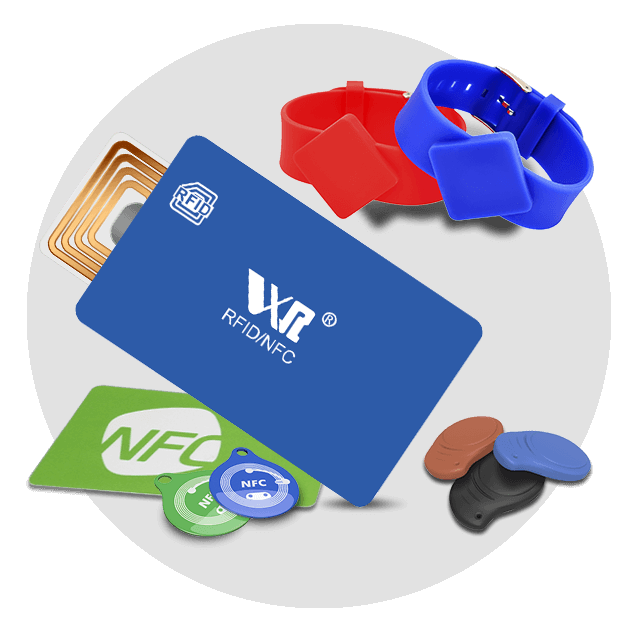
WXR can customize RFID stickers and label tags by material, chip, shape, printing, encoding, and application needs. For wet or outdoor projects, sample testing is more useful than relying on a generic product description.
How To Test NFC Sticker Durability Before Mass Production
Apply samples to the real surface, not a clean test card. Let the adhesive settle according to the supplier’s guidance, then test tap performance with both iPhone and Android phones from the expected user position.
Expose the sticker to the real stress: water spray, short soaking, condensation, cleaning wipes, sunlight, cold storage, bending, or abrasion. After each test, check whether the edge lifted, whether the printed surface changed, and whether the NFC read still works from a natural tap angle.
FAQ
Do NFC stickers stop working if they get wet?
Not always. A properly sealed waterproof NFC sticker can keep working after water exposure. A basic paper sticker or poorly sealed label may fail because water reaches the inlay or weakens the adhesive.
Epoxy NFC tags are usually better for scratch resistance, wet handling, and a more sealed surface. PVC or PET NFC stickers are thinner and easier to apply on packaging or printed materials. The better option depends on the surface, appearance, budget, and expected lifetime.
Can NFC stickers be used on metal?
Standard NFC stickers are not recommended for metal surfaces. Use an anti-metal NFC sticker or anti-metal RFID tag so the antenna can work correctly near metal.
Which NFC sticker is best for outdoor use?
For light outdoor use, a PET or PVC NFC sticker with suitable adhesive and lamination may be enough. For long-term rain, sun, abrasion, or industrial exposure, compare epoxy, hard-shell, or waterproof RFID tag formats and test samples before mass production.
Conclusion
NFC stickers are waterproof and durable only when the construction matches the use case. For dry indoor campaigns, a simple NFC label may be enough. For water, outdoor exposure, cleaning, or metal surfaces, buyers should compare material, adhesive, sealing, and anti-metal design before choosing.
Need NFC stickers for smart packaging, wet environments, or outdoor assets? Contact WXR with your application, surface, chip requirement, printing design, quantity, and testing environment. The team can help compare NFC sticker, epoxy tag, anti-metal tag, and waterproof RFID tag options before you place a mass order.