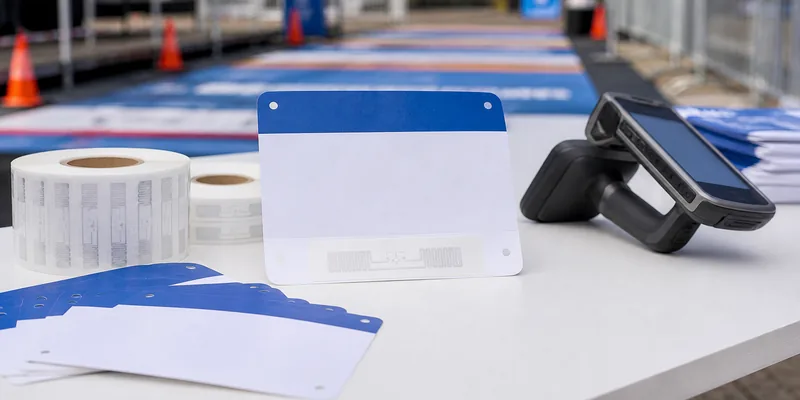

TID memory, short for Tag Identifier memory, is a memory area inside many UHF RFID tags that stores chip identification information. In most EPC Gen2 / ISO 18000-63 RFID tags, TID memory is programmed by the chip manufacturer and is used to identify the RFID chip type, manufacturer, and sometimes a unique serial number.
In simple terms, EPC memory tells your system what the tag represents, while TID memory helps identify what the tag itself is.
This difference matters. If you only read the EPC, you may know that a tag is assigned to a product, asset, pallet, or item. But if you read the TID, you can often verify the chip model, check whether the tag uses the expected IC, and reduce the risk of tag cloning in applications where authenticity matters.
How RFID Tag Memory Is Organized
A typical UHF RFID tag is divided into several memory banks. The exact memory size depends on the chip model, but the common structure includes:
| Memory Bank | Main Purpose | Usually Writable? |
|---|---|---|
| Reserved Memory | Stores access and kill passwords | Yes, if supported |
| EPC Memory | Stores the EPC or item identifier | Yes |
| TID Memory | Stores tag/chip identification data | Usually factory-programmed and read-only |
| User Memory | Stores extra application data | Yes, if available |
Not every RFID tag has large User memory, and not every TID contains a globally unique serial number. That is why it is important to check the chip specification before choosing a tag for a project.
What Information Does TID Memory Store?
TID memory usually contains information that identifies the RFID chip. Depending on the chip, this may include:
- The chip manufacturer ID
- The chip model or IC type
- Tag class information
- Extended TID data
- A unique serial number, if supported by that IC
For example, two RFID labels may look the same from the outside, but their TID memory can reveal that they use different chips. This is useful for quality control, supply chain verification, and technical troubleshooting.
However, one important point is often misunderstood: TID memory is not always unique. Some chips include a unique TID serial number, while others may only include manufacturer and model information. If your application requires unique chip-level identification, confirm that the selected RFID chip supports a unique TID or extended TID.
TID Memory vs EPC Memory
TID and EPC memory are both important, but they serve different jobs.
EPC memory is normally used by the business application. It may store a product code, asset number, carton ID, or serialized item number. It is usually written during tag encoding and can often be changed if the tag is not locked.
TID memory is more like the chip’s built-in identity. It is generally programmed during chip manufacturing and is not intended to be rewritten by users.
Here is the practical difference:
| Feature | EPC Memory | TID Memory |
|---|---|---|
| Main role | Identifies the tagged item | Identifies the RFID chip/tag IC |
| Written by | Tag encoder, printer, system integrator | Chip manufacturer |
| Can be changed? | Often yes, unless locked | Usually no |
| Used for | Inventory, asset ID, product ID | Authentication, chip verification, tag diagnostics |
| Risk if copied | EPC can be cloned onto another tag | TID is harder to copy on standard tags |
For most inventory systems, reading EPC is enough. But for higher-security or higher-control applications, reading both EPC and TID gives stronger confidence.
Why TID Memory Matters
1. Anti-Counterfeiting and Clone Detection
Because EPC memory can often be rewritten, a copied EPC alone does not prove that a tag is genuine. If someone copies the EPC from one tag to another, a basic RFID reader may treat both tags as the same item.
TID memory helps reduce this risk. A system can compare the EPC with the expected TID or chip type. If the EPC looks correct but the TID does not match the expected tag, the system can flag the tag for review.
This does not make RFID impossible to attack, but it adds a useful layer of verification.
2. Tag Quality Control
For RFID suppliers, converters, and system integrators, TID memory is useful during production and inspection. It helps confirm that the correct chip was used in a batch of RFID labels, cards, or hard tags.
For example, if a customer ordered tags using a specific UHF chip, reading the TID can help verify the IC before shipment.
3. Troubleshooting RFID Projects
When an RFID project has read performance issues, the chip model matters. Different ICs may have different sensitivity, EPC memory sizes, User memory options, and feature support.
Reading TID memory can help technicians identify the exact chip type in the field. This is especially helpful when tags from multiple suppliers are mixed together.
4. Application-Level Security
Some systems store an expected relationship between EPC and TID. During reading, the software checks whether the EPC and TID combination is valid.
This approach is common in applications such as:
- Asset tracking
- Retail item-level tagging
- Supply chain verification
- Tool and equipment management
- Brand protection
- Document or certificate tracking
Can TID Memory Be Changed?
In most standard UHF RFID tags, TID memory is factory-programmed and read-only. Users normally cannot rewrite it.
That is exactly why TID is useful: it gives the system a more stable identifier than EPC memory. EPC may be encoded, changed, or locked by the user. TID is generally fixed by the chip manufacturer.
Still, the behavior depends on the chip. Some tags may have extended TID features, and memory locking options vary by IC. Always check the datasheet if your application depends on TID uniqueness or read-only behavior.
Do All RFID Tags Have TID Memory?
TID memory is mainly discussed in the context of UHF RFID tags using EPC Gen2 / ISO 18000-63 standards.
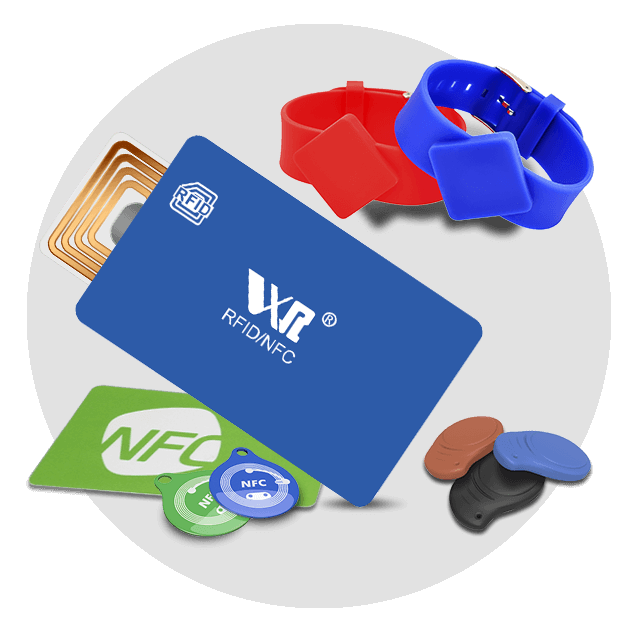
Other RFID technologies may use different identity concepts. For example, many HF and NFC chips have a UID rather than a UHF-style TID memory bank. The exact terminology and memory structure depend on the frequency, protocol, and chip family.
So when selecting tags, do not assume all RFID tags have the same memory layout. A UHF logistics label, an NFC sticker, and an LF access card may all be called “RFID tags,” but their chip architecture can be very different.
When Should You Read TID Memory?
You should consider reading TID memory when:
- You need to verify the tag chip type
- You want to detect possible EPC cloning
- Your project requires stronger item authentication
- You need to confirm supplier or chip consistency
- You are debugging mixed RFID tag batches
- You want to bind EPC and TID together in your database
For simple inventory counting, EPC reading may be enough. For applications where trust, traceability, or quality control matters, TID reading is often worth adding.
How to Choose RFID Tags Based on TID Requirements
Before buying RFID tags, ask these questions:
- Does the chip include TID memory?
- Is the TID unique or only chip-model information?
- How many bits of TID are available?
- Can the reader and software read TID reliably?
- Does the application need EPC-only tracking or EPC + TID verification?
- Should the EPC memory be locked after encoding?
- Is User memory also required?
A reliable RFID supplier should be able to tell you the chip model, EPC memory size, TID behavior, and whether the chip supports a unique serial number.
Conclusion
TID memory is an important but often overlooked part of UHF RFID tags. While EPC memory identifies the object or item in your business system, TID memory identifies the RFID chip itself.
For basic inventory, EPC may be enough. But for anti-counterfeiting, chip verification, batch inspection, and secure asset tracking, TID memory provides an extra layer of confidence.
If you are choosing RFID tags for a project, do not only ask about read range and price. Ask what chip is used, whether it has a unique TID, and how your system will use EPC, TID, and User memory together.
FAQ
What does TID mean in RFID?
TID means Tag Identifier. It is a memory area in many UHF RFID tags that stores chip identification information, such as manufacturer, chip model, and sometimes a unique serial number.
Is TID the same as EPC?
No. EPC memory usually identifies the tagged item, while TID memory identifies the RFID chip. EPC can often be written by the user, while TID is usually programmed by the chip manufacturer.
Is RFID TID memory unique?
Sometimes. Some RFID chips include a unique TID or extended TID serial number, but others may only store manufacturer and model information. Check the chip datasheet before relying on TID as a unique ID.
Can TID memory be rewritten?
Usually no. In most EPC Gen2 UHF RFID tags, TID memory is factory-programmed and read-only. This makes it useful for verification and clone detection.
Why read both EPC and TID?
Reading both EPC and TID helps confirm not only what item the tag represents, but also whether the tag chip matches the expected identity. This is useful for authentication, quality control, and troubleshooting.
Need RFID tags with specific EPC, TID, or User memory requirements? Contact our team to choose the right UHF RFID chip and tag format for your application.