
NTAG 424 DNA NFC tags are used when a basic tap-to-open NFC sticker is not enough. A normal NFC tag can open a product page, manual, registration form, or campaign URL. For product authentication, anti-copy checks, or tamper-aware smart packaging, the buyer must look at the chip security features, the label construction, the encoded URL strategy, and the backend verification flow together.
The important point is simple: NTAG 424 DNA is a chip choice, not a complete anti-counterfeit system by itself. A secure NFC project also needs controlled encoding, key management, server-side validation, physical tag placement, and sample testing on the real package. If any of those parts are weak, the finished label may still disappoint even when the chip is technically capable.
What is NTAG 424 DNA?
NTAG 424 DNA is an NXP NFC tag IC family designed for secure, phone-readable NFC applications. Public NXP documentation positions it for trusted IoT and authentication use cases, with features such as AES-based authentication, SUN message capability, and optional TagTamper variants depending on the selected product. Those features can help a system verify that a tap came from a genuine chip rather than only from a copied static URL.
For buyers, the chip name should lead to more questions, not fewer. Which variant is required? Does the project need a tamper loop? Who controls keys? Will the tag open a static landing page, a dynamic verification URL, or a backend that checks each tap? Will the label sit on paperboard, glass, plastic, foil, liquid-filled packaging, or metalized material? Each answer changes the right inlay, adhesive, label design, and testing plan.
Consider NTAG 424 DNA when the project needs stronger protection than a simple NFC URL tag can provide. Common scenarios include premium product authentication, warranty registration, refill verification, sealed packaging, limited-edition products, connected packaging, and controlled consumer engagement programs.
It may be more than you need for a simple menu link, poster, business card, or standard marketing sticker. In those cases, NTAG213, NTAG215, NTAG216, or another NFC chip may be more practical if the goal is only to open a URL or store a small NDEF record. The better choice depends on the risk level, user experience, phone compatibility needs, backend design, and budget.
Use this rule for early screening: if copying a static URL would not create a serious business problem, a basic NFC tag may be enough. If copied tags, replaced labels, or opened packages would damage trust, revenue, warranty control, or compliance, discuss secure NFC options and the full verification system before ordering samples.
Secure NFC tag options to define before the RFQ
| RFQ decision | What to specify | Why it matters |
|---|---|---|
| Chip and variant | NTAG 424 DNA, TagTamper variant if required, or acceptable alternatives | Controls authentication, memory, tamper behavior, and availability checks |
| Tag format | Wet inlay, printed NFC sticker, seal label, hang tag, card, or custom converted label | Changes adhesive, placement, artwork, and production process |
| Surface material | Paperboard, plastic, glass, metalized film, liquid-filled package, curved surface, or outdoor item | NFC performance and adhesive behavior depend on the real surface |
| URL and backend | Static URL, dynamic verification URL, redirect platform, scan/tap logging, or authentication server | Security depends on the full digital flow, not only the chip |
| Encoding and keys | Who encodes, who manages keys, lock status, data file format, and readback proof | Prevents weak production controls and mismatched records |
| Tamper requirement | Visual tamper label, destructible material, TagTamper loop, seal placement, or no tamper function | Defines whether removal, opening, or transfer should be visible or electronically detectable |
| Sample testing | Phone models, package surfaces, tap position, environmental exposure, backend response, and pass/fail rules | Reduces risk before bulk production |
Do not send an RFQ that says only “secure NFC sticker, best price.” A supplier cannot safely infer whether you need cryptographic authentication, a tamper loop, UID mapping, a printed serial number, anti-metal material, waterproof construction, or only a premium tap experience.
Basic NFC URL vs secure NFC authentication
A basic NFC URL tag stores or launches a link. This is useful for many marketing and product information projects, but the security is limited. If the same public URL is copied into another NFC tag or printed as a QR code, the user may still reach the same page.
A secure NFC authentication project works differently. The tap should produce data that the backend can verify, often with dynamic values generated by the chip and checked by the server. The exact behavior depends on the chip configuration, application design, and key handling. For higher-risk programs, the brand or integrator should define the verification logic before label production starts.
That is why buyers should avoid vague claims such as “anti-counterfeit NFC tag” without system details. Ask what the chip verifies, what the backend checks, what happens when verification fails, how duplicate taps are handled, and how the package tells users where to tap.
How to test NTAG 424 DNA samples before bulk orders
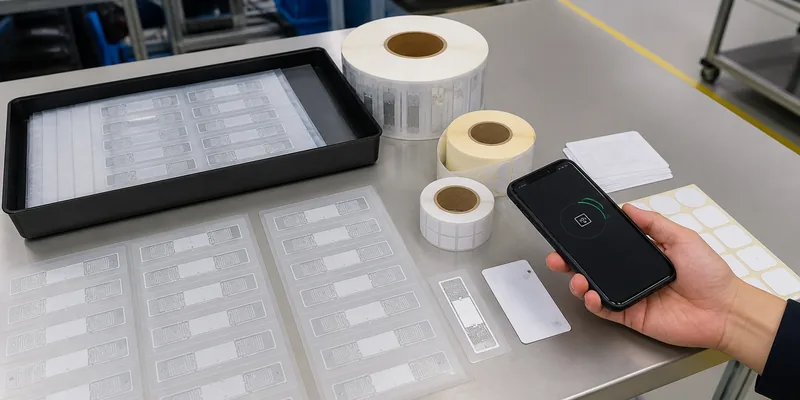
Sample testing should cover both RF performance and system behavior. Start by checking loose samples with supported phones and NFC tools to confirm that the tag can be read consistently. Then test the converted label on the actual package, with the final artwork, adhesive, seal position, and product contents.
For smart packaging, test the tag on the real surface. Metalized film, foil, liquid, thick cosmetics, electronics, glass curvature, and dense product contents can change the tap experience. If the package has a tamper seal, test opening, peeling, shipping vibration, handling, and shelf display. If the user must tap a specific area, make sure the package design makes that action obvious without relying on tiny instructions.
Also test the backend. Confirm that each sample opens the correct URL, returns the expected verification result, records useful events if analytics are required, and handles repeated taps, offline phones, unsupported phones, redirects, and invalid tags in a controlled way. The goal is not just “the phone reads it once.” The goal is a repeatable user and operations workflow.
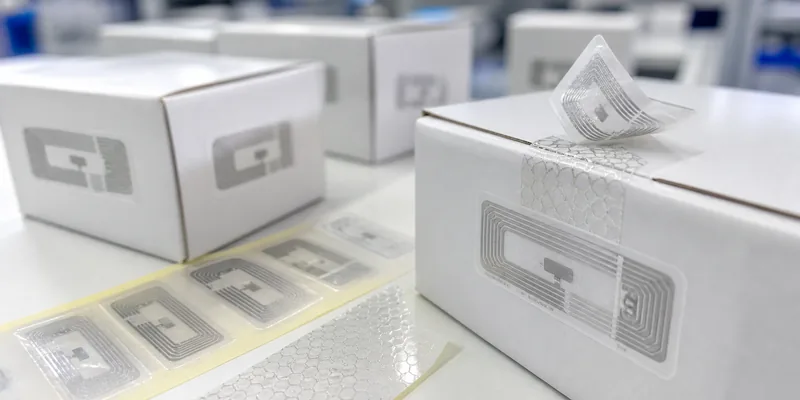
Common mistakes in secure NFC packaging projects
The first mistake is treating chip selection as the entire security plan. A secure chip helps, but weak key handling, public static URLs, poor redirect controls, or untested labels can still create risk. The second mistake is using a normal NFC sticker on metalized, liquid-filled, or curved packaging without sample testing. The third mistake is approving artwork before confirming antenna size and placement.
Another common mistake is confusing tamper evidence with authentication. A tamper-evident label can show or detect opening behavior, depending on the design. Authentication checks whether a digital interaction is valid. Many projects need both, but they are not the same requirement.
Buyers should also avoid overpromising the user experience. NFC tap behavior depends on phone model, antenna location, package material, and user guidance. Test with the phones and packaging conditions your customers or field teams are likely to use.
How WXR can support secure NFC tag projects
WXR can help buyers compare custom NFC tags, RFID and NFC stickers, RFID inlays, and 13.56 MHz RFID tags for smart packaging and product interaction projects. For broader NFC chip selection, review WXR’s guides to NTAG213, NTAG215, and NTAG216 and rewritable and locked RFID tags.
If your project needs NTAG 424 DNA or another secure NFC option, confirm chip availability, backend requirements, key handling, tag format, and sample testing conditions before mass production. Send WXR your application, package material, security goal, artwork, encoding plan, and test environment through the contact page so the team can recommend a practical sample plan.
FAQ
Is NTAG 424 DNA necessary for every NFC packaging project?
No. Many packaging projects only need a phone-readable URL, manual, registration page, or marketing experience. NTAG 424 DNA is usually considered when copied links, replaced labels, or package tampering would create a meaningful risk.
Does NTAG 424 DNA guarantee anti-counterfeiting?
No chip alone guarantees anti-counterfeiting. Stronger authentication depends on chip configuration, secure encoding, key control, server-side verification, physical label design, and how users respond to verification results.
What is TagTamper used for?
TagTamper variants are used when the project needs an electronic tamper indication, such as detecting whether a seal loop has been opened. The final behavior depends on the exact chip variant, antenna and loop design, placement, and backend logic.
They may need special anti-metal construction or a different placement. Standard NFC labels can perform poorly on metal or metalized surfaces, so buyers should test samples on the actual package before production.
What should I provide before ordering secure NFC tag samples?
Provide the application, chip or security requirement, package material, tag size, placement, artwork, encoding and backend plan, tamper requirement, phone test list, and pass/fail criteria.