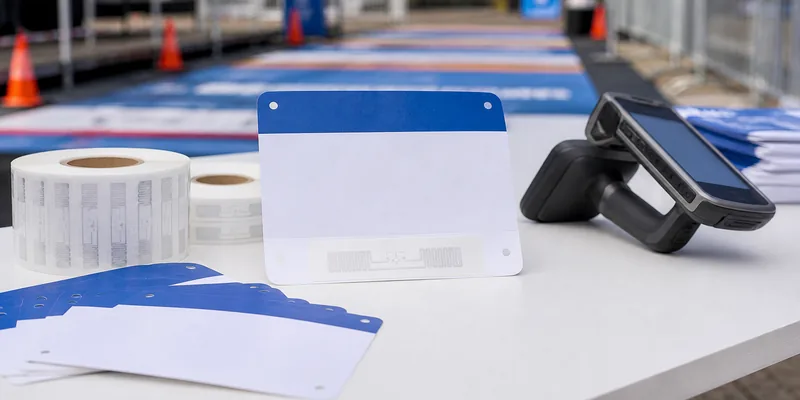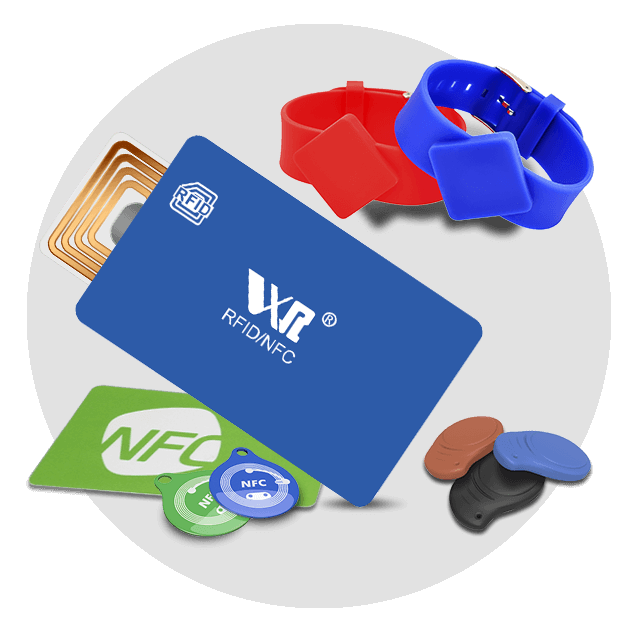

Small NFC tags are useful when you need a simple phone tap interaction in a limited space. They can be built as round stickers, square labels, tiny wet inlays, epoxy tags, cards, key fobs, or custom shapes for product packaging, access control, membership, authentication, and marketing.
The short answer: small NFC tags are best for close-range, one-at-a-time interactions such as opening a product page, verifying an item, sharing contact details, launching an app flow, or identifying a compact asset. They are not the right choice for long-range bulk inventory, large data storage, or difficult surfaces unless the tag design is tested carefully.
What Counts as a Small NFC Tag?
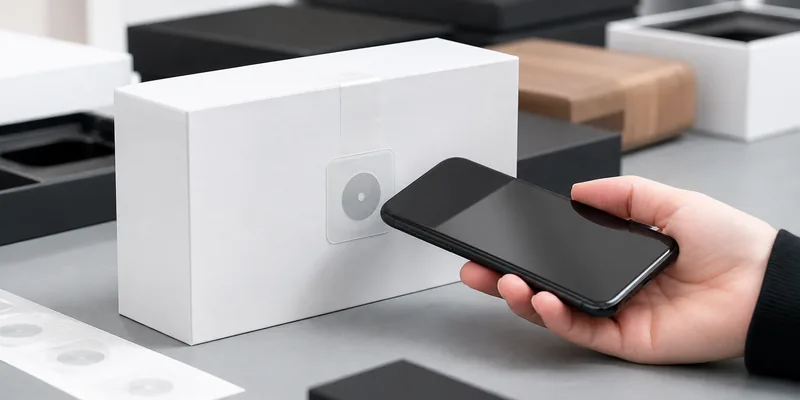
An NFC tag is a passive 13.56 MHz RFID tag that can communicate with an NFC-enabled phone or reader at close range. The tag has a chip and antenna, but no battery. When a phone comes near the tag, the reader field powers the chip and reads the stored data.
"Small" usually refers to the physical format: a compact sticker, label, inlay, coin tag, on-metal mini tag, or embedded tag that must fit on a small product, tool, package, bottle cap, card, accessory, or device housing. WXR supplies custom NFC tags, RFID stickers, and small RFID tags for projects where tag size, material, printing, chip selection, and encoding all matter.
The key tradeoff is antenna area. A smaller antenna can make the tag easier to hide or fit, but it may reduce read distance and make placement more sensitive.
Best Use Cases for Small NFC Tags
Small NFC tags work best when the user can intentionally tap or hold a phone near the tag. Common use cases include:
| Use case | Why small NFC tags fit | What to confirm |
|---|---|---|
| Smart packaging | Adds product information, manuals, warranty registration, or reorder pages without a large label | Sticker material, phone tap location, URL encoding, and anti-tamper needs |
| Product authentication | Helps users check a product ID or open a verification page | UID strategy, security level, locking, and backend workflow |
| Digital business cards | Stores a contact page, profile, or lead capture link in a thin card or sticker | Chip memory, design printing, phone compatibility |
| Events and membership | Supports tap-to-check-in, coupons, loyalty pages, or member ID | Expected scan volume, tag durability, and whether cards or wristbands are better |
| Tools and compact assets | Marks small items that cannot carry a large RFID label | Surface material, read position, and whether NFC or UHF is the better frequency |
| Access and device triggers | Opens a controlled app action, Wi-Fi setup, or maintenance record | Reader system, chip compatibility, and permission model |
For projects where users tap with phones, NFC is usually more natural than UHF RFID. For warehouse inventory where many items must be read at a distance, UHF may be more suitable. WXR's guide on NFC vs RFID is a useful next read when the application is not yet fixed.
Benefits of Small NFC Tags
The biggest benefit is low-friction interaction. A printed package, card, poster, label, or product can become digital without a visible battery, screen, or large device. Users tap and reach the intended page or action.
Small NFC tags are also easy to customize. Buyers can choose chip type, tag diameter, adhesive, waterproof material, anti-metal layer, epoxy finish, printed logo, serial number, QR code, and pre-encoded URL or NDEF message.
For B2B projects, the practical value is control. Instead of printing one static QR code for every product, a brand can encode different URLs, serials, or IDs by batch, SKU, region, or campaign. NFC also reduces scanning friction in situations where a phone tap feels more premium than camera scanning.
Another benefit is compatibility with common NFC phones, especially for simple NDEF records such as URLs, contact links, app links, and short IDs. The NFC Forum maintains specifications that support interoperability across contactless modes, including reader/writer behavior.
Limits You Should Test Before Ordering
Small NFC tags have real limits. The first is read range. NFC is designed for close interaction, and small antennas often require very close placement. Do not select the smallest possible tag until you test it on the real product with the real phone or reader.
The second limit is surface material. Metal can detune a standard NFC sticker and make it unreadable or unstable. Liquids, carbon fiber, dense electronics, curved surfaces, and thick packaging can also affect performance. If the tag will be placed on metal, ask for an anti-metal NFC tag or ferrite-backed structure.
The third limit is memory. NTAG213, NTAG215, and NTAG216 are common NFC chip options with different user memory sizes. WXR's NTAG213 vs NTAG215 vs NTAG216 guide compares common choices. In many projects, NTAG213 is enough for a short URL; NTAG215 or NTAG216 may be better for longer NDEF messages, vCards, or more complex records.
The fourth limit is security. A basic NFC tag is not a full anti-counterfeiting system by itself. If the tag only stores a public URL, someone may copy the link. For authentication, discuss UID usage, password protection, read-only locking, dynamic URLs, tamper-evident labels, or higher-security chip options.
The fifth limit is environment. Adhesive strength, waterproofing, heat, abrasion, cleaning, bending, and UV exposure all depend on material. A tiny paper NFC sticker may be fine for indoor packaging, but not for tools, outdoor products, or washable items.
How to Choose the Right Small NFC Tag
Start with the interaction. Will the user tap with a phone, or will a fixed reader scan the tag? If the project depends on smartphone interaction, choose a phone-compatible 13.56 MHz NFC format. If the project needs long-distance inventory, compare UHF RFID before deciding.
Next, define the mounting surface. For paper, plastic, and cardboard, a standard NFC sticker or wet inlay may work. For metal, choose an anti-metal NFC design. For premium goods, an epoxy tag or custom printed label may protect the antenna and improve appearance.
Then choose the chip and encoding plan. Short URLs usually need less memory. Contact cards, multi-field NDEF messages, or app workflows may need more. Decide whether the data should remain rewritable during testing and locked before shipment.
Finally, test samples. Send WXR your product material, tag size target, read distance expectation, phone models or reader model, environment, printing needs, encoding format, and quantity. The safest procurement process is sample testing before mass production.
Small NFC Tag Testing Checklist
Before rollout, test:
- The smallest acceptable tag size on the real product surface.
- Tap position with both iPhone and Android devices if consumers will scan the tag.
- Read reliability before and after printing, lamination, packaging, or assembly.
- Performance near metal, liquid, electronics, or curved surfaces.
- Adhesive, waterproofing, abrasion resistance, and temperature exposure.
- Encoding, URL redirects, analytics, locking, and backup process.
FAQ
Do small NFC tags work with all smartphones?
Most modern NFC-enabled smartphones can read common NFC tags, but performance depends on phone model, antenna position, tag chip, tag size, and placement. Always test with the phone models your users are likely to use.
Can small NFC tags store a full product page or file?
Usually no. NFC tags store small data records, not large files. A common approach is to encode a short URL that opens a product page, manual, warranty form, or authentication result online.
Do small NFC tags work on metal?
Standard NFC stickers usually do not perform well on metal. For metal products, tools, devices, or containers, choose an anti-metal NFC tag and test it on the exact surface.
Can WXR customize small NFC tags?
Yes. WXR can help with chip selection, tag size, material, printing, logo, serial number, QR code, encoding, and sample testing for custom NFC projects.
Conclusion
Small NFC tags are a strong choice when space is limited and the user interaction is intentional, close-range, and phone-friendly. The main decision is not simply "which tag is smallest?" but "which small tag still reads reliably on the real product?" If you need NFC stickers, inlays, anti-metal tags, or encoded custom samples, contact WXR with your application details and testing requirements.