
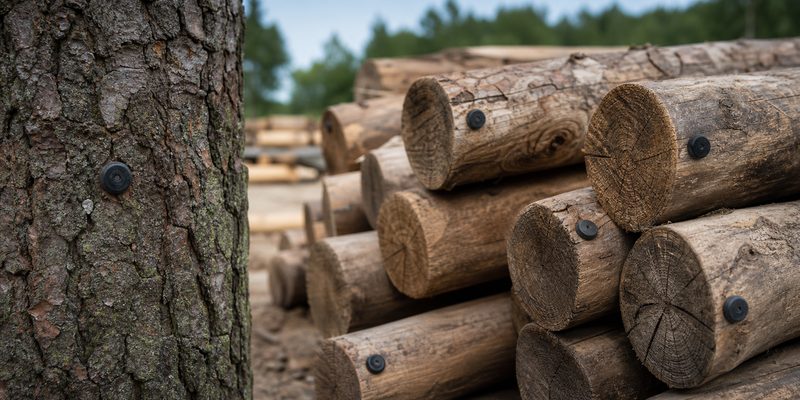
RFID nail tags are useful when a normal adhesive label will not stay on the asset. They are pushed or pre-drilled into wood, tree trunks, timber, pallets, crates, or other non-metallic materials so the identifier stays with the object through handling, weather, and repeated scanning.
For buyers, the hard part is not simply finding a nail-shaped tag. The real decision is matching frequency, chip, housing, installation method, and testing conditions to the way the asset moves. A tag that works on a pallet block in a quiet bench test may behave differently in a yard, near stacked timber, under rain, or when a reader sees the tag from a difficult angle.
This checklist explains what to confirm before ordering RFID nail tags for wood, pallets, trees, and outdoor assets. It is written for project buyers, system integrators, forestry teams, warehouse operators, and distributors who need a sample plan before mass production.
Choose RFID nail tags when the asset is mainly wood or another non-metallic surface, the tag must be mechanically fixed, and the workflow needs a durable ID that is harder to remove than a label or paper tag. Common projects include tree identification, timber traceability, pallet pooling, returnable wooden crates, landscape assets, and outdoor equipment made with non-metal mounting points.
Do not treat a nail tag as a universal rugged tag. If the asset is metal, use an anti-metal RFID tag. If the asset needs long-range portal reading, confirm whether a nail form factor gives enough antenna performance, or whether a larger asset tracking RFID tag is more stable.
1. Define the asset and installation surface first
Start with the physical asset, not the chip. RFID nail tags are usually selected because the mounting surface is rough, curved, exposed, or handled often. Before asking for a quotation, record the asset material, surface hardness, moisture exposure, and whether the tag will be installed in a living tree, dry timber, pallet block, wood crate, plastic component, or cement-like non-metallic material.
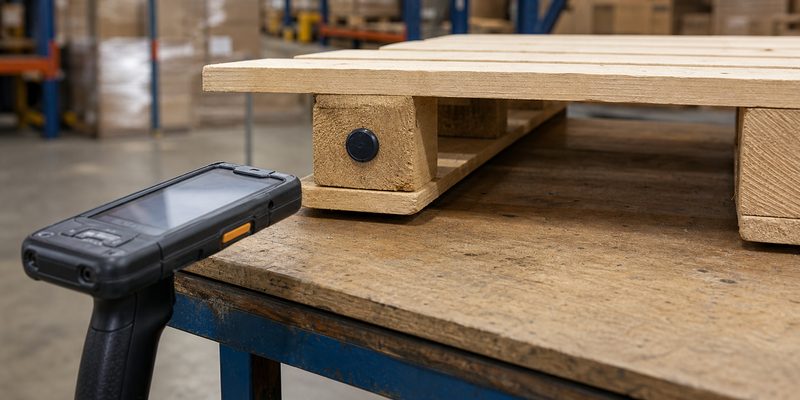
For pallets and crates, the installation point should avoid forklift impact, stacking pressure, and repair zones where boards are replaced. For tree or timber projects, confirm whether the tag is for short-term stock movement, long-term tree identity, inspection records, or origin traceability. These details change the required tag size, frequency, and installation method.
2. Choose frequency by workflow, not by habit
RFID nail tags may be available in LF, HF/NFC, or UHF formats. The right choice depends on reading distance, reader infrastructure, environment, and data workflow.
| Frequency option | Common fit | What to confirm before ordering |
|---|---|---|
| LF 125 kHz | Close-range ID for trees, patrol points, simple asset identity, and harsh material conditions | Reader compatibility, chip type such as TK4100 or EM series, read-only vs writable memory, and installation depth |
| HF 13.56 MHz / NFC | Close-range scanning, phone or handheld interaction, and projects that use ISO 14443 or ISO 15693 systems | Chip family, NDEF or application data needs, phone compatibility if NFC is required, and moisture effects around the tag |
| UHF 860-960 MHz | Pallet, warehouse, timber yard, and batch scanning where longer read distance may be needed | Reader region, antenna placement, EPC/TID encoding, tag orientation, and whether the small antenna can meet the required read zone |
If the project already uses UHF readers, review WXR’s 860-960 MHz UHF RFID tags. For simple close-range identity, compare with 125 kHz RFID tags. The frequency decision should be tested on the actual asset, not only chosen from a catalog table.
3. Specify housing, size, and mechanical strength
A nail tag must survive installation before it can survive the project. Ask the supplier how the chip and antenna are protected inside the housing, what material is used, whether the head is sealed, and whether pre-drilling is recommended. Many nail tags use plastic or composite housings with a nail-like insert, but exact material and dimensions vary by supplier and chip.
Do not hammer samples directly into a hard asset until you know the installation method. Some formats are designed for a drilled pilot hole and gentle insertion with a rubber mallet. For dense wood or knots, forcing the tag can crack the housing, bend the insert, or damage the antenna. A useful sample test includes installation success rate, visual damage, read performance before and after insertion, and removal resistance.
4. Plan encoding before field installation
Encoding is easier to control before tags are installed. Decide whether each tag needs only a fixed UID, an EPC code, a written user memory block, a printed serial number, or a database mapping between tag ID and asset record. For pallet and timber workflows, buyers often need a clean ID rule so warehouse software, inspection apps, or ERP records can connect the physical asset to a history.
Ask the supplier whether tags can be pre-encoded and verified before shipping. For UHF projects, record whether you need EPC, TID, or user memory. If you are new to RFID memory terms, WXR’s guide to TID memory in RFID is a useful starting point. Avoid adding sensitive business data directly to the tag unless the chip, lock settings, and application security model are reviewed.
5. Test with the real reader, asset, and scan path
A sample test should copy the real workflow as closely as possible. For pallet projects, install tags on the same pallet type, then test handheld scans, fixed reader scans, stacked pallets, wet wood, and common orientations. For tree or outdoor asset projects, test at the expected scan distance, with bark texture, moisture, sunlight, dirt, and seasonal access in mind.
Read range depends on reader power, antenna, frequency, chip, tag size, orientation, installation depth, surrounding materials, and local radio rules. Treat catalog ranges as a starting point. If the tag will be read quickly from a moving forklift, gate, or vehicle, a small nail tag may need a different reader layout than a larger label or hard tag.
6. Ask supplier questions that reveal project fit
- Which frequencies and chip options are available for this nail tag shape?
- Is the tag designed for wood only, or also for plastic, cement-like materials, or outdoor non-metal assets?
- What installation method is recommended: direct insertion, pilot hole, rubber mallet, adhesive backup, or screw-like mounting?
- Can the tag be pre-encoded, UID matched, serialized, or packed by asset batch?
- What sample test should be run before mass production?
- How should the tag be placed to avoid impact, repair, cutting, sanding, or pressure damage?
- Which claims need confirmation for your environment, such as waterproofing, temperature exposure, chemical contact, or UV exposure?
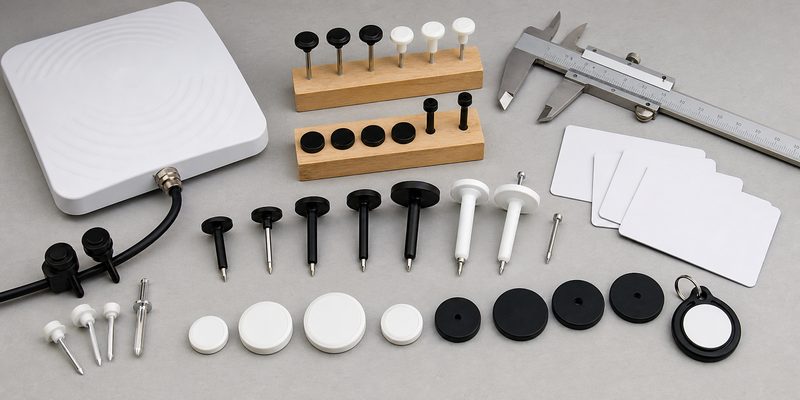
7. What WXR can help customize
WXR can help project buyers compare RFID nail tag options with the wider tag family on tag-rfid.com, including waterproof RFID tags, UHF tags, LF tags, and custom asset tracking formats. For a nail tag request, prepare the asset material, frequency preference, reader model, target read distance, installation surface, data format, sample quantity, and expected environment.
If you are not sure whether a nail tag is the right form factor, start from the application rather than the product name. WXR can compare a nail tag with an adhesive RFID label, hard tag, anti-metal tag, or inlay-based solution depending on the asset. For basic technology background, read what RFID tags are before finalizing the specification.
Procurement checklist before ordering
| Item to confirm | Why it matters | Buyer note |
|---|---|---|
| Asset material and surface | Wood, bark, plastic, and metal behave differently around RFID | Send photos and sample dimensions |
| Frequency and chip | Must match readers and software | List existing reader model and region |
| Installation method | Poor installation can damage the tag | Test pilot hole size and insertion tool |
| Environment | Moisture, UV, pressure, chemicals, and impact affect housing choice | Describe indoor, outdoor, wash, or yard conditions |
| Encoding plan | Prevents duplicated IDs and database confusion | Define UID/EPC/user memory and file format |
| Read test | Confirms real performance before mass rollout | Measure successful reads by location and angle |
FAQ
No. Trees and timber are common uses, but RFID nail tags can also be used on wooden pallets, crates, furniture components, landscape assets, and other non-metallic items when a fixed mechanical installation is needed.
Some UHF nail tags can support longer-range reading than LF or HF options, but the actual distance depends on reader setup, antenna, tag size, orientation, installation depth, and the surrounding material. Test samples in the real workflow before ordering.
Standard nail tags are usually selected for wood or non-metallic surfaces. If the tag must be mounted on metal, compare it with anti-metal RFID tags and test both options on the actual asset.
For custom RFID projects, ask WXR about chip selection, UID or EPC mapping, serial rules, and pre-shipment verification. The final encoding plan should match your reader system and database workflow.
What should I send for a quotation?
Send the application, asset material, frequency or reader model, target read distance, tag size limit, installation method, encoding needs, sample quantity, and environment. This gives the supplier enough information to recommend a realistic sample plan.
Conclusion
RFID nail tags are a practical choice when a wood, pallet, tree, or outdoor non-metal asset needs a durable ID that stays fixed during handling. The best order is not decided by the tag name alone. Confirm the surface, frequency, chip, housing, encoding plan, and scan path, then test samples before rollout.
Need help comparing RFID nail tags with labels, hard tags, or asset tracking tags? Contact WXR with your asset photos, reader setup, and testing goal so the team can recommend a tag format and sample plan.