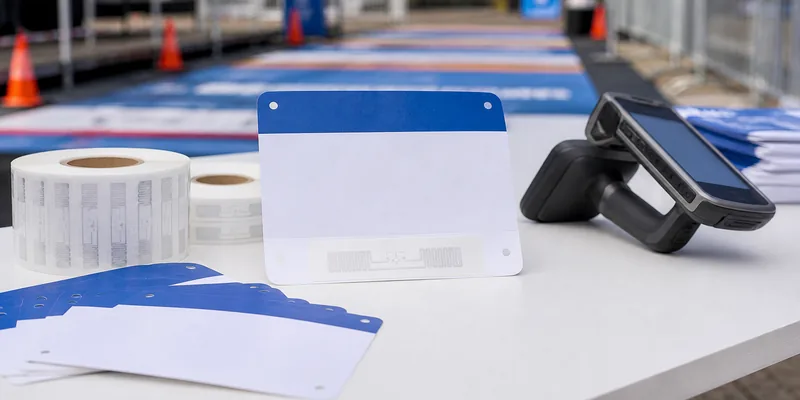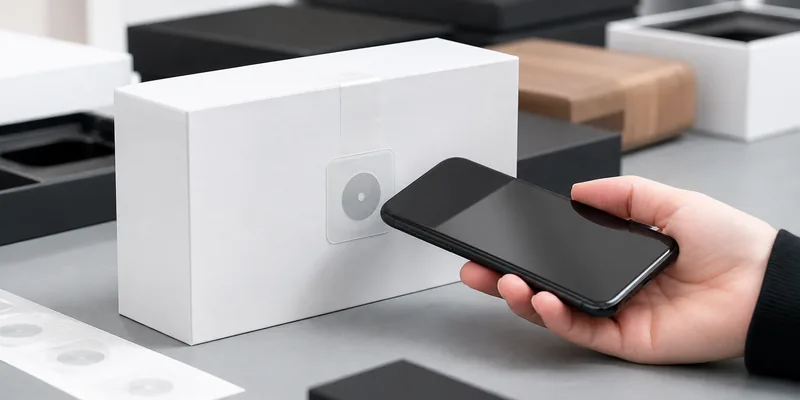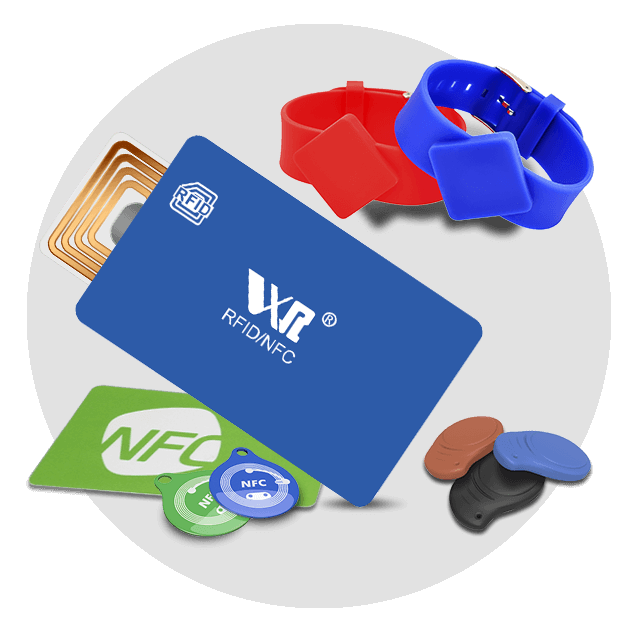

Wet and dry RFID inlays can look similar in a product photo, but they are bought for different production steps. A wet RFID inlay normally includes the chip, antenna, substrate, adhesive, and release liner, so it can be applied or converted into a finished RFID label. A dry RFID inlay is closer to the core chip-and-antenna layer, usually selected by converters or manufacturers that will laminate, embed, or build it into another product.
The best choice is not simply “wet is better” or “dry is cheaper.” It depends on who will convert the material, what surface the tag will identify, which reader system is used, and how printing, encoding, packing, and quality control will be handled before shipment.
Difference: Wet Inlay vs Dry Inlay
Use a wet RFID inlay when you need an adhesive-backed RFID layer for labels, stickers, smart packaging, logistics labels, retail tags, tickets, or other roll-fed converting work. Use a dry RFID inlay when your factory or converter needs the RFID core for lamination into cards, tickets, hang tags, specialty labels, or custom products where the adhesive and face material will be added later.
| Decision point | Wet RFID inlay | Dry RFID inlay |
|---|---|---|
| Basic structure | Chip and antenna with adhesive and release liner | Chip and antenna on a substrate, usually without final adhesive |
| Typical buyer | Label buyer, packaging team, converter needing ready adhesive material | Card maker, ticket maker, converter, OEM product manufacturer |
| Main advantage | Faster conversion or application | More flexible for custom lamination or embedding |
| Main risk | Wrong adhesive, liner, roll direction, or face material | Extra processing responsibility before it becomes a usable tag |
| What to test | Adhesion, print/encode workflow, surface read performance | Lamination process, final tag durability, reader performance after conversion |
Supplier wording can vary. Before approving a quote, confirm the exact layer stack instead of relying only on the words wet or dry.
Start With the Finished RFID Product
Do not choose an inlay before you define the finished tag. The same UHF or NFC inlay may be converted into a simple logistics label, a branded retail hang tag, a product authentication sticker, a ticket, a library label, or a card insert. Each format changes the material and testing requirements.
For a ready-to-apply label project, buyers often compare RFID stickers and labels with RFID inlays to decide whether WXR should supply the inlay, the converted label, or the final printed and encoded roll. For phone-tap packaging, the discussion may start from NFC tags. For warehouse, apparel, carton, and pallet workflows, UHF RFID tags may be the better starting point.
The useful first question is: what does the buyer need to receive in the box? Blank inlay rolls, printable labels, pre-encoded finished labels, cards, tickets, or a custom tag construction?
What to Specify in an RFID Inlay RFQ
An RFID inlay quote should be more specific than frequency and size. Give the supplier enough information to recommend a construction that can survive conversion and read correctly after it is applied.
Include these details:
- Application: retail item, carton, asset, document, smart package, ticket, card, apparel label, or another use case.
- Frequency and protocol: LF, HF/NFC, ISO 15693, ISO 14443A, UHF EPC Gen2, RAIN RFID, or the reader’s required format.
- Chip requirement: EPC, UID, User memory, NDEF capacity, password use, lock rule, or a named chip model.
- Antenna size and label dimensions: available space, orientation, and any printer or die-cut limit.
- Construction: dry inlay, wet inlay, face stock, adhesive, liner, roll core, roll direction, pitch, and finished label format.
- Surface and environment: paper, plastic, glass, textile, cardboard, liquid package, metal, curved surface, heat, humidity, abrasion, or cleaning exposure.
- Data and finishing: logo printing, QR code, barcode, serial number, EPC encoding, NDEF URL, readback file, and packing order.
- Sample plan: final reader, software, product surface, converting process, and acceptance criteria.
When one of these details is unknown, mark it as unknown. Guessing silently creates expensive errors later.
Choose Wet Inlays for Label and Sticker Workflows
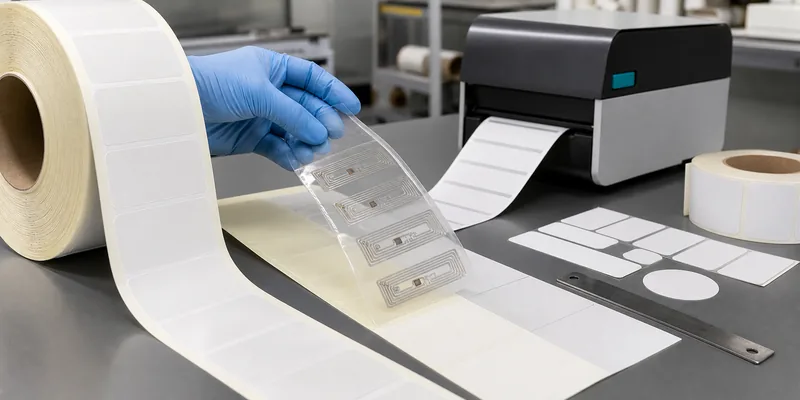
A wet RFID inlay is useful when the project needs an adhesive-backed RFID layer that can be laminated under a printable face, die-cut into labels, or applied to a product or package. This is common in retail labeling, smart packaging, carton tracking, event tickets, logistics labels, library stickers, and product information stickers.
Wet inlays are convenient, but they are not automatically finished labels. A buyer still needs to confirm whether the supplied material includes only the inlay and liner, or whether it also includes face stock, printing, die-cutting, encoding, and final roll packing. A roll that is technically correct can still fail in production if the roll direction does not match the printer, the pitch does not match the applicator, or the adhesive is wrong for the surface.
For wet inlay projects, test the final adhesive and final surface. A label that reads well on paper may behave differently on a curved bottle, a foil pouch, a liquid-filled package, or a dense stack of cartons.
Choose Dry Inlays for Custom Integration
A dry RFID inlay is often better when the inlay will be integrated into another product instead of used directly as an adhesive label. Examples include PVC cards, smart tickets, custom hang tags, laminated credentials, embedded packaging, and specialty RFID products where the converter controls the adhesive, face material, encapsulation, or lamination process.
The advantage is flexibility. The risk is that the buyer or converter owns more of the process. Lamination temperature, pressure, material thickness, antenna placement, die-cut position, and protective layers can all affect final performance. If the dry inlay is damaged during conversion or detuned by the final material, the finished tag may not meet the project goal.
Ask for samples in the final construction, not only raw dry inlay sheets.
Frequency and Chip Still Matter
Wet vs dry describes physical construction. It does not replace frequency and chip selection.
HF and NFC inlays at 13.56 MHz are common for phone interactions, smart packaging, access cards, library labels, and short-range identification. UHF inlays are commonly used for retail inventory, logistics, apparel, warehouse labels, asset tracking, and bulk-reading workflows. LF inlays fit some close-range ID and legacy systems.
Reader compatibility comes first. If the installed system requires a specific chip, memory layout, encoding rule, or regional UHF band, the inlay construction must follow that requirement. For background reading, WXR’s guides to what RFID tags are and LF, HF, and UHF frequency differences are useful before final specification.
Sample Testing Before Bulk Rolls
RFID sample testing should copy the real workflow. Test the same inlay, same adhesive or lamination, same face stock, same encoding, same reader, and same object surface that the production order will use.
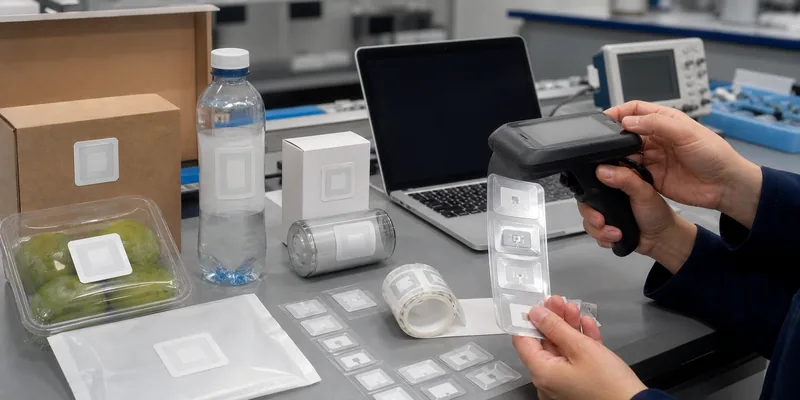
A practical test plan should include:
- Single-label reading on the target surface.
- Reading after printing, encoding, die-cutting, or lamination.
- Multiple-item reads if the workflow requires bulk reading.
- Orientation tests from the normal reader angle.
- Surface tests on paper, plastic, glass, textile, liquid packaging, or metal when relevant.
- Adhesive aging or handling tests when the label will be stored, shipped, bent, cleaned, or touched often.
- Readback verification for encoded EPC, UID reference, serial number, barcode, QR code, or NDEF content.
Do not approve an RFID inlay based only on a maximum read range from a clean lab condition. Real performance depends on antenna design, reader power, reader antenna, orientation, nearby tags, surface material, liquid, metal, and software filtering.
Quality Control and Packing Details
RFID inlay and label orders need traceability. If the buyer receives mixed rolls, wrong roll direction, missing encoding records, or unlabeled sample batches, installation becomes slower and error-prone.
Before mass production, agree on:
- Approved reference sample for each inlay or label type.
- Roll direction, roll core, outer diameter, pitch, and quantity per roll.
- Printing artwork and barcode or QR code rules.
- EPC or NDEF encoding file format.
- Readback file and failed-tag handling.
- Packing labels by chip, size, branch, serial range, or project batch.
- Replacement allowance for field testing and damaged labels.
WXR can help compare custom RFID inlays, converted RFID labels, NFC stickers, UHF labels, and other finished RFID tag formats based on your application, chip, material, printing, encoding, and testing environment.
Common Buying Mistakes
The first mistake is asking for “RFID inlay rolls” without saying what the finished product must do. A library label, retail item label, NFC package sticker, apparel hang tag, and PVC card insert are not the same procurement problem.
The second mistake is treating wet and dry inlays as performance grades. They are construction choices. Performance still depends on chip, antenna, size, reader, surface, conversion process, and environment.
The third mistake is skipping sample conversion. If the final label will be printed, laminated, die-cut, encoded, and applied by machine, the sample should go through those steps before the order is approved.
Conclusion
Choose a wet RFID inlay when you need adhesive-backed material for label or sticker conversion. Choose a dry RFID inlay when a converter or manufacturer will build the RFID core into a custom product. In both cases, the RFQ should define the finished tag, reader system, chip, antenna, material stack, roll format, encoding, packing, and sample test plan.
Not sure which format fits your project? Send WXR your application, frequency, chip requirement, target surface, label size, conversion process, printing, encoding, quantity, and test environment. Contact WXR to discuss RFID inlay samples before bulk production.
FAQ
Is a wet RFID inlay the same as a finished RFID label?
Not always. A wet inlay usually includes adhesive and a release liner, but the final label may still need face material, printing, die-cutting, encoding, inspection, and roll packing.
Is a dry RFID inlay cheaper than a wet inlay?
The raw dry inlay may cost less because it has fewer layers, but the finished project cost depends on lamination, adhesive, face material, conversion labor, testing, and rejection rate.
Can the same chip be used in wet and dry inlays?
Often yes, but confirm the exact chip, antenna design, frequency, memory, and final construction. The physical build can change how the finished tag performs.
Which is better for NFC smart packaging?
Many NFC smart packaging projects use wet inlays or converted NFC labels because they need adhesive-backed material and phone-readable placement. Test the chip, NDEF encoding, package material, and phone tap location before production.
What should I test before ordering RFID inlays in bulk?
Test the final construction on the real surface, with the real reader, software, printing, encoding, roll direction, label pitch, and handling conditions. Include readback verification if the supplier pre-encodes the inlays.