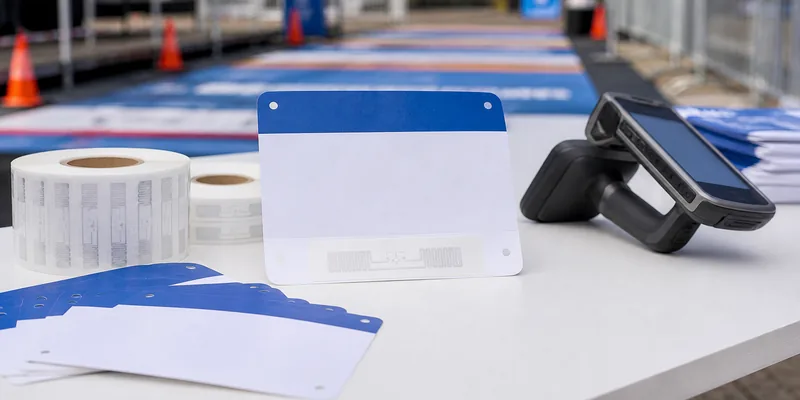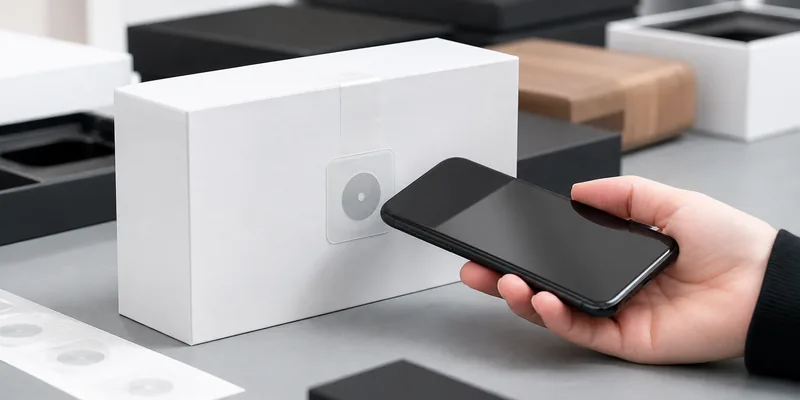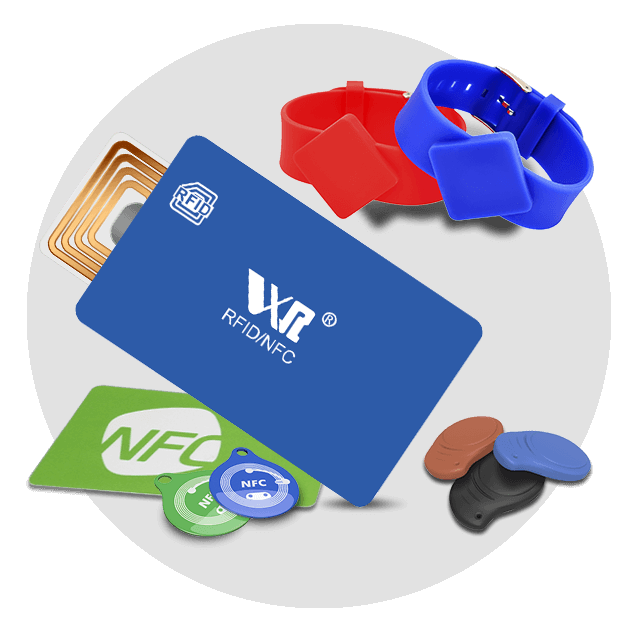
Custom RFID tags are worth specifying carefully before you ask for a quote. The tag format, frequency, chip, surface material, printing, encoding, packaging, and reader setup all affect whether the final tag works in the real project. A supplier can usually recommend a better option when the RFQ includes real use conditions instead of only a target price and quantity.
This checklist is written for buyers, distributors, integrators, and project teams ordering custom RFID labels, NFC tags, cards, wristbands, hard tags, or inlays. Use it before requesting samples from WXR or another RFID manufacturer, then test those samples with the same readers, assets, mounting points, and software workflow planned for rollout.
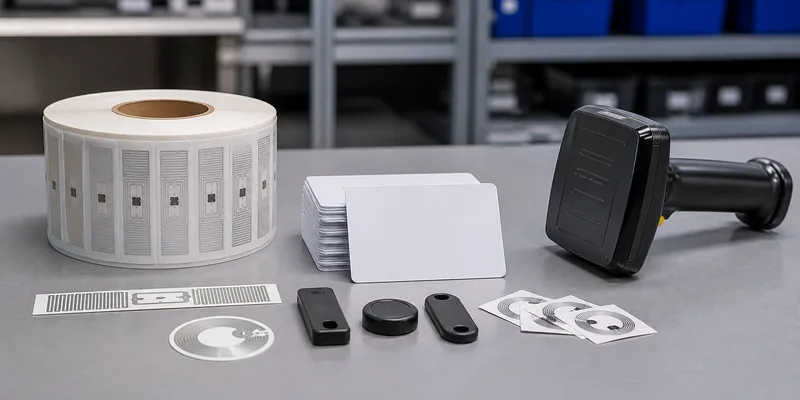
Start With the Application, Not the Tag Shape
The most useful RFQ starts with the job the tag must do. A small NFC sticker for phone interaction, a UHF label for carton inventory, a PVC card for access control, and a hard anti-metal tag for equipment may all be called custom RFID tags, but they do not solve the same problem.
Before choosing a shape, define the object being tagged, the reading action, the expected operator behavior, and the environment. For example, an item-level retail project may need fast group reading with UHF RFID tags, while a phone-based product information campaign usually points toward custom NFC tags. Access control projects may need compatible chips in RFID cards, key fobs, or wristbands rather than adhesive labels.
RFQ Details to Send a Custom RFID Tag Supplier
A short RFQ can create a long chain of follow-up questions. A complete RFQ lets the manufacturer narrow the chip, antenna, material, and finishing method before making samples.
| RFQ item | What to provide | Why it matters |
|---|---|---|
| Application | Asset tracking, access control, laundry, apparel, event, packaging, library, jewelry, vehicle, or another use case | Controls frequency, material, tag form, and test method |
| Frequency and standard | LF, HF/NFC, or UHF; known reader model or required protocol if available | Prevents chip-reader mismatch and regional UHF issues |
| Tagged surface | Plastic, glass, cardboard, textile, metal, liquid-filled package, wood, or curved surface | Surface material changes antenna performance and adhesive choice |
| Tag format | Sticker, label, inlay, card, wristband, key fob, hard tag, anti-metal tag, laundry tag, or custom mold | Defines tooling, converting, attachment, and packaging path |
| Printing | Logo, color, UID, serial number, QR code, barcode, human-readable ID, or blank surface | Connects artwork, print method, and encoded data |
| Encoding | EPC rule, NDEF URL, UID mapping, access system data, lock/password request, or blank chip | Controls data file preparation and verification before shipping |
| Environment | Indoor/outdoor, water, heat, washing, chemicals, impact, abrasion, or UV exposure | Guides material and durability testing without inventing ratings |
| Sample plan | Sample quantity, test readers, mounting method, read points, and pass/fail criteria | Reduces bulk-order risk before mass production |
Choose the Frequency and Chip Around the Reader
Frequency choice should follow the reader and workflow, not a generic assumption that one RFID technology is best. LF is often used for close-range ID and some legacy access or animal projects. HF and NFC are common for smart cards, library tags, phone interactions, and ISO 14443 or ISO 15693 workflows. UHF is common for inventory, logistics, apparel, and asset tracking where longer read range and multi-tag reading are needed.
If the project already has readers, share the exact reader model, frequency, protocol, and any chip requirements. If the software expects a certain EPC format, NDEF record, UID length, memory area, or access-control credential, define that before production. EPC and User Memory can be written on supported chips, but TID is factory-fixed and should be treated as a chip identity reference, not a field to overwrite. WXR’s guide to TID memory in RFID is useful when the data structure is still being planned.
Match the Tag Construction to the Object
The same chip can behave differently when placed in a different antenna, material stack, or housing. A paper RFID label may be fine for cartons, but not for a washable textile. A standard NFC sticker may fail on a metal product unless an anti-metal layer is added. A hard tag may protect the chip better, but it may also require screws, rivets, cable ties, adhesive pads, or a molded attachment point.
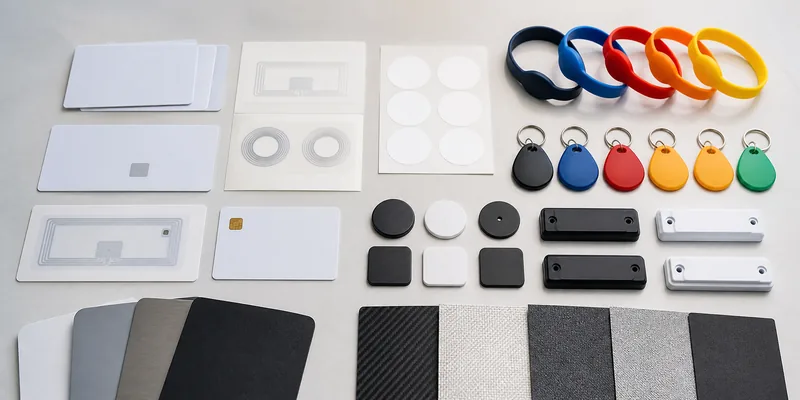
For adhesive projects, send photos of the surface and explain whether the tag is applied by hand, by label applicator, or during packaging. For cards and access credentials, confirm card thickness, chip compatibility, artwork, numbering, and encoding handoff. For event or hospitality projects, RFID wristbands may need different materials, closures, and printing than a reusable staff credential. For labels and stickers, compare RFID stickers and RFID inlays if you also need roll format, converting, or later label production.
Plan Printing and Encoding Before Samples
Printing and encoding are easier to verify when they are treated as one workflow. A buyer may want a logo, barcode, serial number, QR code, UID, or human-readable text printed on the tag surface. The RFID chip may need a matching EPC, NDEF URL, access credential, or customer-specific data record. If the printed ID and encoded ID are related, send the data file format before production instead of after samples are approved.
For NFC campaigns, decide whether the tag should remain rewritable or be locked after encoding. For UHF inventory projects, define whether WXR should encode EPC values before shipping or provide blank tags for on-site encoding. The article Can RFID tags be rewritten? is a useful internal reference when stakeholders are unsure what can be changed after delivery.
How to Test Custom RFID Tag Samples
Sample testing should copy the real workflow as closely as possible. Testing a loose tag on a desk is useful for a first check, but it does not prove that the tag will work on a curved bottle, metal tool, textile seam, jewelry tray, carton stack, vehicle windshield, or crowded shelf.
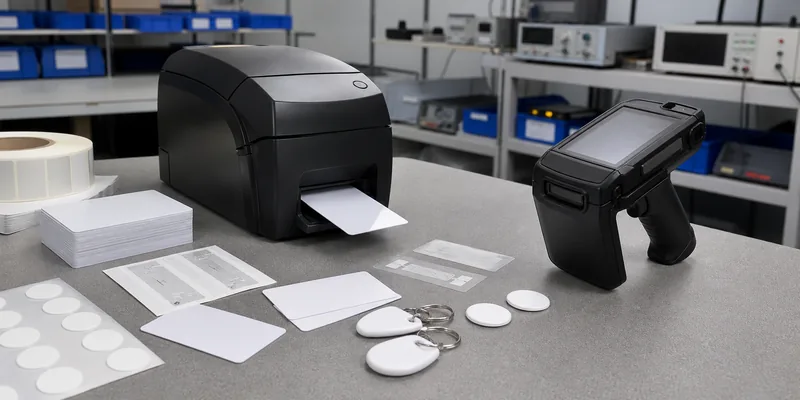
Use a simple test sheet: tag ID, object type, mounting position, reader model, antenna position, read distance target, orientation, read count, missed reads, and notes. Test edge cases too: stacked items, wet surfaces, nearby metal, human handling, washing, outdoor exposure, packaging pressure, or whatever condition is most likely to break the project. If two tag options both work, compare how easy they are to apply, scan, print, encode, pack, and remove.
Common Mistakes That Delay Custom RFID Orders
- Ordering by tag size only, without explaining the reader, surface, or application.
- Choosing UHF, HF, NFC, or LF without checking the installed reader system.
- Assuming an adhesive label will work on metal, liquid, rough plastic, or curved surfaces without testing.
- Approving artwork before confirming where the chip, antenna, barcode, serial number, and logo should sit.
- Sending an encoding file after production has started, which can force rework.
- Testing one sample in ideal conditions and skipping real mounting, orientation, and group-read tests.
- Asking for waterproof, heat-resistant, washable, or outdoor performance without defining the actual exposure conditions.
What WXR Can Customize
WXR can help buyers compare custom RFID tags across chip, frequency, material, size, shape, printing, encoding, and packaging requirements. The best starting point is a short project brief: what you are tagging, how it will be read, where it will be used, what data must be printed or encoded, and how samples will be tested.
If you are not sure which RFID tag format fits the project, send WXR photos of the object, reader information, target workflow, quantity range, artwork needs, and sample test conditions. The team can recommend a tag format and sample plan before mass production. For quote review, use the contact WXR page and include the RFQ details above.
FAQ
Send the application, reader system, frequency, chip requirement if known, tag format, object material, mounting method, print artwork, encoding data, quantity range, packaging needs, and sample test plan. Photos of the tagged object and read point are often more useful than a long written description.
Yes, when the chip and tag format support the requested data. Confirm the printed ID, encoded data, file format, lock/password requirements, and verification method before production. Do not assume every memory area is writable on every chip.
Choose by workflow. Labels and inlays fit packaging and item tracking, cards and key fobs fit access systems, NFC stickers fit phone interactions, and hard or anti-metal tags fit demanding asset environments. Samples should be tested on the actual object before a bulk order.
How many samples should I test before mass production?
There is no universal number. Test enough samples to cover the real surfaces, tag positions, reader locations, orientations, and difficult conditions in the project. If the project has several product types or environments, test each group separately.
What affects the read range of a custom RFID tag?
Read range depends on the tag antenna, chip, frequency, reader power, antenna design, region settings, object material, tag orientation, nearby metal or liquid, and surrounding RF noise. Treat supplier read-range figures as a starting point, then verify with your own setup.