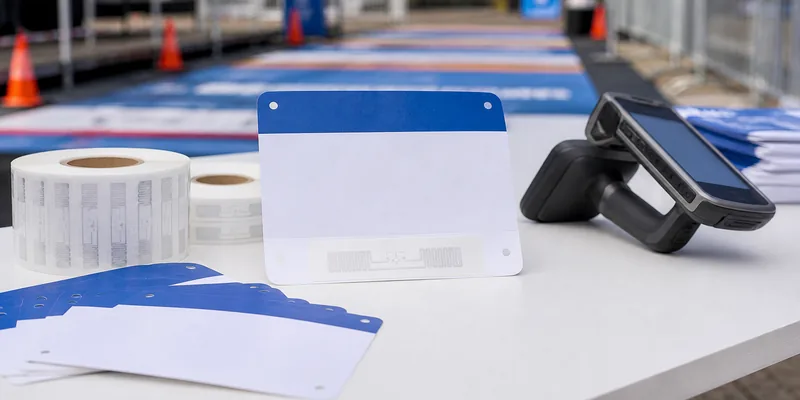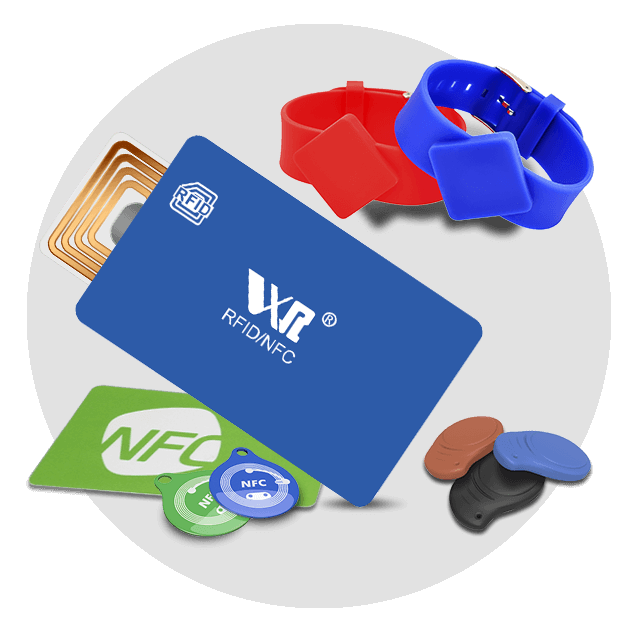

RFID for manufacturing works best when the tag specification is built around the exact object being tracked: work-in-process parts, returnable bins, tools, fixtures, pallets, or finished goods. For most production-floor inventory and WIP tracking, buyers compare UHF RFID labels, hard anti-metal tags, small rugged tags, and sometimes HF/NFC tags for close-range operator actions. The right choice depends on surface material, read point design, temperature, oil or cleaning exposure, encoding needs, and how the RFID data will enter the MES, ERP, or warehouse system.
Manufacturing RFID projects often fail at the tag-selection stage. A generic label is tested on a difficult surface, then every gate, handheld reader, and workstation is expected to behave the same. Start by defining the event to capture: a bin entering a process step, a tool returning to a cabinet, a fixture moving through inspection, a pallet leaving the line, or a component becoming finished inventory.
This guide turns the broad idea of RFID for manufacturing into a practical buyer checklist for selecting RFID tags before a factory rollout.
Where RFID Fits in a Manufacturing Workflow
RFID is useful when a factory needs faster identification without line-of-sight scanning. Unlike a barcode, an RFID tag can often be read through packaging, on a moving tote, or in a group of tagged items, depending on reader setup and tag orientation. That makes RFID attractive for WIP tracking, tool control, returnable transport items, inventory counts, maintenance assets, and dispatch verification.
It is not a replacement for every label. If an operator must confirm one item by hand at a bench, a barcode or NFC tag may be enough. If the goal is to read many bins at a dock door or track fixtures through multiple work cells, UHF RFID is usually the stronger candidate.
Choose the Tag by Asset Type, Not by Keyword Alone
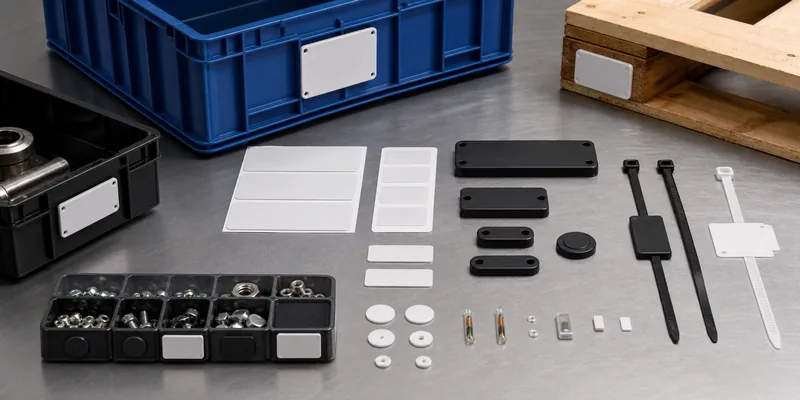
A manufacturing floor can contain plastic bins, metal tools, painted fixtures, cardboard packaging, rubber parts, pallets, and finished products in the same workflow. One RFID tag format rarely fits all of them.
| Manufacturing object | Common RFID option | What to confirm before ordering |
|---|---|---|
| Plastic bins and totes | UHF RFID labels or durable stickers | Read distance, label adhesive, curve radius, cleaning exposure, and encoding format |
| Metal tools and fixtures | Anti-metal RFID tags or hard tags | Mounting method, thickness, impact risk, reader distance, and tag orientation |
| Small components | Small RFID tags, compact labels, or HF/NFC tags | Available surface area, memory need, read zone size, and whether group reading is required |
| Pallets and returnable racks | Long-range UHF tags or rugged hard tags | Outdoor exposure, attachment, forklift read points, and regional UHF frequency range |
| Finished goods packaging | UHF RFID labels or printed RFID stickers | Packaging material, printer/encoder compatibility, EPC serialization, and customer data rules |
For adhesive manufacturing labels, review WXR’s RFID stickers and labels. For antenna format and wet/dry inlay decisions, the RFID inlay category is a useful next step. If the item is metal, start with anti-metal RFID tags.
Frequency Selection: UHF, HF/NFC, or LF?
UHF RFID is commonly selected for manufacturing inventory because it supports longer read ranges and faster group reading than HF/NFC. It is the usual choice for dock doors, pallet movement, bins on conveyors, and finished goods inventory. For buyers comparing UHF options, WXR’s 860-960 MHz UHF RFID tags page is the most relevant product path.
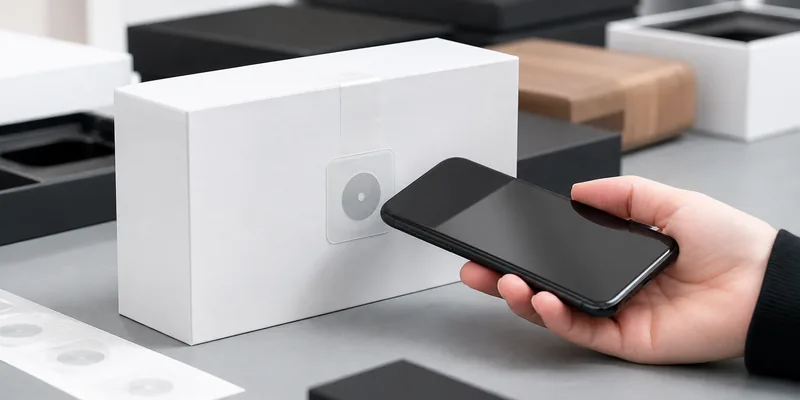
HF/NFC can make sense when the operator intentionally taps or reads one item at close range, such as maintenance verification, operator instructions, sample identity, or phone-based inspection. LF is more specialized and is less common for general manufacturing inventory. For a broader technical comparison, use WXR’s guide to LF, HF, and UHF frequency differences.
Metal, Oil, Heat, and Mounting Surface Matter
Manufacturing environments are rarely as friendly as a clean office asset-tracking test. Metal can detune a normal RFID label. Oil can weaken adhesives. Curved surfaces can bend the antenna. Heat, vibration, abrasion, or wash-down cleaning can damage a tag that looked fine in a sample photo.
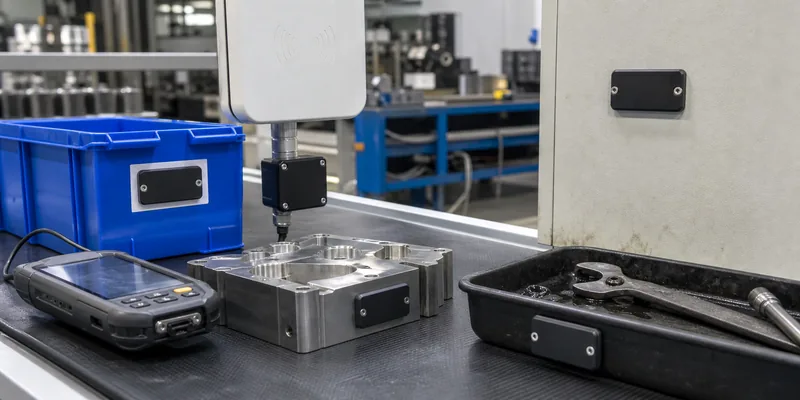
Before ordering bulk RFID tags, prepare a surface map. List object type, material, flat area, mounting direction, temperature, cleaning process, mechanical contact, and outdoor exposure. Ask the supplier to recommend samples against that map, not against the application name alone.
For tools, machines, fixtures, and IT or maintenance assets, also compare asset tracking RFID tags. If the project includes outdoor racks, wet processes, or washable containers, review waterproof RFID tags and verify the actual cleaning and exposure conditions before publishing a specification.
Define Encoding and Data Rules Early
In a manufacturing project, the physical tag is only half the decision. The other half is what the ID means to your software. A UHF tag may carry an EPC, and some projects also use TID or User memory depending on the workflow. Avoid leaving encoding rules until the day before mass production.
Clarify these items before the sample order:
- Whether each tag needs a unique serialized EPC, a printed barcode, a QR code, or human-readable number.
- Whether the RFID ID maps to a work order, fixture ID, tote ID, tool ID, batch, or finished item.
- Whether data is encoded by the tag supplier, printed and encoded in-house, or written at first use.
- Whether the system needs to read only EPC, verify TID, or use additional memory.
- Whether failed reads, duplicate reads, and exception events have a clear handling rule.
If your team is still defining EPC, TID, and memory fields, WXR’s article on TID memory in RFID is a useful technical reference.
Build a Pilot Test Before Bulk Production
A useful RFID pilot does not only ask, “Can the reader see the tag?” It tests whether the tag can be read consistently at the real process point, with the real object, in the real orientation, while operators work normally.
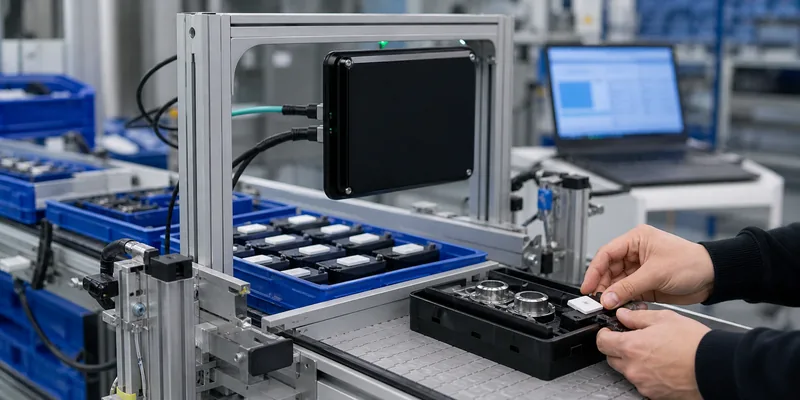
Sample Test Checklist
- Test each tag on the real material: plastic, metal, cardboard, coated parts, racks, or tools.
- Try the expected tag position and at least one fallback position.
- Measure reads at the actual reader distance and antenna angle, not only at a desk.
- Check single-item reads and multi-item reads separately.
- Run the test after handling, cleaning, movement, or heat exposure when those conditions apply.
- Record no-read zones, misreads, duplicate reads, and operator steps that create errors.
For read-distance planning, also review WXR’s guide to RFID read range and sample testing.
Questions to Send an RFID Tag Supplier
A strong RFQ should give the supplier enough detail to recommend the tag format without guessing. Include the application, object material, available tag area, target read distance, reader type if known, expected environment, print or encoding needs, quantity range, and sample-test plan.
For example, “RFID for manufacturing inventory” is too broad. A better request is: “We need UHF tags for reusable plastic bins moving through three read points in an assembly line. The flat label area is 60 x 25 mm, target read distance is 1.5 m, and each tag needs serialized EPC encoding plus a printed number.” That gives the supplier a real specification to work with.
WXR can help compare RFID labels, anti-metal tags, small RFID tags, and UHF inlays for manufacturing use. Send your object photos, surface details, reader setup, read-range target, printing design, and encoding rules through the WXR contact page so the team can suggest samples before mass production.
FAQ
What is the best RFID tag for manufacturing?
There is no single best tag. UHF RFID labels often fit bins, packaging, and pallets, while anti-metal tags are usually needed for metal tools, fixtures, and machine assets. The best choice depends on material, read distance, mounting method, and the event being tracked.
Yes, but standard RFID labels usually perform poorly on metal. Use anti-metal RFID tags or a tested spacer/mounting method, then verify performance with the actual tool shape, reader distance, and storage layout.
Use UHF when you need longer-range or multi-item reading, such as bins passing a read point or pallets moving through a dock. Use NFC or HF when the operator needs deliberate close-range interaction with one item.
Most projects need a unique ID that maps to the software record. Depending on the system, this may be an EPC, a tool ID, a tote ID, a work-order link, or another serialized identifier. Confirm the data rule before ordering encoded tags.
How should buyers test RFID samples before a factory rollout?
Test tags on the real item, at the real read point, with the expected mounting position and workflow speed. Record failed reads, orientation problems, surface issues, and operator handling problems before approving the final tag.