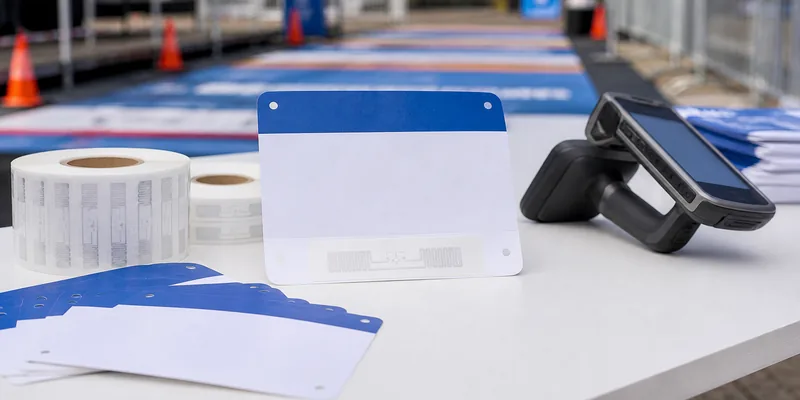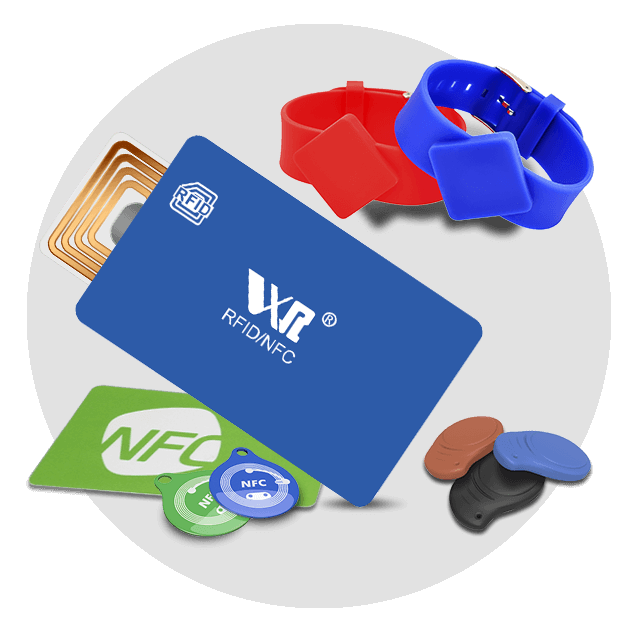

RFID tags and EAS tags are often discussed together because both appear on retail merchandise. They solve different problems. EAS is mainly an exit-alarm technology for loss prevention. RFID identifies individual items, so it can support inventory counts, stock visibility, replenishment, checkout workflows, and, when integrated correctly, loss-prevention signals.
For a retailer, the choice is not simply “RFID or EAS.” A store that only needs a simple alarm at the door may continue using EAS. A retailer that wants item-level inventory accuracy, faster stock counts, omnichannel fulfillment, and serialized merchandise data should evaluate RFID. Many apparel and footwear projects use RFID for inventory and may still keep EAS or an RFID-based security workflow depending on store systems, tag format, and budget.
| Question | RFID Tags | EAS Tags |
|---|---|---|
| Main purpose | Identify a specific item with a unique encoded ID | Trigger or clear an alarm condition at store exits |
| Typical retail use | Inventory counting, receiving, replenishment, item lookup, checkout support | Shoplifting deterrence and exit detection |
| Data capability | Can carry EPC or other item identifiers depending on chip and encoding | Usually does not provide item-level identity |
| Best fit | Retailers that need stock visibility across stores, stockrooms, and online fulfillment | Stores that primarily need a low-complexity security gate signal |
| Procurement risk | Reader, antenna, tag placement, encoding, software, and SKU data must be tested together | Gate type, label type, deactivation/removal process, and store operations must match |
What an EAS Tag Does Well
EAS, short for electronic article surveillance, is built around a simple store-security task: detect an active label or hard tag as merchandise passes through an exit zone. In practice, this can be useful. A fashion shop, pharmacy, bookstore, or electronics store may already have EAS gates, detachers, deactivators, and staff procedures in place.
The strength of EAS is operational simplicity. Staff know that the tag must be removed or deactivated at checkout. If an active tag reaches the exit, the gate can alert store staff. For retailers that only need that alarm function, EAS can be easier to understand than a full RFID data project.
The limitation is that an EAS alarm normally does not tell the retailer which item triggered the event, whether that item was already counted in inventory, or whether the stock record is wrong. EAS can help discourage theft, but it does not create item-level inventory intelligence by itself.
What RFID Adds for Retail Inventory
RFID tags are used when the retailer needs to identify items, not just protect exits. A UHF RFID apparel label, hang tag, or inlay can be encoded with an item identifier. Readers can then detect many tagged items without line-of-sight barcode scanning.
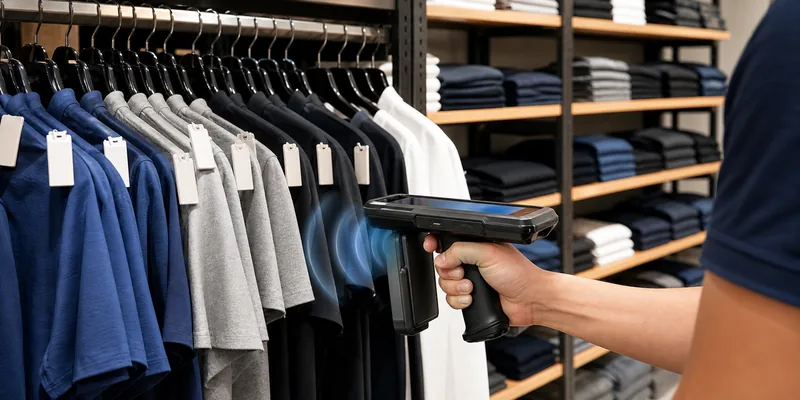
That changes the workflow. Store staff can count racks, stockroom shelves, boxes, and return areas faster than manual barcode scanning. Distribution centers can verify cartons and outbound orders. Retail teams can investigate out-of-stock problems, misplaced items, and replenishment gaps with better item visibility.
For apparel, footwear, accessories, and other SKU-heavy categories, RFID is usually considered when inventory accuracy affects sales, online pickup, returns, or store labor. WXR’s RFID clothing tags, RFID inlays, and 860-960MHz UHF RFID tags are relevant formats to compare when the project is built around item-level retail inventory.
When Retailers Use Both RFID and EAS
Some retail teams do not replace EAS on day one. They use RFID for inventory visibility and keep EAS for the existing exit-security process. Others move toward RFID-enabled exit monitoring after they have the reader infrastructure, tag encoding, and point-of-sale integration to support it.
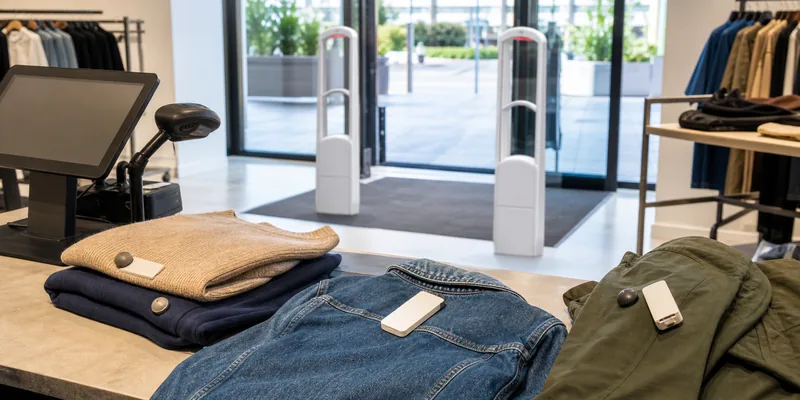
This combined approach can make sense when loss prevention and stock accuracy are both important, but the organization cannot change every process at once. It also avoids a common mistake: assuming an RFID tag automatically solves theft detection just because it can be read at a distance. RFID security depends on reader placement, shielding, tag orientation, POS status, event rules, and how the store handles exceptions.
If a retailer already has EAS gates, the first question is whether the project objective is security only, inventory only, or both. That answer controls the tag format, system design, and testing plan.
How to Choose the Right Tag Format
For retail RFID, the physical tag is as important as the chip. Apparel hang tags, care labels, stickers, wet inlays, and source-tagged packaging all behave differently. Tag size, antenna design, placement, material, and how close items sit to each other will affect read performance.
Start with the merchandise type. A paper swing tag may work for apparel. A discreet adhesive label may fit boxed goods. A small tag may be needed for accessories. For metalized packaging or unusual surfaces, buyers should test carefully rather than assuming a standard inlay will work. If the product surface is difficult, review options such as anti-metal RFID tags or adjusted label placement.
Then define encoding. Many retail RFID projects use EPC-style item identifiers, but the actual data structure should come from the retailer, system integrator, or brand owner. Do not approve mass production until the encoding rule, barcode/SKU relationship, TID or UID handling, lock policy, and readback file format are clear.
A Practical Sample Test Before Rollout
The safest way to compare RFID tags vs EAS tags is not a spreadsheet alone. Test the process in the store or stockroom where the tags will be used.
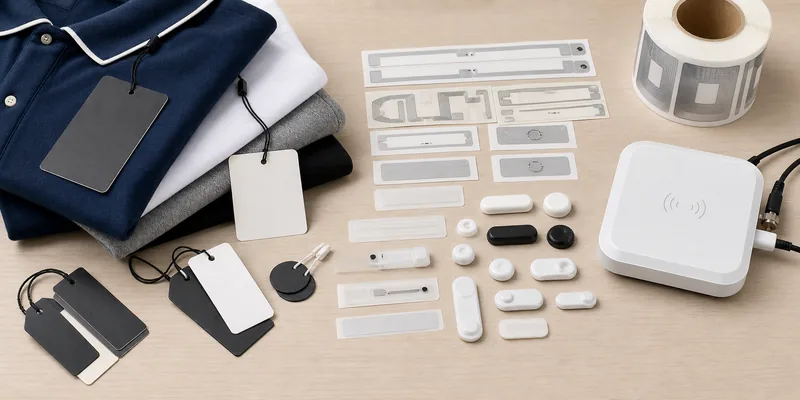
For RFID, test tagged samples on real merchandise, with real readers and normal staff movement. Include dense racks, folded stacks, cartons, metal fixtures, mirrors, checkout counters, and returns areas. Measure whether the team can read the items they need to read, not the maximum distance observed in an ideal room. For more detail on performance variables, WXR’s RFID read range testing guide is a useful companion.
For EAS, test the gate, tag removal or deactivation process, false-alarm handling, and staff workflow. If both systems are used, test what happens at checkout, return, exchange, and exit. A successful pilot should prove the workflow, not just the label.
Questions to Ask Before Ordering
- Is the main goal inventory visibility, exit security, or both?
- Which merchandise categories will be tagged first?
- Will tags be applied by the supplier, warehouse, store staff, or brand owner?
- What chip, memory, EPC format, or encoding rule is required?
- Will the same tag support receiving, stock counts, checkout, and returns?
- Does the tag need printing, barcode, QR code, logo, size control, or custom packing?
- How will exceptions be handled when a tag fails, is removed, or is unreadable?
- Which samples must be approved before mass production?
How WXR Can Support Retail RFID Tag Projects
WXR can help retail buyers and system integrators compare RFID inlays, apparel hang tags, RFID labels, UHF chips, printing, encoding, and packing options before bulk production. If your project is still comparing RFID and EAS, the useful next step is to define what data the store needs from each tagged item and where that data must be read.
Send WXR your merchandise type, tag size, application surface, reader setup, encoding requirement, artwork, quantity, and sample test environment. You can contact WXR to request retail RFID samples and check whether a standard or custom tag format fits your rollout.
FAQ
No. EAS tags are mainly used for exit alarm detection. RFID tags identify individual items and can support inventory, receiving, replenishment, checkout, and security workflows when the system is designed for it.
Can RFID replace EAS in retail stores?
Sometimes, but not automatically. RFID can support security workflows only when readers, POS status, software rules, and exception handling are integrated. Many retailers evaluate RFID for inventory first and decide later how much EAS functionality to keep.
Which RFID frequency is common for apparel retail?
Many item-level apparel projects use UHF RFID because it can read multiple items efficiently in inventory workflows. The final choice still depends on reader setup, tag placement, product material, and software requirements.
No tag prevents theft by itself. RFID can provide item visibility and event data, while EAS can provide a simple exit alarm. Loss-prevention performance depends on the whole store process.
Test the final chip, tag size, antenna, placement, encoding, reader, software workflow, merchandise type, and staff process before mass production. Include difficult products and dense display conditions, not only easy samples.