
NFC business cards look simple: tap a phone and open a profile, contact page, product catalog, or lead form. The hard part is choosing the card specification that will still work well after printing, encoding, shipping, and daily use.
For most projects, the safest NFC business card is a printed PVC card with an NTAG chip and a short dynamic URL. Choose metal when the brand needs a premium feel and the supplier can prove the NFC tap area works reliably. Choose wood, bamboo, or paper when the material supports the campaign story and the expected card life is shorter. For any custom rollout, confirm the material, chip, NFC record, QR backup, and sample test results before mass production.
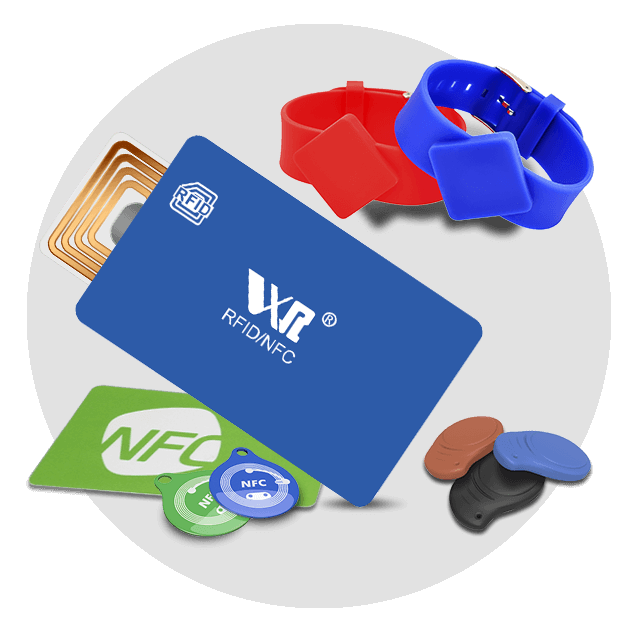
Quick Comparison: NFC Business Card Options
| Card type | Best for | Main tradeoff | Confirm before ordering |
|---|---|---|---|
| PVC or PET NFC card | Sales teams, staff cards, repeat daily use | Practical and durable, but less premium than metal or wood | Thickness, finish, chip, printing, encoding, QR/serial needs |
| Metal NFC card | Executives, VIP gifts, luxury brands | Premium feel, but metal can block NFC if the structure is wrong | NFC tap area, anti-metal design, insert position, phone testing |
| Wood or bamboo NFC card | Eco, hospitality, lifestyle, and wellness brands | Natural look, but grain and print color can vary | Engraving effect, moisture resistance, flatness, edge finish |
| Paper or laminated NFC card | Events, conferences, short-term campaigns | Lower cost, but less durable for daily wallet use | Lamination, edge protection, expected card lifetime |
| NFC sticker or inlay | Pilots and retrofitting existing cards | Fast to test, but surface material affects reading | Adhesive, placement, card surface, phone scan position |
Start With the Tap Experience
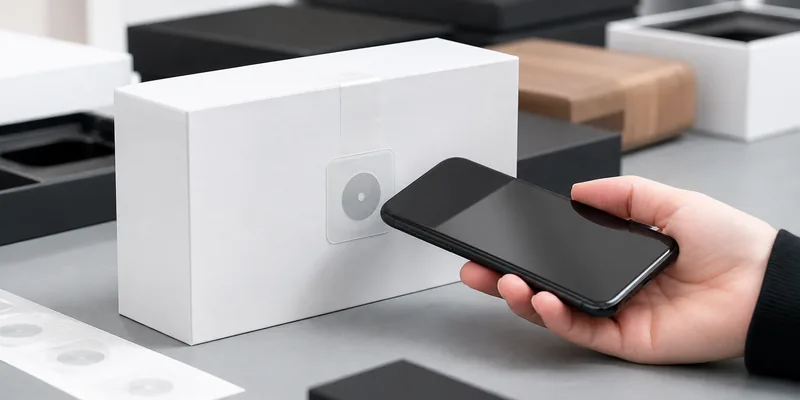
Before choosing a material, decide what should happen after someone taps the card. A short URL is usually the best NFC record for business cards because the destination can be changed later without re-encoding every card. The URL can open a digital profile, contact form, LinkedIn page, WhatsApp chat, product catalog, or campaign landing page.
Storing a full vCard directly on the chip can work, but it uses more memory and is less flexible. If the card also needs access control, membership ID, or a closed reader system, confirm the reader and chip requirement first. A simple phone-tap NFC card and an access-control smart card are not always the same specification.
Choose the NFC Chip by Data Size
For phone-based NFC business cards, 13.56 MHz NFC chips that support NDEF records are the normal choice. NTAG213, NTAG215, and NTAG216 are common options.
- NTAG213: a good fit for a short URL, profile link, or basic campaign page.
- NTAG215: useful when the record needs more space or the project may change later.
- NTAG216: the safer choice for larger records, longer URLs, or projects where the final encoded data is not fixed yet.
For many custom NFC business cards, NTAG213 is enough when the chip only opens a short dynamic URL. NTAG215 or NTAG216 becomes useful when you need larger data or extra margin. Before bulk ordering, ask the supplier to encode your actual record on a sample and confirm it scans correctly. WXR has a practical guide to NTAG213, NTAG215, and NTAG216, plus related information on 13.56 MHz RFID tags.
Match the Material to the Project
PVC and PET are the practical default. They support full-color printing, matte or glossy finishes, QR codes, serial numbers, and standard wallet-friendly dimensions. If you need hundreds or thousands of consistent team cards, this format is easier to control and reorder.
Metal NFC business cards are different. Metal can interfere with the antenna, so the card needs an engineered tap area, anti-metal layer, or non-metal insert. Do not approve a metal card from appearance alone. Test with iPhone and Android phones, with and without common phone cases, and make the tap position clear in the design if necessary.
Wood, bamboo, and paper cards are stronger brand choices than technical defaults. Wood and bamboo work well for natural, hospitality, and lifestyle positioning, but grain and engraving vary from card to card. Paper or laminated cards are better for short-term events where distribution volume matters more than long service life.
Plan Printing, QR Backup, and Encoding
A QR code is still useful even when NFC is the main feature. It gives users a fallback when NFC is blocked by a thick case, unfamiliar to the recipient, or not triggered on the first tap. For business cards, a good layout often combines NFC, QR code, logo, name, title, and a short call-to-action.
Before artwork approval, decide whether all cards use the same URL or each employee needs a unique profile link. Confirm whether the chip should remain rewritable, be password-protected, or be locked after encoding. Also check whether you need UID, serial number, QR code, barcode, or employee number printing. If the destination may change later, use a redirect or profile platform instead of encoding a long final URL directly. For more background, see WXR’s guide on whether RFID and NFC tags can be rewritten.
Test Samples Before Mass Production
Ask for samples using the same chip, material, finish, thickness, and printed design planned for production. Then test the real user experience: tap with several iPhone and Android models, scan with common phone cases, check the front and back tap positions, open the encoded URL or NDEF record, and scan the printed QR code under normal office and event lighting.
For metal, wood, or unusual card structures, test more than one sample. For company rollouts, record the approved chip, URL format, artwork version, finish, dimensions, and encoding rule. This makes future reorders easier and reduces the chance of a second batch behaving differently.
Common Buying Mistakes
The biggest mistake is choosing the best-looking card before defining the NFC workflow. A premium card that scans poorly will create support problems. Another mistake is encoding too much data when a short dynamic URL would be easier to manage. Teams also forget that phone model, case thickness, antenna position, card material, and tap location can all affect scan behavior.
NFC business cards are more than a software profile. The physical card still needs the right chip, antenna, substrate, printing, encoding, and QC process.
How WXR Can Support Custom NFC Business Card Projects
WXR manufactures custom NFC and RFID products for project buyers, distributors, and system integrators. For NFC business card projects, WXR can help compare custom NFC tags, card materials, NTAG chip options, logo printing, QR/serial printing, data encoding, and sample testing. If your project also connects with access control or staff ID, review WXR’s custom RFID cards options as well.
To get a practical recommendation, prepare your application, quantity, preferred material, artwork, chip requirement, URL or NDEF record, personalization needs, and target delivery plan. You can contact WXR to discuss your NFC project and request samples before mass production.
FAQ: Choosing NFC Business Cards
What is the best NFC chip for business cards?
For a simple profile URL, NTAG213 is often enough. Choose NTAG215 or NTAG216 when you need more memory for larger records, richer data, or future encoding changes.
Are metal NFC business cards reliable?
They can be reliable when the card is designed for NFC reading. Confirm the tap area, anti-metal structure, and phone test results before mass production.
Should I encode a vCard or a URL?
A URL is usually better because it can point to a profile or landing page that can be updated later. A vCard can be useful for offline contact sharing, but it uses more memory and is less flexible.
Can NFC business cards be customized for each employee?
Yes. Cards can be printed and encoded with unique names, profile URLs, QR codes, serial numbers, or IDs. The project needs a clean data file and an approved encoding rule before production.
What should I test before ordering in bulk?
Test the chip, material, phone compatibility, tap position, QR backup, printed finish, and encoding behavior. For metal, wood, or unusual card structures, sample testing is especially important.