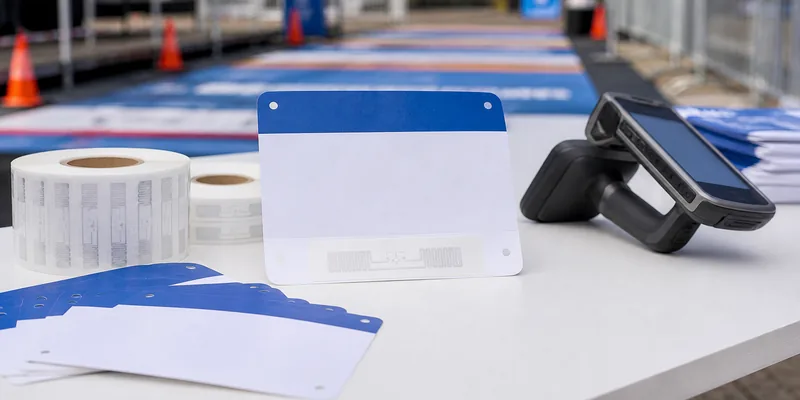

An RFID inlay is the core electronic part inside many RFID labels, stickers, cards, tickets, and tags. It usually contains a tiny RFID chip, also called an IC, and an antenna attached to a thin substrate such as PET.
The antenna receives radio waves from an RFID reader. The chip stores identification data and communicates back through the antenna. In passive RFID inlays, the chip has no battery; it is powered by the reader’s radio signal during the read event. In simple terms, the inlay is the “engine” of an RFID product, while the finished label or tag adds adhesive, printing, housing, or protection.
RFID Inlay vs RFID Label vs RFID Tag
These terms are often used loosely, but they are not identical.
| Term | What it means | Typical buyer question |
|---|---|---|
| RFID inlay | Chip and antenna on a carrier substrate | Which chip, antenna, and frequency do I need? |
| RFID label | Inlay converted into a printable adhesive label | Can it be printed, encoded, and applied? |
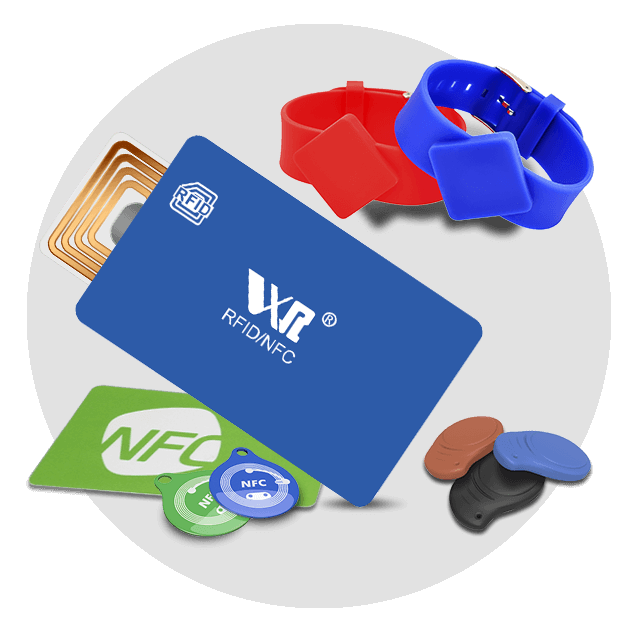
| RFID tag | Finished product such as a label, card, hard tag, wristband, or key fob | Will it survive and read reliably? |
If you are buying for label converting, smart packaging, retail inventory, or logistics, you may start by choosing an RFID inlay. If you need a ready-to-use product, ask for an RFID label, sticker, card, or another finished tag format.
What Are Dry and Wet RFID Inlays?
RFID inlays are commonly described as dry or wet.
A dry RFID inlay is the basic chip-and-antenna assembly on a substrate. It is usually used by converters or manufacturers who will laminate it into a finished product.
A wet RFID inlay adds adhesive and a release liner, making it easier to convert into RFID labels or stickers. In many label projects, the wet inlay is placed under a printable face material, then die-cut and encoded for the application.
Supplier wording can vary, so confirm the actual construction before ordering: substrate, adhesive, liner, face stock, printing, encoding, and final roll format.
How an RFID Inlay Works
An RFID system has a reader, reader antenna, RFID inlay or tag, and software. When the reader sends a radio signal, the inlay antenna receives it. The RFID chip powers up, processes the command, and sends back data such as an EPC, UID, serial number, or other encoded information.
Read performance depends on antenna design, frequency, reader power, tag orientation, nearby materials, liquid, metal, and package shape. Serious RFID projects should test samples on the actual products or assets before mass production.
Common RFID Inlay Frequencies
RFID inlays can be designed for different frequencies and standards.
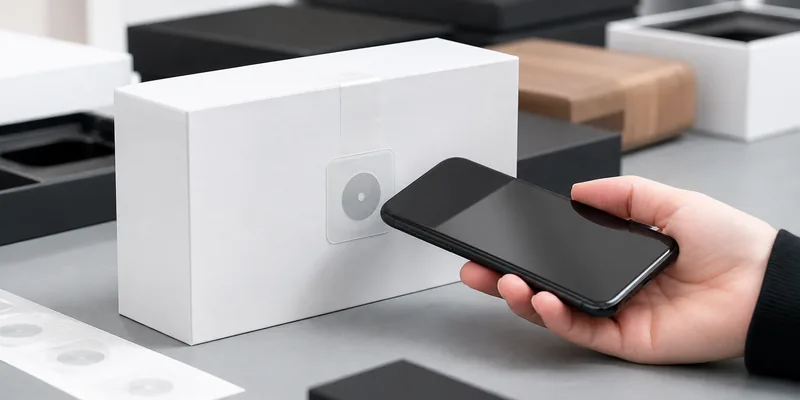
HF and NFC inlays, usually 13.56 MHz, are common for phone interactions, smart packaging, access cards, library labels, authentication, and short-range ID.
UHF RFID inlays, commonly 860-960 MHz, are used for item-level inventory, apparel, logistics, asset tracking, and warehouse workflows. UHF can support longer read zones and bulk reading, but performance depends heavily on antenna design and the environment.
Some projects use LF RFID for close-range identity applications. If unsure, start with the reader system, regional frequency rules, and the object you need to identify.
Where RFID Inlays Are Used
RFID inlays are used wherever a thin, convertible RFID layer is needed: retail apparel labels, logistics labels, NFC smart packaging, library labels, tickets, membership credentials, and asset labels for tools, IT equipment, documents, or components.
For metal, liquid-filled packaging, curved items, or outdoor equipment, a standard inlay may not perform well. Consider anti-metal tags, spacers, special antenna designs, or a more protective finished tag.
How to Choose the Right RFID Inlay
Before choosing an RFID inlay, define the project clearly:
- Application: What item, package, asset, or product will be tagged?
- Frequency: Does your reader system require LF, HF/NFC, or UHF?
- Chip: Do you need EPC, UID, User memory, passwords, or a specific chip model?
- Size: How much space is available, and what read range is realistic?
- Surface: Will it be applied to paper, plastic, glass, textile, metal, liquid, or curved packaging?
- Format: Do you need dry inlays, wet inlays, printed labels, stickers, cards, or rolls?
- Data: Do you need logos, QR codes, serial numbers, EPC encoding, or locked data?
- Testing: Can you test samples with real readers, software, products, and environment?
This helps a supplier recommend an inlay instead of guessing from the keyword alone.
How WXR Can Help
WXR can support custom RFID inlay and label projects by matching chip, frequency, antenna size, material, printing, encoding, and delivery format to the application. A retail project may need UHF RFID labels on rolls, while smart packaging may need NFC inlays with phone-readable chips.
If you are comparing RFID formats, review TAG RFID’s pages for RFID inlays, RFID stickers, NFC tags, UHF RFID tags, and anti-metal RFID tags.
Not sure which RFID inlay fits your project? Send WXR your application, frequency, chip, material, size, read range target, printing, encoding, quantity, and testing environment. The team can recommend a format and sample plan.
Conclusion
An RFID inlay is the functional core of many RFID products: the chip, antenna, and substrate that make wireless identification possible. It is not the same as every finished RFID label or RFID tag, but it strongly influences final performance.
For a reliable project, do not choose an inlay only by price or size. Start with the frequency, chip, antenna design, application surface, conversion format, and test conditions. The right inlay should match both the reader system and the physical item it will identify.
FAQ
Is an RFID inlay the same as an RFID tag?
No. An RFID inlay is usually the internal chip-and-antenna layer. An RFID tag is the finished product, which may include adhesive, printing, protective material, plastic housing, card layers, or other construction.
What is the difference between a wet inlay and a dry inlay?
A dry inlay is the basic chip-and-antenna assembly on a substrate. A wet inlay usually includes adhesive and a release liner so it can be converted into an RFID label or sticker. Confirm the exact layer structure with your supplier.
How far can an RFID inlay be read?
Read range depends on frequency, chip, antenna, reader power, tag orientation, material surface, and environment. NFC is usually very short range, while UHF can support longer read zones when designed and tested correctly.
Can RFID inlays work on metal?
Standard inlays often perform poorly on metal because metal can detune the antenna. For metal assets, use an anti-metal RFID tag, on-metal label, spacer, or special antenna design and test samples before rollout.
Can RFID inlays be customized?
Yes. Depending on the supplier, RFID inlays and converted labels can be customized by chip, frequency, antenna size, material, adhesive, roll format, printing, serial number, QR code, barcode, and data encoding.