
RFID Jewelry Tags

Take a break and read all about it

Anti-Metal RFID Tags for Tools and Equipment: Buyer Checklist

Anti-metal RFID tags for tools and equipment should be chosen by the metal surface, tag size, attachment method, read point, encoding plan, and sample test result. A standard RFID label may read well in free air and still fail on a steel wrench, machine housing, server rack, gas cylinder, tool cart, or metal cabinet. For production use, test the exact tag construction on the real asset before ordering in bulk.

This guide is for project buyers, system integrators, maintenance teams, and distributors comparing RFID tags for metal-heavy assets. It focuses on practical procurement decisions rather than a generic RFID overview.

Why metal changes RFID tag performance

Metal can detune an RFID antenna, reflect radio energy, and create inconsistent reads when the tag is placed too close to the surface. The effect depends on frequency, antenna design, tag orientation, reader power, nearby structures, and the size and shape of the asset. This is why the question is not simply “does RFID work on metal?” The better question is: which on-metal construction works on this asset, at this read point, with this reader setup?

Anti-metal RFID tags use a structure that separates or tunes the antenna for conductive surfaces. Some use foam, ferrite, ceramic, PCB, ABS housing, or a designed spacer. Others are flexible labels built specifically for metal. For UHF projects, the goal is usually to identify many tools or assets faster than barcode scanning, while keeping each item tied to a reliable EPC or asset ID.

For general metal asset projects, review WXR’s anti-metal RFID tags category first. If the workflow needs longer read zones or bulk inventory, compare UHF RFID tags. If the project is close-range phone tapping on metal, an NFC on-metal tag may be a better fit.

Match the tag format to the tool or equipment

The best anti-metal tag is rarely the smallest or the strongest on paper. It is the tag that can survive the way the asset is handled and still read from the planned location.
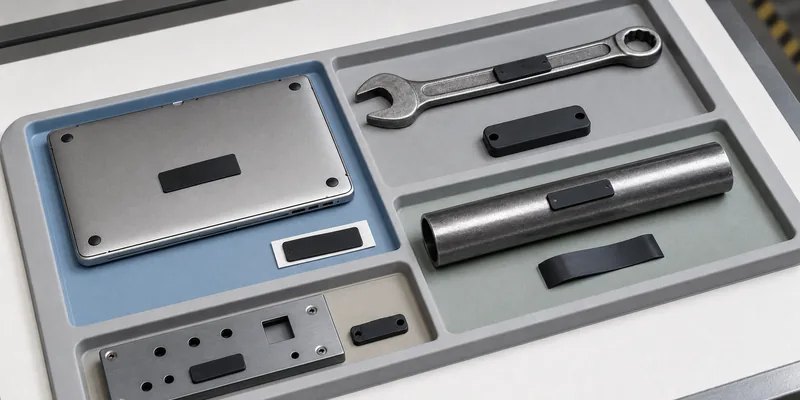
Comparison of anti-metal RFID tag formats for laptop casing, wrench, steel pipe, and equipment panel
Asset type Likely tag option What to confirm before ordering
Hand tools and torque tools Small hard tag, screw-mount tag, or recessed tag Space available, impact risk, cleaning, operator grip, reader angle
Metal equipment housings ABS anti-metal tag or PCB tag Mounting surface, screw holes, heat, vibration, service access
Servers, racks, laptops, and IT assets Low-profile on-metal label or compact hard tag Adhesive, curved edges, audit distance, asset label visibility
Pipes, cylinders, and curved metal Flexible anti-metal label or bracket-mounted tag Curve radius, cable tie or adhesive, rotation during scanning
Outdoor machinery and rental assets Rugged waterproof hard tag UV, rain, abrasion, impact, screw or rivet fixing

If the asset is small, do not hide the tag where it cannot be read. If the asset is rough-handled, do not rely only on adhesive. If the asset is cleaned, painted, heated, or exposed outdoors, ask for samples that match the final housing and mounting method.

Define the read workflow before choosing samples

RFID tool tracking can mean different things. A maintenance room may only need handheld audits once per shift. A factory may need tools read at a cabinet door or workbench. A rental business may need check-out and return scans. A warehouse may want asset counts from a cart, cage, or dock area.

Each workflow changes the tag requirement. Handheld reading gives the operator more control over distance and orientation. Fixed readers need a more disciplined read zone because tools may pass quickly, overlap, or sit near other metal. For high-value tools, pair the RFID record with a printed serial number, QR code, or human-readable label so staff can still identify the item if the RFID read fails.

For broader inventory projects, WXR’s asset tracking RFID tags page is a useful next step. For mixed paper, plastic, and metal assets, also compare RFID stickers and labels before assuming every item needs a hard on-metal tag.

Prepare the encoding and numbering plan

A durable tag still creates problems if the encoded data is weak. Before production, decide whether each tag will carry an EPC, internal asset number, tool ID, container ID, or another database key. Decide who creates the data file, who encodes the tags, who checks for duplicate values, and whether the tag memory should be locked after verification.

For UHF tags, many systems use EPC memory as the fast inventory identifier. TID can help record the chip identity, while optional User memory should only be used when the workflow truly needs extra data on the tag. For background, see WXR’s guides to EPC memory on an RFID tag and TID memory in RFID.

Run a sample test on real metal assets

Do not approve anti-metal RFID tags from a desktop scan alone. A proper sample test should include the final tag construction, final placement, real reader, real asset surface, and normal operating movement.
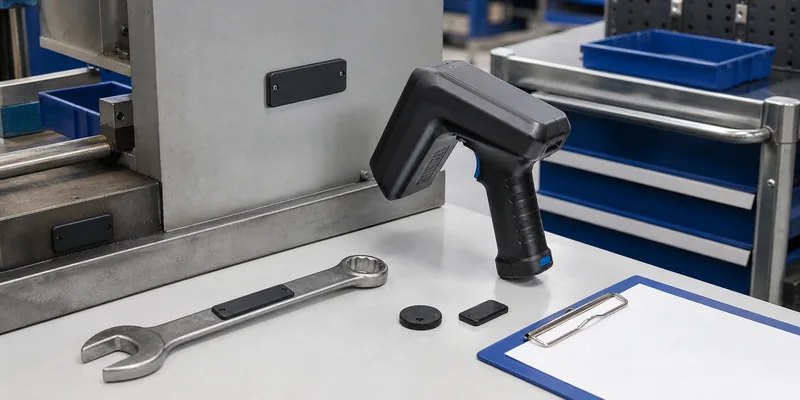
Handheld reader testing anti-metal RFID tags on a wrench and metal equipment during sample evaluation

Minimum sample test checklist

  • Test each candidate tag on the actual metal tool, equipment, pipe, rack, or case.
  • Scan from the intended handheld distance or fixed read point, not only from close range.
  • Rotate the asset and test realistic tag orientations.
  • Check nearby metal, stacked tools, toolboxes, bins, and operator hand positions.
  • Verify encoded values, printed numbers, QR codes, and database matching.
  • Inspect adhesive, screws, rivets, cable ties, or recessed placement after handling.
  • Repeat tests after cleaning, vibration, transport, or outdoor exposure when relevant.

Keep the acceptance criteria simple: which assets must read, from which location, at which workflow step, and what failure rate triggers a tag or placement change. Avoid buying on advertised read range alone because read range changes with reader, antenna, metal geometry, region frequency, and installation quality.

Choose the attachment method with maintenance in mind

Attachment is part of RFID performance. A tag that loosens, bends, or moves can become unreadable. Adhesive is clean and fast for flat indoor assets, but rough tools may need screws, rivets, cable tie brackets, epoxy fixing, or recessed mounting. Curved pipes and cylinders often need a flexible on-metal label or a bracket that keeps the tag in a readable position.
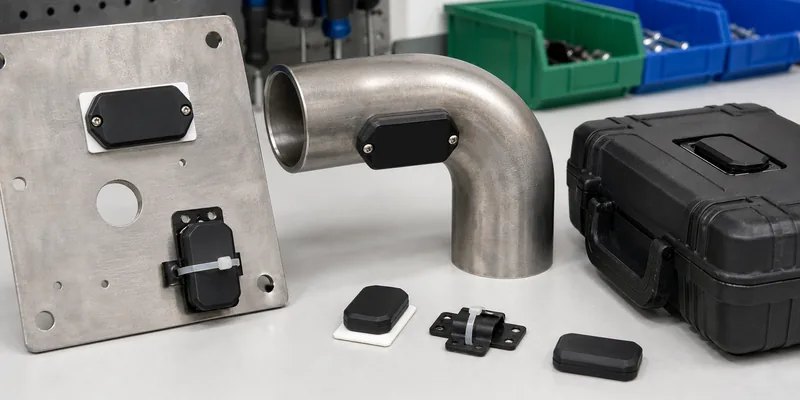
Anti-metal RFID tag installation methods using adhesive, screws, and bracket mounting on metal equipment

If assets are exposed to water, dust, oil, cleaning chemicals, or outdoor handling, compare waterproof RFID tags and ask for the exact material and housing options. If space is tight, review small RFID tags, but confirm that smaller size still meets the read requirement on metal.

What to send your RFID supplier

A supplier can recommend a better tag when the RFQ includes the real constraints. Send asset photos, metal type, available tag area, surface curve, indoor or outdoor environment, cleaning exposure, attachment preference, reader model if known, target read method, encoding format, printing requirement, quantity, and sample-test plan.

WXR can help compare anti-metal tags, UHF labels, hard asset tags, small RFID tags, printing, encoding, and sample testing for metal tool and equipment projects. To reduce trial and error, contact WXR with your asset details before mass production.

FAQ

Can normal RFID stickers work on metal tools?

Usually not reliably when mounted directly on metal. Some labels may read with spacing or special placement, but production projects should test purpose-built anti-metal RFID tags on the final tool surface.

Are UHF anti-metal tags better than NFC on-metal tags?

They solve different workflows. UHF is usually better for inventory, tool-room audits, and longer read zones. NFC is better for deliberate phone taps, service records, or one-at-a-time confirmation.

Should anti-metal RFID tags be pre-encoded?

Pre-encoding helps when the asset list and numbering file are ready before installation. In-house encoding may be better when IDs are assigned during commissioning. In either case, verify every tag and prevent duplicate IDs.

What is the most common failure in RFID tool tracking?

The most common failure is approving a tag without testing the final surface, tag placement, reader angle, and handling conditions. Metal, tag orientation, and attachment method can change performance dramatically.

Can WXR customize anti-metal RFID tags?

WXR can support custom RFID tag format, chip selection, material, size, printing, encoding, and sample preparation. Exact availability, dimensions, chip stock, and environmental ratings should be confirmed before publishing a final specification.

How to Choose RFID Jewelry Tags for Real-World Projects

Choose RFID jewelry tags by starting with the workflow, not the tag shape. A jewelry store doing daily shelf counts usually needs compact UHF RFID jewelry tags that can be read quickly with a handheld reader. A brand authentication or customer interaction project may use HF/NFC tags instead. A high-value anti-tamper workflow may need a fragile or tamper-evident structure that stops working if removed.

Before ordering in bulk, confirm six points: frequency, chip, tag form, jewelry material, reader setup, and software workflow. Jewelry items are small, valuable, reflective, and often metal-heavy, so sample testing is not optional.

What Are RFID Jewelry Tags?

RFID jewelry tags are small radio-frequency tags attached to rings, necklaces, bracelets, watches, earrings, gemstones, or jewelry packaging. Each tag carries a unique ID that can be linked to item data such as SKU, certificate number, material, weight, purity, location, sales status, or audit history in software.

The tag itself usually does not need to store all product details. In most projects, the RFID tag stores an EPC, UID, or other identifier, while the jewelry management system stores the sensitive business data. This keeps the tag simple and makes data updates easier.

Match the Frequency to the Use Case

Frequency optionBest fit for jewelry projectsWhat to confirm
UHF RFIDFast inventory counts, trays, counters, safes, stockrooms, branch auditsReader region, antenna setup, tag orientation, near-metal performance
HF/NFCClose-range authentication, customer interaction, certificate links, phone-based actionsPhone compatibility, memory needs, URL/NDEF encoding, privacy requirements
LF RFIDShort-range ID in special legacy systemsReader compatibility and whether LF is really required

For most jewelry inventory projects, UHF RFID is the practical starting point because it supports faster multi-item reading than barcode scanning. RAIN RFID systems generally operate in the UHF range, but allowed bands and reader power vary by country, so project teams should confirm local reader regulations before deployment.

Choose the Right Tag Form

Jewelry RFID tags must be readable without damaging the product or hurting the display experience. Common formats include:

  • Loop or flag tags: These wrap around a ring, necklace, watch, or bracelet and keep the RFID inlay slightly away from metal. This is often safer than placing a standard label flat on metal.
  • Adhesive labels: Useful for boxes, trays, certificates, packaging, or non-metal surfaces.
  • Tamper-evident tags: Designed for anti-transfer or anti-counterfeit workflows where the tag should fail or show damage if removed.
  • Embedded cards or care tags: Useful when the RFID identity is connected to a certificate, warranty card, or luxury packaging.
  • Tray or display-case tags: Suitable when the project tracks trays, boxes, or display positions rather than each jewelry item.

The best format depends on whether the business is tracking the item, the package, the tray, or the customer-facing certificate.

Plan for Metal, Gems, Glass, and Crowded Displays

Jewelry is a difficult RFID environment. Gold, silver, platinum, watch cases, dense displays, mirrors, glass cabinets, and human hands can all change read performance. A tag that reads well on a sample card may behave differently when it hangs near a metal ring inside a glass display case.

For real-world testing, place sample tags on the actual jewelry types: rings, chains, earrings, watches, bracelets, and boxed items. Test the reader from the same angle staff will use during daily counts. Also test crowded trays, stacked boxes, locked cases, and safe shelves. If the project needs exit detection, test that scenario separately with fixed antennas instead of assuming the handheld inventory result will translate.

Confirm Printing, Encoding, and Data Structure

RFID jewelry tags often need more than an invisible chip. Buyers may need logo printing, barcode or QR code printing, serial numbers, SKU text, color coding, or pre-encoded EPC values. Decide this before production because printing layout and encoding rules affect workflow.

Ask these questions early:

  • Should the tag be blank, pre-printed, or pre-encoded?
  • Will the RFID number match an existing SKU, serial number, or certificate number?
  • Does the project need EPC memory only, or also TID/User memory?
  • Will staff scan barcodes during exceptions, returns, or service?
  • Does the software import encoding files from the tag supplier?

If the jewelry is high value, avoid storing sensitive value, cost, or customer data directly on the tag unless the system design specifically requires it.

Test Readers and Software Together

RFID hardware alone does not create a jewelry inventory system. The project needs tags, handheld or fixed readers, antennas, software, and a repeatable operating procedure.

A good pilot should test:

  • Daily opening and closing inventory counts.
  • Safe, showcase, tray, and stockroom audits.
  • Missing-item and extra-item exception reports.
  • Item receiving, transfers, sales, returns, and repairs.
  • Read performance near metal, glass, dense trays, and staff movement.
  • Label durability during handling, polishing, cleaning, and display changes.

Do not judge RFID jewelry tags only by maximum read range. In retail projects, a controlled and repeatable read zone may be more useful than the longest possible distance.

Common Mistakes to Avoid

The first mistake is buying generic RFID labels and expecting them to work on every jewelry item. Jewelry needs a tag structure designed for small, metal-heavy, high-value items.

The second mistake is choosing tags before mapping the workflow. A store count project, warehouse receiving project, exhibition security project, and product-authentication project may need different tags.

The third mistake is skipping software planning. If the tag ID is not connected to product data, staff roles, reports, and exception handling, the system becomes another spreadsheet burden.

What to Send an RFID Tag Supplier

To get useful recommendations, send the supplier:

  • Jewelry types and materials.
  • Target workflow: inventory, anti-tamper, authentication, transfer, display case, or warehouse.
  • Frequency preference, reader model, and country/region.
  • Required tag size, shape, color, and attachment method.
  • Printing needs: logo, barcode, QR code, serial number, or SKU.
  • Encoding format and software import requirements.
  • Quantity, packaging, sample needs, and rollout timeline.

WXR provides jewelry RFID tags, 860-960MHz UHF RFID tags, and custom RFID tag production for project buyers. If you are planning a jewelry inventory project, share your jewelry type, reader setup, tag size, printing, encoding, and sample-testing requirements with WXR before mass production.

FAQ

Are UHF RFID jewelry tags better than NFC tags?

UHF is usually better for fast inventory counts and multi-item reading. NFC is better for close-range phone interaction, product storytelling, or certificate links. Some projects may use both.

Can RFID jewelry tags work near metal?

Yes, but the tag design and placement matter. Loop or flag-style tags often perform better because the RFID inlay is not pressed flat against the metal jewelry surface. Always test with real jewelry items.

Do RFID jewelry tags prevent theft?

RFID can support audits, exception reports, and exit-control workflows, but it does not guarantee theft prevention by itself. Results depend on tag type, reader placement, store procedure, and software alerts.

Should the tag store product details?

Usually, the safest approach is to store a unique ID on the tag and keep detailed product data in the software database. This makes updates, security, and reporting easier.

What should I test before ordering RFID jewelry tags in bulk?

Test tag readability, tag attachment, display appearance, reader distance, crowded trays, metal interference, software matching, barcode backup, staff workflow, and exception reports.

Ask For A Quick Quote

Your inquiry will be replied within 24 hours! Please pay attention to the email with the suffix “@tag-rfid.com”. If not received, please check your spam email.