UCODE 8 RFID tags are a common choice for passive UHF projects that need item-level identification, fast inventory reading, and flexible label or inlay production. For buyers, the chip name alone is not enough. The final result depends on the antenna design, tag format, material, encoding plan, reader setup, and how the tag is tested on the real item.
If you are sourcing UCODE 8 UHF RFID labels, stickers, inlays, or apparel hang tags, treat the order as a specification project rather than a simple part-number purchase. A supplier needs to know what the tag will be attached to, how it will be encoded, where it will be read, and what failure modes must be avoided before mass production.
What is UCODE 8 in an RFID tag?
UCODE 8 is an NXP RAIN RFID / UHF RFID chip family used in passive EPC Gen2v2 tags. Public NXP documentation lists UCODE 8/8m with EPC memory options, a factory-locked TID, access and kill password functions, and features such as Self Adjust, Memory Safeguard, Brand Identifier, and Product Status Flag. Those chip features matter, but the finished tag still needs the right antenna, substrate, adhesive, and conversion process.
In a finished tag, the chip is only one part of the inlay. The antenna collects energy from the reader field, the chip stores and replies with data, and the label or hang-tag material determines whether the inlay survives printing, handling, shipping, and use. That is why two tags with the same UCODE 8 chip can perform differently on a carton, garment, plastic case, or product package.
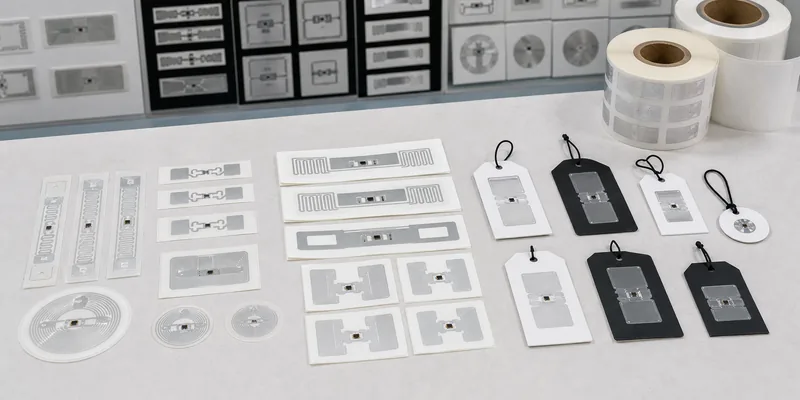
UCODE 8 is usually considered when the project needs UHF item-level reading rather than short-range HF/NFC interaction. Typical projects include apparel inventory, retail item tracking, warehouse cartons, logistics labels, product authentication workflows, and manufacturing WIP tracking.
It is a practical fit when you need a standardized UHF RFID ecosystem, compatibility with EPC encoding workflows, and tag formats that can be produced as wet inlays, dry inlays, printed labels, or hang tags. It may not be the best fit for access control cards, phone-tap NFC campaigns, animal ID, or applications where a different frequency is required by the reader system.
Before requesting a quote, confirm whether your reader infrastructure expects UHF EPC Gen2 tags. If the project already uses a specific reader, printer-encoder, middleware platform, or retailer encoding rule, share that information early. Chip choice should support the workflow; it should not be selected in isolation.
UCODE 8 tag format options
| Tag format | Best for | What to confirm before ordering |
|---|---|---|
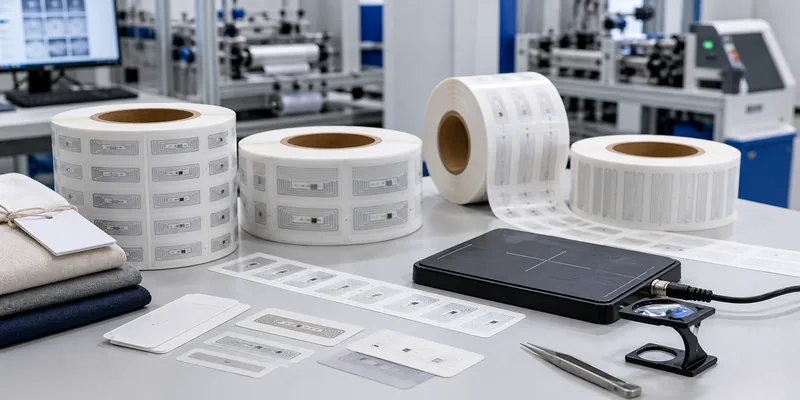
| Dry RFID inlay | Label converting, custom adhesive labels, embedded tag production | Antenna size, roll format, pitch, chip, orientation, converting waste tolerance |
| Wet RFID inlay | Direct label production and sticker converting | Adhesive, release liner, roll direction, printer compatibility, encoding process |
| Printed RFID sticker | Cartons, packaging, asset labels, retail logistics | Face material, adhesive, print method, surface material, barcode or serial printing needs |
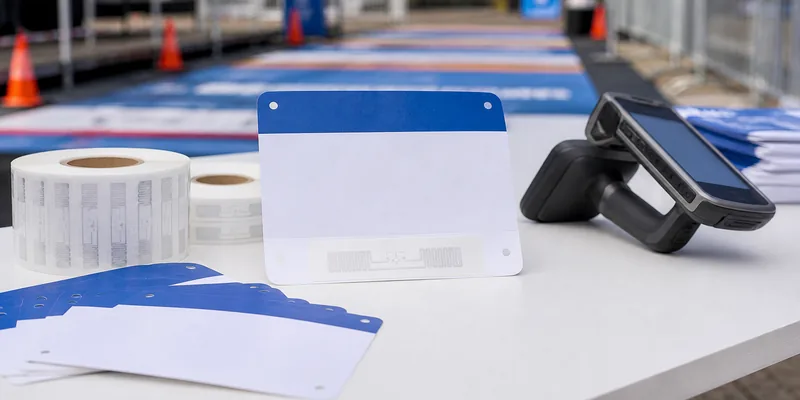
| Apparel hang tag | Garments, footwear, fashion retail, detachable item ID | Hang-tag paper, string/hole position, artwork, EPC encoding, packing order |
| Specialty UHF tag | Plastic assets, difficult surfaces, reusable containers | Encapsulation, mounting method, environment, sample testing method |
For label and apparel projects, buyers often focus on the chip first and the antenna second. In practice, the antenna and placement often decide whether the tag reads reliably. A narrow inlay may fit a small package but lose performance on dense products. A larger antenna may read better but create packaging or artwork constraints. Ask for the physical inlay dimensions, not only the chip model.
What to include in a UCODE 8 RFID tag RFQ
A useful RFQ should answer the questions your supplier cannot safely guess. Start with the application: apparel inventory, carton tracking, product authentication, logistics, or another workflow. Then define the object material, tag position, read point, expected handling, and whether the tag must be printed, encoded, or packed in sequence.
- Frequency and protocol requirement: UHF / RAIN RFID / EPC Gen2 workflow.
- Chip request: UCODE 8 or acceptable alternatives if availability changes.
- Memory plan: EPC length, whether TID is used for verification, and whether User Memory is required.
- Tag format: dry inlay, wet inlay, printed sticker, apparel hang tag, or custom tag.
- Physical constraints: maximum label size, artwork area, roll core, pitch, orientation, and packaging method.
- Surface and environment: paper carton, plastic, fabric, liquid-filled item, metal nearby, humidity, heat, or outdoor exposure.
- Encoding rules: EPC format, serial number logic, lock status, password handling, barcode/QR/UID print matching, and data file format.
- Testing plan: sample quantity, reader model, antenna placement, read zone, item mix, and pass/fail criteria.
Avoid vague RFQs such as “UCODE 8 sticker, long range, best price.” Read range depends on reader power, antenna, tag orientation, surface material, surrounding products, and local regulations. A better request says where the tag will be placed and how it will be read.
How to test samples before bulk production
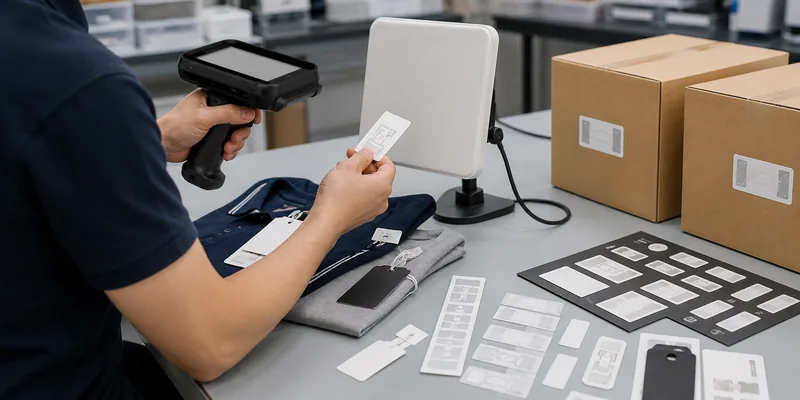
Sample testing should reproduce the real workflow as closely as possible. Test loose tags first to confirm encoding and basic readability, then test tags after printing, attachment, packing, stacking, and movement through the intended read zone.
For apparel, test different fabrics, folded garments, hanging rails, cartons, and mixed SKU batches. For carton or warehouse labels, test the actual carton material, item contents, pallet pattern, and reader portal or handheld scan path. If liquids, foil, dense products, or metal shelves are nearby, include them in the test instead of saving them for rollout.
Record the reader model, antenna, power setting, tag orientation, item count, distance, and missed-read conditions. The goal is not to prove that one sample can be read once. The goal is to find the antenna size, label position, and encoding workflow that remain reliable when operators use the system every day.
Common mistakes with UHF chip selection
The first mistake is treating UCODE 8 as a guaranteed performance answer. It is a capable chip family, but the tag construction and deployment design still matter. The second mistake is buying the smallest label that fits the artwork without checking whether the antenna still works on the item. The third mistake is approving bulk production before encoded, printed, and packed samples have been tested.
Another common issue is mixing memory expectations. EPC memory is normally used for the operational item identity. TID is factory locked and useful for chip-level identification checks. User Memory, when present in a selected chip variant, should be specified only when the project has a real data requirement and compatible software flow. Do not assume every chip variant or tag format supports the same memory plan.
How WXR can support UCODE 8 RFID tag projects
WXR can help project buyers compare UHF RFID tag formats, including RFID inlays, RFID stickers and labels, and clothing RFID tags. For chip-specific projects, buyers can also review UCODE 8 RFID tag options and broader UHF RFID tags.
Send WXR your application, item material, target tag format, printing and encoding needs, reader setup, and sample testing conditions. The team can suggest a practical tag structure and prepare samples before mass production. For custom projects, contact WXR with the RFQ details above instead of sending only a chip name.
FAQ
Is UCODE 8 the same as a complete RFID tag?
No. UCODE 8 is the RFID chip inside a passive UHF tag. The complete tag also includes an antenna, substrate, adhesive or carrier material, printing, encoding, and packaging.
Yes, UCODE 8 is commonly used in UHF item-level tagging workflows such as apparel and retail inventory. Buyers still need to test the selected inlay size, tag position, reader setup, and encoding process before bulk rollout.
Standard UHF labels may perform poorly on or near metal. If the tagged item includes metal surfaces, ask for an anti-metal or specialty UHF tag and test it on the actual item.
Most operational workflows use EPC memory for the item identity. Some projects also reference TID for chip-level identification. The exact encoding rule should come from your software, retailer requirement, or project data structure.
Should I choose a wet inlay, dry inlay, sticker, or hang tag?
Choose the format based on the production process. Dry inlays suit converting, wet inlays suit adhesive label production, printed stickers suit cartons and assets, and hang tags suit apparel or retail items where the tag will be attached externally.