RFID key fobs are simple to carry, but bulk ordering them for an access control project is rarely simple. The buyer has to match the chip to existing readers, choose a housing that survives daily use, decide whether IDs should be printed or encoded before shipment, and test samples before the full batch is produced.
For most access control projects, the safest starting point is not the fob shape. Start with the reader system. Confirm the frequency, chip family, card number format, encoding rule, and whether the system reads only a UID/CSN or a protected memory sector. After that, the material, color, logo, serial printing, and packaging choices become much easier to specify.
WXR supplies custom RFID key fobs for access control, membership, hotel, gym, campus, and visitor ID projects. Use the checklist below before asking for samples or a quote.
What Is an RFID Key Fob?
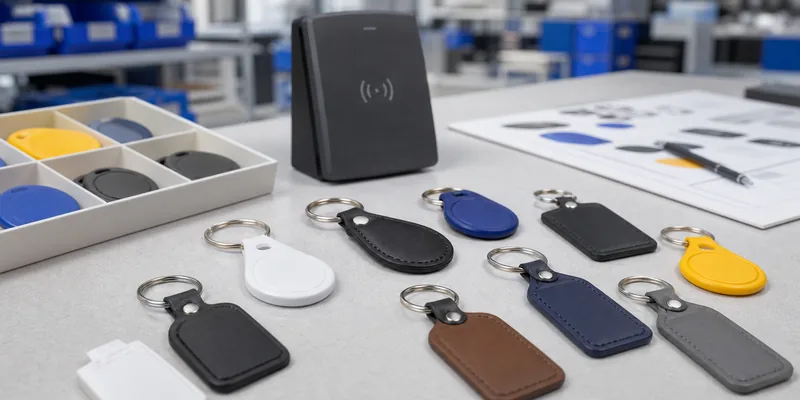
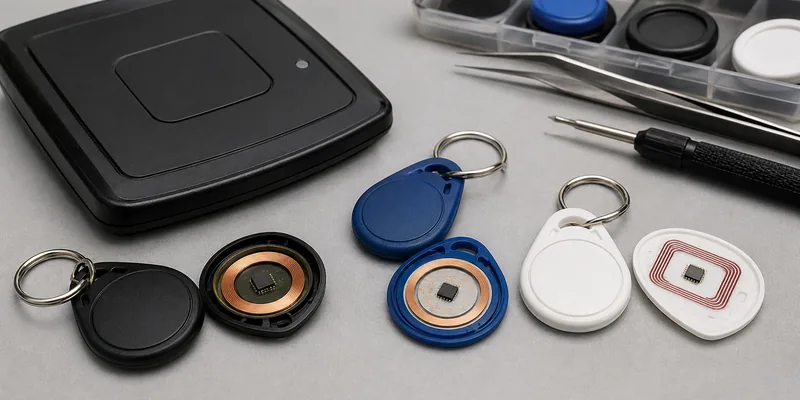
An RFID key fob is a small contactless credential with an RFID chip and antenna sealed inside a plastic, epoxy, leather-style, wooden, or other compact housing. Users present the fob near a reader to identify themselves for door access, attendance, membership check-in, parking, lockers, or other controlled workflows.
Compared with cards, key fobs are harder to forget because they stay on a key ring. Compared with wristbands, they feel more natural for employees, tenants, gym members, and hotel staff who already carry keys. The tradeoff is that fobs have less print area than a card, so buyers need to plan serial numbers, color coding, laser marking, or small logo placement carefully.
Start With Reader Compatibility
Access control projects fail when the fob is treated as a generic item. Two key fobs can look identical but use different frequencies, chips, memory structures, and data formats.
Use this compatibility table before choosing shape or color.
| Requirement to Confirm | Why It Matters | What to Send the Supplier |
|---|---|---|
| Frequency | LF, HF/NFC, and UHF systems use different reader hardware. | Reader model, current card/fob sample, frequency if known. |
| Chip family | TK4100, EM, T5577, MIFARE, DESFire, NTAG, and other chips behave differently. | Exact chip request or photos/specs from existing credentials. |
| Data format | Some systems read UID/CSN; others need facility code, card number, Wiegand format, or encrypted sectors. | Existing credential number rule and access controller requirement. |
| Security level | Simple UID credentials are easier to clone than managed smart-card formats. | Risk level, migration plan, and whether encryption is required. |
| Encoding before shipment | Bulk orders often need sequential IDs or imported access numbers. | Encoding file, number range, checksum rule, and sample approval process. |
If the project is a direct replacement, send WXR a working credential sample or a clear reader/controller specification. If the project is new, compare 125 kHz RFID tags, 13.56 MHz RFID tags, and the broader guide to LF, HF, and UHF frequency before deciding.
Choose LF, HF, or NFC Based on the System
LF 125 kHz key fobs are common in legacy door access and time attendance systems. They are often chosen for simple ID reading at short distance. Common chip families include TK4100, EM4100/EM4200, EM4305, and T5577, but compatibility should be confirmed against the actual controller.
HF 13.56 MHz key fobs are common where the project needs MIFARE, DESFire, Ultralight, NTAG, ICODE, or other HF/NFC chips. HF is often selected for membership, hotel, campus, payment-adjacent, or multi-application credentials. If the system uses MIFARE Classic, DESFire, or another secure format, confirm sector keys, application structure, and encoding responsibility before production.
NFC key fobs can also support phone interaction when the chip, memory, encoding, and phone behavior fit the use case. For a public NFC action such as opening a URL, NTAG chips may be relevant. For controlled access, do not assume an NFC phone-use chip is compatible with a door reader.
UHF key fobs exist, but they are not the default for normal door presentation. UHF is more common when the project needs longer-distance identification, asset tracking, parking, or hands-free gate applications. Test orientation and reader placement before treating UHF as a credential replacement.
Material and Shape Affect Daily Use
ABS plastic is a common key fob material because it is light, durable, and suitable for sealed everyday credentials. Epoxy fobs can support stronger visual branding and a polished surface. PU or leather-style key fobs are often chosen for hotels, offices, clubs, and VIP membership programs where appearance matters. Wooden keychains may fit hospitality or branded gift use, but they should be tested for the actual reader distance and handling environment.
Before finalizing the housing, check:
- Key ring strength and hole position.
- Thickness near the reader surface.
- Color coding for buildings, departments, member tiers, or visitor types.
- Logo size and whether printing, laser marking, or epoxy finish is more suitable.
- Whether UID, serial number, barcode, QR code, or human-readable ID must appear on the fob.
- Packaging method for encoded batches, especially if each fob must match a user list.
Avoid choosing a beautiful housing before testing the chip in that housing. Antenna size, internal placement, and reader field strength can change performance.
Encoding Details Buyers Should Prepare
Encoding is where many bulk orders slow down. The supplier cannot safely guess how your access system expects numbers to be stored.
Prepare a simple encoding brief:
- Existing card or fob sample, if replacing an old credential.
- Chip type and frequency required by the reader.
- UID-only, block/sector write, NDEF, Wiegand number, facility code, or custom format.
- Starting number, ending number, and whether numbers must be printed on the fobs.
- Whether the encoded data should be locked, password-protected, or left rewritable.
- A sample approval rule: how many pieces will be tested before mass production starts.
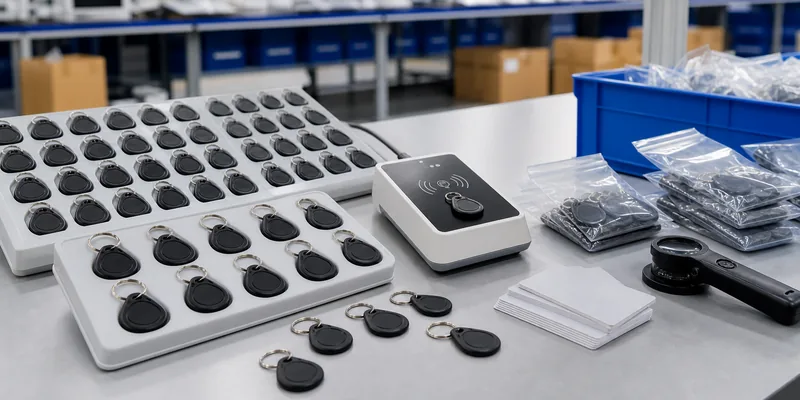
- Packaging order: sequential trays, individual bags, department groups, or mixed colors.
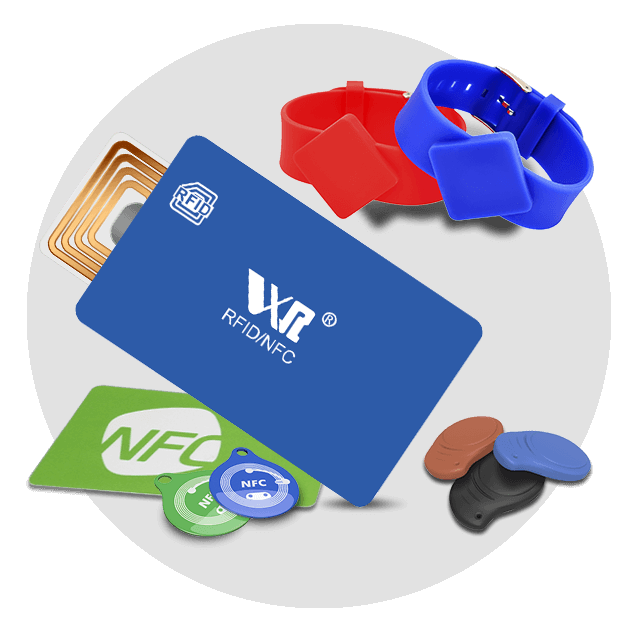
For access control projects using cards, key fobs, and wristbands together, keep the same credential rule across all formats where the system allows it. WXR can also support related RFID cards and RFID wristbands when a project needs multiple credential types.
Sample Testing Plan Before Mass Production
Do not approve a bulk RFID key fob order from a catalog image alone. Test the exact chip, housing, encoding, reader, and door/controller workflow.
A practical sample test should include:
- Read test on every reader model in the project.
- Enrollment test in the access control software.
- Duplicate-number check if sequential encoding is requested.
- Printed number or logo inspection under normal handling.
- Key ring pull and daily-carry handling check.
- Test near phones, wallets, metal key rings, and other items users will carry.
- Small mixed-color batch test if the final order uses multiple colors or departments.
Record the sample ID, chip, encoding file version, and approval result. This prevents confusion when the final batch is produced weeks later.
Questions to Ask an RFID Key Fob Supplier
Ask practical questions that affect delivery quality:
- Can you match the chip used by our current reader system?
- Can you encode sample fobs before bulk production?
- Can each fob be printed or laser marked with a serial number?
- How will encoded fobs be packed so our team can enroll them correctly?
- Can the same chip be supplied in card, wristband, or key fob format?
- What should we test before approving the final order?
Do not rely on broad claims like “compatible with all readers.” Ask for sample testing and confirm the real reader, controller, and software workflow.
How WXR Can Support Custom RFID Key Fob Orders
WXR can help buyers compare chip options, fob housing materials, printing methods, serial number rules, encoding files, and sample test plans for access control and membership projects. Share your reader model, current credential sample, target chip, printing artwork, encoding requirement, quantity, and packaging preference.
If you are unsure which credential format fits the project, review WXR’s access control RFID tags and then contact WXR with your application details. The correct fob is the one that works with your system, survives daily handling, and arrives encoded in a way your team can enroll without rework.
FAQ
Which RFID key fob chip should I choose for access control?
Choose the chip that matches your existing reader and controller. LF systems often use 125 kHz chips such as TK4100, EM, T5577, or related formats. HF systems may use MIFARE, DESFire, NTAG, ICODE, or another 13.56 MHz chip. Confirm with a working credential sample or reader specification before ordering.
Can RFID key fobs be encoded before shipping?
Yes, RFID key fobs can often be encoded before shipment when the buyer provides the correct format, number range, and approval sample. The exact process depends on chip type, memory access, encryption, and the access control system.
Are RFID key fobs better than RFID cards?
Key fobs are easier to carry on a key ring and are useful for buildings, gyms, clubs, hotels, and member access. RFID cards offer more print area for photos, names, and branding. Many projects use both formats with the same chip family.
Can WXR customize RFID key fob color, logo, and serial numbers?
WXR can support custom colors, shapes, materials, logo printing, serial numbers, UID printing, QR codes, barcodes, and encoding depending on the selected fob type. Confirm artwork, marking method, and sample approval before bulk production.
How should I test RFID key fob samples?
Test the exact sample on each reader model, enroll it in the software, check the encoded number, inspect printing, and carry it with normal keys or phone items. Approve mass production only after the access workflow works end to end.