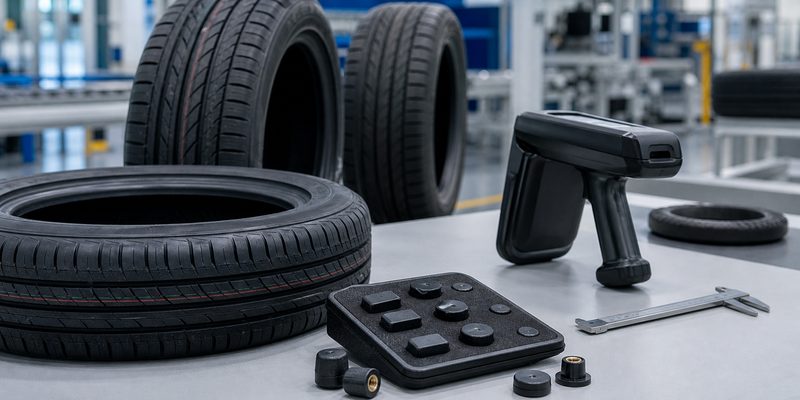
RFID tire tags give each tire a digital identity that can follow it through production, warehouse storage, installation, service, retreading, and recycling. For tire manufacturers, fleet operators, and retreaders, the practical question is not simply whether RFID works. The real question is which tire tag construction can survive the tire environment and still read reliably at the points where the business needs data.
Most RFID tire projects use UHF technology because tires often need to be read by fixed portals, handheld readers, or service-bay equipment without one-by-one visual scanning. But a tire is not a carton label. Rubber, steel belts, heat, pressure, sidewall movement, road conditions, cleaning, and repair workflows can all change RF performance. Buyers should treat tire tagging as a sample-tested engineering decision, not a generic label purchase.
Quick Answer: Choose the Tag by When and Where It Will Be Installed
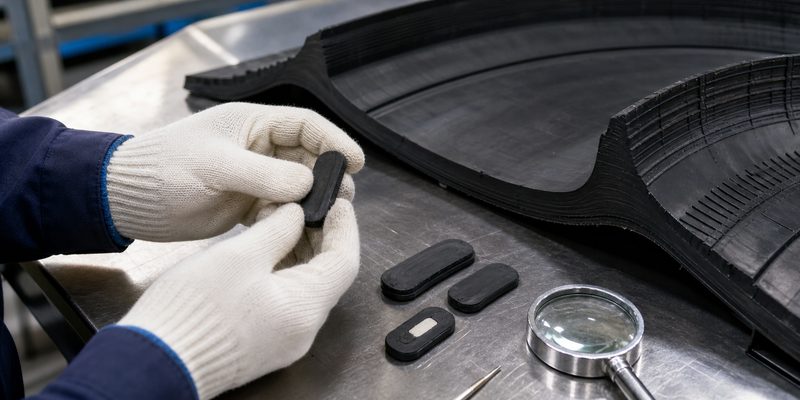
Choose an embedded RFID tire tag when the tag must become part of the tire during manufacturing and remain with that tire for the complete lifecycle. Choose a patch or inner-liner tire tag when the project is for fleet maintenance, retreading, tire rental, aftermarket tracking, or a smaller pilot where tags are applied after the tire already exists.
Both formats need a clear data plan. Decide whether the tag will store only an EPC or unique ID, whether TID must be captured for authentication, whether User memory is required, and how the encoded value connects to tire size, batch, serial number, vehicle, customer, inspection record, or retread history in your software.
RFID tire tags are rugged RFID identifiers designed for tire tracking. A reader captures the tag ID, and software links that ID to tire records such as production batch, warehouse movement, vehicle assignment, mileage, inspection status, casing history, retread cycle, warranty record, or recycling status.
For buyers already evaluating RFID vehicle tags, the tire use case is more demanding. A windshield tag mainly deals with glass, heat, adhesive, lane layout, and reader position. A tire tag must also handle deformation, rubber material, steel or textile reinforcement, mounting location, curing or service conditions, and repeated movement.
| Option | Best fit | Main buyer questions | Testing priority |
|---|---|---|---|
| Embedded RFID tire tag | Tire manufacturing, OEM traceability, lifecycle identity from production | Can the tag survive curing, pressure, rubber bonding, and customer qualification? | Validate read performance after embedding and through the intended tire process. |
| Inner-liner patch tag | Fleets, retreading, aftermarket service, tire leasing, pilots | Can the patch bond to the tire, stay readable, and survive maintenance handling? | Test adhesive or bonding method, read distance, washing, heat, and service workflow. |
| External or adjacent vehicle RFID tag | Parking, vehicle access, fleet gate control, non-tire vehicle ID | Is tire-level identification really needed, or is vehicle-level ID enough? | Test lane reads, mounting position, tamper control, and system integration. |
Embedded tags are harder to replace, so qualification has to happen before production. Patch tags are more flexible, but the attachment method becomes critical. A patch that reads well on day one can still fail if it peels, is installed in the wrong position, or is damaged during inspection and retreading.
Frequency, Protocol, and Chip Details to Confirm
Most tire-tag searches and supplier pages point toward UHF RFID using EPC Gen2 / ISO/IEC 18000-63 style systems. UHF is useful because it can support longer read zones than HF or NFC and can work with handheld or fixed readers used in inventory, logistics, or service areas. WXR's 860-960MHz UHF RFID tags page is a useful adjacent category when buyers are comparing UHF behavior, reader compatibility, and chip options.
Do not stop at the word UHF. Confirm the exact reader region, chip family, EPC memory, TID requirements, User memory, write protection, access password needs, and whether the software expects a specific EPC structure. Some projects only need a stable unique ID. Others need a controlled encoding file that connects tire serials, printed markings, and database records.
If the project involves authentication or anti-counterfeiting, discuss whether a standard unique TID is enough or whether the system requires stronger chip features. If the project involves fleet maintenance, User memory may sound attractive, but many systems are easier to maintain when the tag stores an ID and the software stores changing service records.
Application Checklist by Workflow
Tire Manufacturing
Manufacturers need traceability through production, curing, warehouse storage, distribution, warranty, recall, and recycling. The tag must be compatible with the tire construction and production process. Ask for sample testing in the real tire structure, not only on a bench. Also define whether RFID data will be linked to molded serials, barcode labels, MES records, or customer-facing digital product passports.
Fleet and Logistics Operations
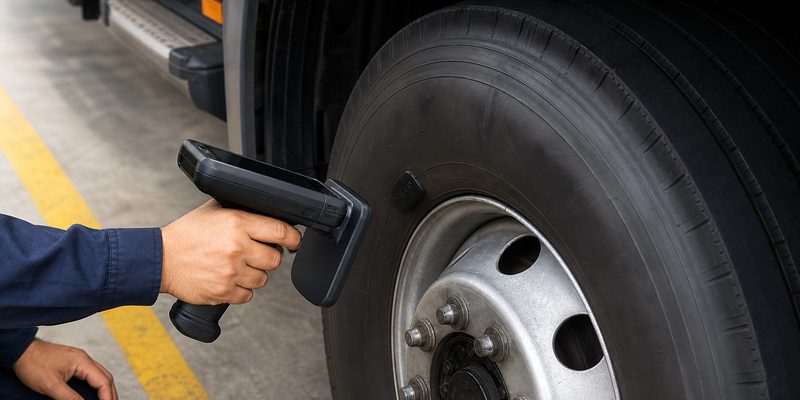
Fleet teams usually care about tire identity during inspection, rotation, repair, replacement, and loss investigation. A handheld UHF reader may be used in the yard or service bay. Test the read angle around mounted tires, nearby metal, wet surfaces, dirt, and vehicle layout. If the fleet only needs vehicle access at a gate, a long-range RFID tag or windshield credential may be more practical than a tire-level tag.
Retreading and Casing Management
Retreaders need reliable casing history. The ID should connect to inspection results, customer ownership, repair notes, retread count, rejection reasons, and final shipment. Patch placement and durability matter because retreading workflows include handling, cleaning, buffing, heat, pressure, and repeated checks. Confirm what happens if a tag is unreadable: will the casing be rejected, manually matched, or re-tagged under a controlled rule?
Sample Testing Plan Before Bulk Ordering
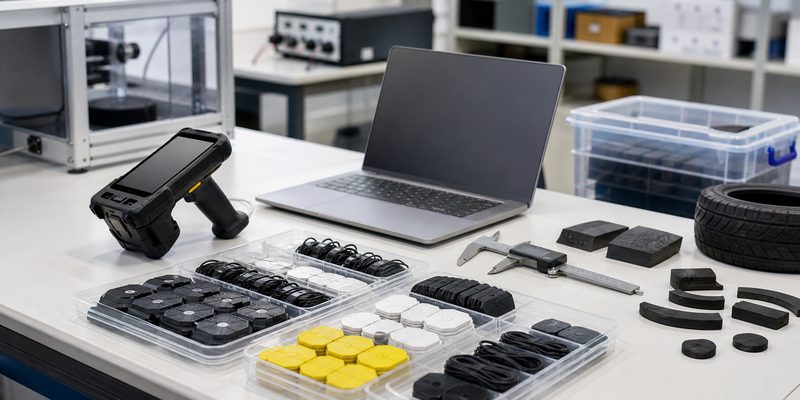
A tire-tag sample test should include more than a reader beep. Build a short test plan before requesting samples:
- Define the tire type, size, construction, installation position, and project stage.
- Confirm reader model, antenna, region frequency, software workflow, and target read points.
- Test the tag on or inside real tires, including mounted tires when possible.
- Record read distance, missed reads, duplicate reads, orientation sensitivity, and reader power settings.
- Run handling tests that reflect production, service, washing, storage, and retreading conditions.
- Check the encoded EPC, TID capture, printed serial, packing label, and database import file together.
- Decide pass/fail criteria before approving a production batch.
What to Send an RFID Supplier
Before asking for a quote, prepare a concise specification. Include the tire application, installation method, tire material or process constraints, reader model, region, target read distance, chip preference if any, data format, quantity, sample-test plan, packaging requirement, and whether you need printing, pre-encoding, or a readback file.
If the use case overlaps with vehicle access, outdoor tracking, or general asset tracking, compare related WXR pages such as asset tracking RFID tags, waterproof RFID tags, and RFID stickers. For true tire-embedded use, confirm that the proposed sample is designed and qualified for tire conditions rather than assuming any flexible UHF tag will survive.
Common Buying Mistakes
The first mistake is treating an RFID tire tag as a normal UHF label. Tire materials and movement can detune or damage a tag that looks acceptable on a flat sample board.
The second mistake is choosing read range before confirming the workflow. A long read distance is not helpful if the reader captures the wrong tire, misses mounted tires in a service bay, or creates duplicate reads near stacked inventory.
The third mistake is separating encoding from operations. The EPC file, printed number, tire serial, software record, and packing sequence should be checked together. If WXR or another supplier pre-encodes tags, request a readback file and keep one master data sheet for the project.
FAQ
Many tire-tracking projects use UHF RFID because it supports practical read zones for manufacturing, inventory, fleet service, and retreading workflows. Confirm the exact protocol, reader region, and chip requirements before ordering.
Can a normal RFID sticker be used on a tire?
Usually not without testing. A standard label may fail because of rubber, movement, heat, cleaning, or the tire's internal materials. Use a tire-suitable embedded or patch construction when tire-level tracking is required.
Should tire service records be stored on the RFID tag?
In many systems, the tag stores a unique ID while service records stay in the database. This keeps reads fast and makes maintenance history easier to update. Use tag User memory only when the software and security plan truly require it.
Test mounted tires, handheld reader behavior, wet or dirty surfaces, nearby metal, service-bay layout, tag placement, software import, and the replacement process for damaged or unreadable tags.
Can WXR help with RFID tire tag projects?
WXR can help buyers discuss UHF, vehicle, waterproof, long-range, asset-tracking, printing, encoding, and sample-testing requirements. For tire-embedded or retreading-specific tags, share the exact tire process so the team can confirm suitable sample options before mass production.
Conclusion
RFID tire tags are useful when the business needs tire-level identity, not just vehicle-level tracking. Start by deciding whether the tag will be embedded during manufacturing or applied as a patch during fleet or retreading operations. Then confirm UHF compatibility, chip data, attachment method, software mapping, and sample-test criteria before approving a batch.
For a practical quote discussion, contact WXR with your tire type, installation stage, reader setup, encoded data plan, and testing conditions. A good tire RFID project starts with samples and documented pass/fail rules, not a generic tag name.