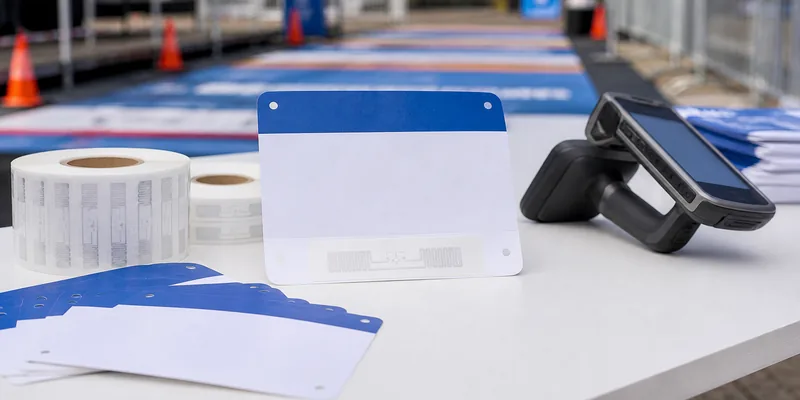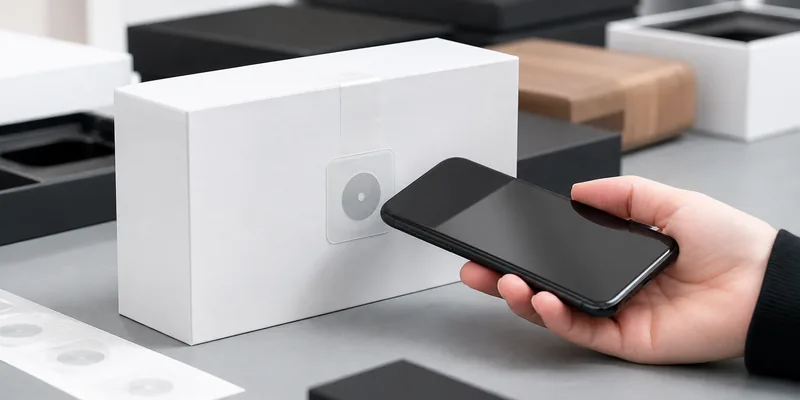
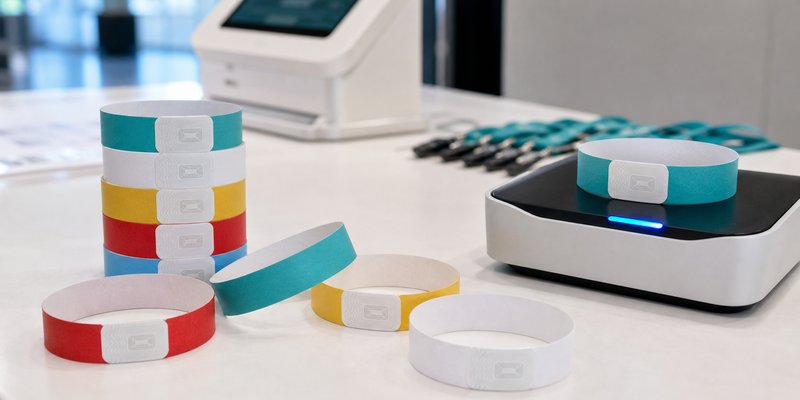
RFID paper wristbands are a good fit for short events when the band mainly needs to identify one attendee, support access control, trigger an NFC tap, or connect to a cashless or check-in workflow for a limited time. They are not the best default choice for multi-day water parks, long outdoor use, heavy abrasion, or reusable membership programs. Before ordering, buyers should confirm the chip, frequency, wristband size, closure style, print method, encoding data, reader position, and sample test plan.
Paper wristbands look simple, but the RFID part makes the specification more important. The inlay position affects tap behavior. The closure affects transfer control. The face material affects printing and skin comfort. The chip decides whether the wristband works with a phone, a door reader, a payment terminal, or a dedicated event access reader. That is why a useful quote request should describe the event workflow first, then the wristband construction.
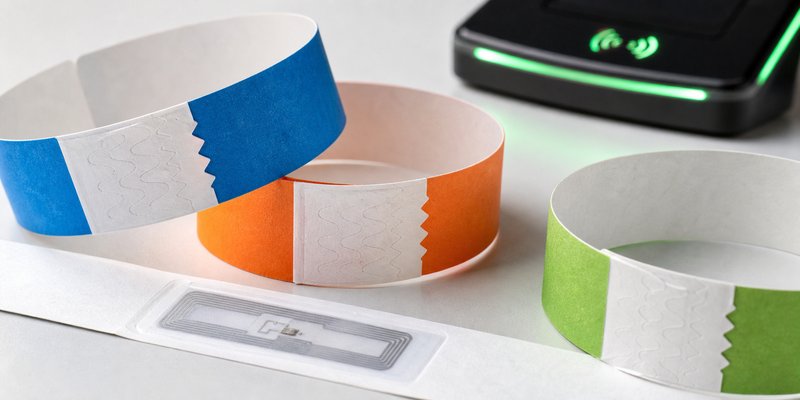
When RFID paper wristbands make sense
Choose RFID paper wristbands when the project is disposable, time-limited, and attendance-based. Typical examples include one-day concerts, exhibitions, conferences, hospital visitor ID, temporary gym trials, venue access, VIP zones, and controlled guest areas. For these projects, the band is usually issued once, worn for a few hours or a few days, and then discarded.
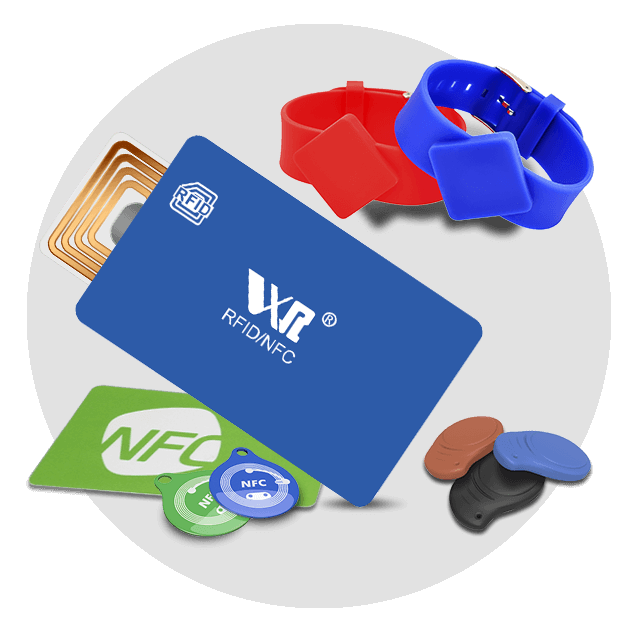
WXR’s RFID wristbands category covers multiple materials, including silicone, fabric, cloth, wood, paper, and PVC wristbands, with LF, HF, and UHF options. Paper should be selected because it fits the operating environment, not because it is the cheapest visible band. If the same credential must survive repeated swimming, long outdoor use, or a reusable membership cycle, compare silicone, fabric, or PVC before committing.
Paper vs silicone, fabric, and PVC wristbands
The right material depends on wear time, comfort, security, water exposure, and brand presentation. A music festival and a hotel pool do not put the same stress on the wristband. A hospital visitor workflow and a cashless event also have different privacy and encoding requirements.
| Wristband type | Best fit | What to confirm before ordering |
|---|---|---|
| Paper RFID wristbands | Short events, visitor ID, temporary access, single-use check-in | Closure strength, print durability, chip position, reader distance, skin comfort |
| Silicone RFID wristbands | Reusable memberships, gyms, spas, theme parks, wet environments | Chip compatibility, size range, clasp style, cleaning process, reuse policy |
| Fabric RFID wristbands | Multi-day festivals, branded events, higher comfort and visual quality | Locking bead, weaving/print method, NFC tap area, attendee transfer policy |
| PVC RFID wristbands | Water-resistant events, hotels, amusement venues, longer temporary use | Flexibility, closure style, edge comfort, temperature and cleaning exposure |
If the event team is unsure, order samples in more than one material and test them at the real gate, kiosk, or phone-tap point. Material choice should be validated by the workflow, not only by a catalog photo.
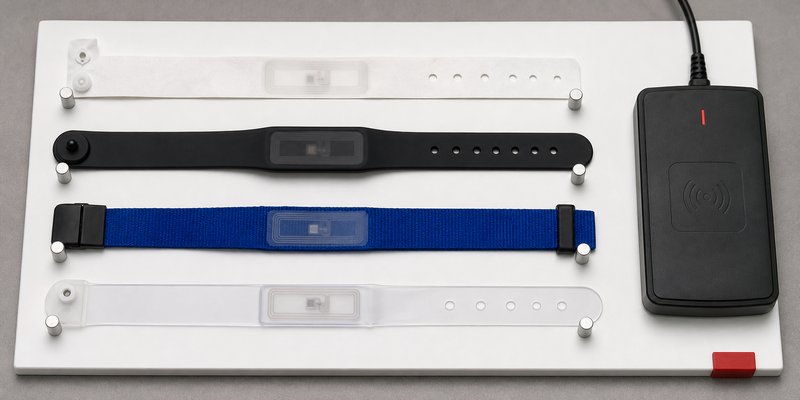
Choose the chip and frequency from the reader workflow
Start with the reader system. For many paper wristband projects, 13.56 MHz HF or NFC is the practical starting point because it supports close-range taps for access, registration, social media, or URL interactions. NFC paper wristbands are commonly chosen when attendees need to tap with a smartphone. MIFARE-style HF wristbands may be used when the event platform, access-control reader, or payment system already expects that chip family.
Do not specify a chip only by a familiar name. Confirm whether the system needs UID reading, NDEF URL storage, sector-based memory, encrypted access, or simple identification. For example, an NTAG213 wristband can be enough for a simple NFC URL or ID tap, while a MIFARE Classic or DESFire option may be requested by a closed-loop access or payment platform. For frequency background, review WXR’s guide to LF, HF, and UHF RFID differences and the 13.56 MHz RFID tags category.
Printing and encoding details buyers should prepare
Paper wristbands often carry more than RFID data. They may need color zones, logos, serial numbers, QR codes, barcodes, ticket tiers, sponsor marks, or blank write-on areas. Keep the visual design away from the chip area and closure if the supplier advises it. Heavy ink coverage, lamination choices, and fold lines can affect comfort and sometimes the way staff identify the tap zone.
For encoding, prepare a clean data map before production. Decide whether each band needs only a UID list, a pre-encoded URL, a ticket number, a batch code, or a mapping file for the event platform. If the wristband is part of an access or payment flow, ask the software or reader provider what format they expect before asking the manufacturer to encode. WXR can customize printing and encoding, but the buyer should supply the system-side rule set.
Sample testing should happen before mass production
A paper wristband sample test should include both RF performance and physical wear. Test the wristband flat, worn on the wrist, near a phone, at the entry gate, and at the expected staff scanning speed. If attendees will tap a reader themselves, mark the chip location clearly in the design or train staff to guide the tap. If staff will scan the band, test left wrist, right wrist, tight fit, loose fit, and multiple attendee heights.
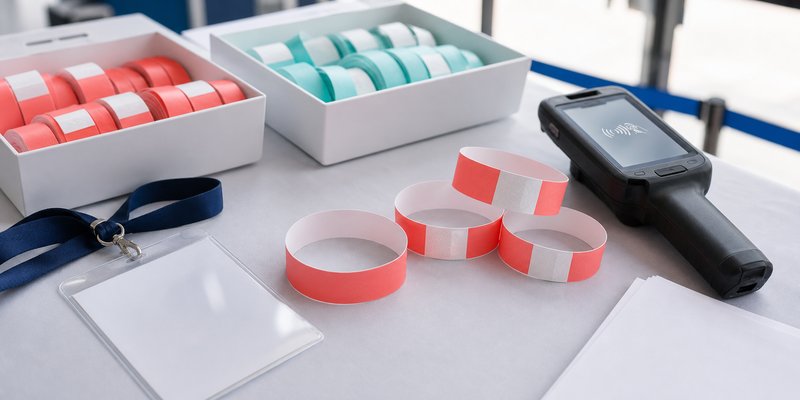
RFQ checklist for RFID paper wristbands
- Event type, duration, indoor/outdoor conditions, and expected wear time.
- Wristband material preference: paper, synthetic paper, PVC, silicone, fabric, or mixed samples.
- Reader type, phone-tap requirement, frequency, and chip requirement.
- Data format: UID only, NDEF URL, ticket ID, encoded serial, or platform mapping file.
- Printing needs: logo, color, QR code, barcode, serial number, VIP tier, or blank field.
- Closure requirement: single-use adhesive, tamper-evident cut, snap, lock, or reusable clasp.
- Quantity, packaging, issuing sequence, and whether bands need batch separation.
- Sample test plan: reader location, tap speed, wrist position, water/sweat exposure, and staff workflow.
Common mistakes to avoid
The first mistake is treating all paper wristbands as the same. Paper face stock, adhesive, embedded inlay, closure shape, and print process can differ. The second mistake is ordering by chip name without confirming the reader platform. The third is testing the wristband only on a desk, then discovering that the tap behavior changes when it is curved on a wrist.
Also avoid overclaiming security. A disposable RFID paper wristband can help control access and reduce manual checking, but it does not replace system-side validation, staff training, fraud rules, or lost-band procedures. For event access, pair the wristband with a clear policy for reissue, transfer, refund, and disabled credentials.
How WXR can support custom event wristbands
WXR can help event organizers, distributors, and system integrators compare paper, silicone, fabric, PVC, and NFC wristband formats. Share your application, reader model, chip requirement, print artwork, encoding rule, quantity, and test environment. For event projects, WXR can prepare custom RFID wristband samples for validation before bulk production.
If your project uses phone taps, also compare NFC tags and phone-readable chip options. For event access examples, WXR’s articles on RFID wristbands for music events and RFID wristbands for theme parks can help you map the use case. When ready, contact WXR with your wristband specification and sample-test requirements.
FAQ
Are RFID paper wristbands waterproof?
Some paper wristbands can handle light sweat or short exposure depending on the material and coating, but buyers should not assume waterproof performance. If the event involves swimming, heavy rain, cleaning chemicals, or multi-day outdoor use, request samples and compare silicone, PVC, or fabric alternatives.
Can paper RFID wristbands be printed with a logo or QR code?
Yes, custom printing is commonly requested for event branding, QR codes, serial numbers, colors, and access tiers. Confirm the printable area, chip position, and whether the QR code or serial number must match the encoded RFID data.
Which chip should I choose for RFID paper wristbands?
Choose the chip from the reader and software requirement. NFC tap projects often use NTAG-family chips. Access-control or payment platforms may require MIFARE, DESFire, LF, or another specified chip. Ask the platform provider for the required frequency, memory, and encoding format.
How should event teams test RFID paper wristband samples?
Test the sample on the wrist, not only flat on a desk. Check tap position, staff scanning speed, gate reader placement, phone compatibility if needed, print durability, closure strength, and the process for lost or replacement bands.
Can WXR encode wristbands before shipping?
WXR can support custom encoding when the buyer provides the required data format and workflow. Confirm the chip, UID or memory requirement, file structure, serial mapping, and sample approval process before mass production.