
NFC wristbands

Take a break and read all about it

RFID Paper Wristbands for Events: Durability, Printing, and Chip Checklist

RFID paper wristbands are a good fit for short events when the band mainly needs to identify one attendee, support access control, trigger an NFC tap, or connect to a cashless or check-in workflow for a limited time. They are not the best default choice for multi-day water parks, long outdoor use, heavy abrasion, or reusable membership programs. Before ordering, buyers should confirm the chip, frequency, wristband size, closure style, print method, encoding data, reader position, and sample test plan.

Paper wristbands look simple, but the RFID part makes the specification more important. The inlay position affects tap behavior. The closure affects transfer control. The face material affects printing and skin comfort. The chip decides whether the wristband works with a phone, a door reader, a payment terminal, or a dedicated event access reader. That is why a useful quote request should describe the event workflow first, then the wristband construction.
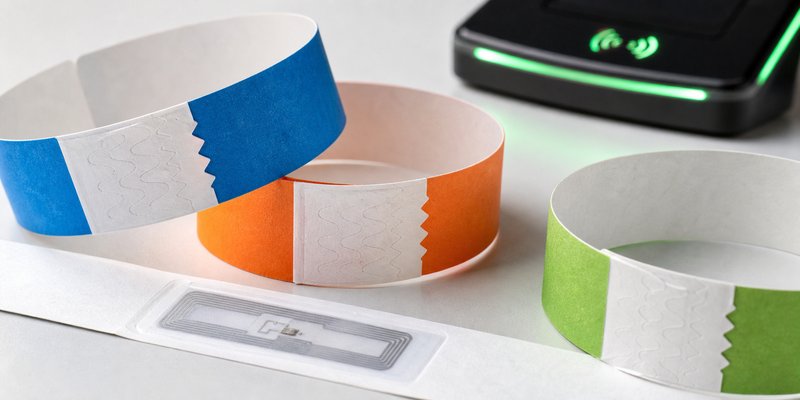
Close-up of RFID paper wristband closure and embedded chip area

When RFID paper wristbands make sense

Choose RFID paper wristbands when the project is disposable, time-limited, and attendance-based. Typical examples include one-day concerts, exhibitions, conferences, hospital visitor ID, temporary gym trials, venue access, VIP zones, and controlled guest areas. For these projects, the band is usually issued once, worn for a few hours or a few days, and then discarded.

WXR’s RFID wristbands category covers multiple materials, including silicone, fabric, cloth, wood, paper, and PVC wristbands, with LF, HF, and UHF options. Paper should be selected because it fits the operating environment, not because it is the cheapest visible band. If the same credential must survive repeated swimming, long outdoor use, or a reusable membership cycle, compare silicone, fabric, or PVC before committing.

Paper vs silicone, fabric, and PVC wristbands

The right material depends on wear time, comfort, security, water exposure, and brand presentation. A music festival and a hotel pool do not put the same stress on the wristband. A hospital visitor workflow and a cashless event also have different privacy and encoding requirements.

Wristband type Best fit What to confirm before ordering
Paper RFID wristbands Short events, visitor ID, temporary access, single-use check-in Closure strength, print durability, chip position, reader distance, skin comfort
Silicone RFID wristbands Reusable memberships, gyms, spas, theme parks, wet environments Chip compatibility, size range, clasp style, cleaning process, reuse policy
Fabric RFID wristbands Multi-day festivals, branded events, higher comfort and visual quality Locking bead, weaving/print method, NFC tap area, attendee transfer policy
PVC RFID wristbands Water-resistant events, hotels, amusement venues, longer temporary use Flexibility, closure style, edge comfort, temperature and cleaning exposure

If the event team is unsure, order samples in more than one material and test them at the real gate, kiosk, or phone-tap point. Material choice should be validated by the workflow, not only by a catalog photo.
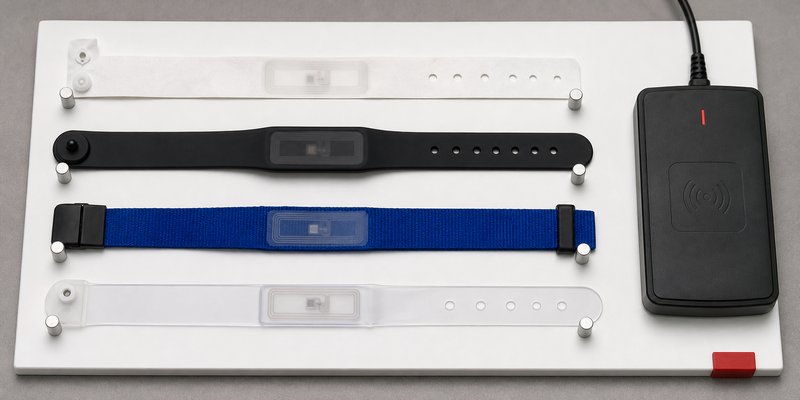
RFID wristband material comparison with paper silicone fabric and PVC samples

Choose the chip and frequency from the reader workflow

Start with the reader system. For many paper wristband projects, 13.56 MHz HF or NFC is the practical starting point because it supports close-range taps for access, registration, social media, or URL interactions. NFC paper wristbands are commonly chosen when attendees need to tap with a smartphone. MIFARE-style HF wristbands may be used when the event platform, access-control reader, or payment system already expects that chip family.

Do not specify a chip only by a familiar name. Confirm whether the system needs UID reading, NDEF URL storage, sector-based memory, encrypted access, or simple identification. For example, an NTAG213 wristband can be enough for a simple NFC URL or ID tap, while a MIFARE Classic or DESFire option may be requested by a closed-loop access or payment platform. For frequency background, review WXR’s guide to LF, HF, and UHF RFID differences and the 13.56 MHz RFID tags category.

Printing and encoding details buyers should prepare

Paper wristbands often carry more than RFID data. They may need color zones, logos, serial numbers, QR codes, barcodes, ticket tiers, sponsor marks, or blank write-on areas. Keep the visual design away from the chip area and closure if the supplier advises it. Heavy ink coverage, lamination choices, and fold lines can affect comfort and sometimes the way staff identify the tap zone.

For encoding, prepare a clean data map before production. Decide whether each band needs only a UID list, a pre-encoded URL, a ticket number, a batch code, or a mapping file for the event platform. If the wristband is part of an access or payment flow, ask the software or reader provider what format they expect before asking the manufacturer to encode. WXR can customize printing and encoding, but the buyer should supply the system-side rule set.

Sample testing should happen before mass production

A paper wristband sample test should include both RF performance and physical wear. Test the wristband flat, worn on the wrist, near a phone, at the entry gate, and at the expected staff scanning speed. If attendees will tap a reader themselves, mark the chip location clearly in the design or train staff to guide the tap. If staff will scan the band, test left wrist, right wrist, tight fit, loose fit, and multiple attendee heights.
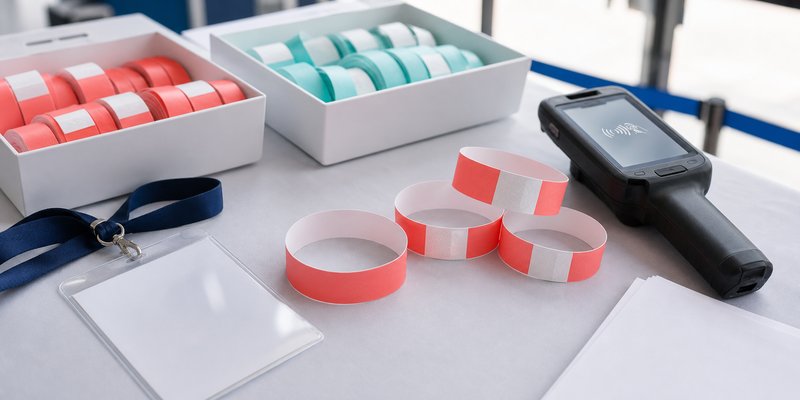
RFID paper wristband sample testing setup with handheld reader

RFQ checklist for RFID paper wristbands

  • Event type, duration, indoor/outdoor conditions, and expected wear time.
  • Wristband material preference: paper, synthetic paper, PVC, silicone, fabric, or mixed samples.
  • Reader type, phone-tap requirement, frequency, and chip requirement.
  • Data format: UID only, NDEF URL, ticket ID, encoded serial, or platform mapping file.
  • Printing needs: logo, color, QR code, barcode, serial number, VIP tier, or blank field.
  • Closure requirement: single-use adhesive, tamper-evident cut, snap, lock, or reusable clasp.
  • Quantity, packaging, issuing sequence, and whether bands need batch separation.
  • Sample test plan: reader location, tap speed, wrist position, water/sweat exposure, and staff workflow.

Common mistakes to avoid

The first mistake is treating all paper wristbands as the same. Paper face stock, adhesive, embedded inlay, closure shape, and print process can differ. The second mistake is ordering by chip name without confirming the reader platform. The third is testing the wristband only on a desk, then discovering that the tap behavior changes when it is curved on a wrist.

Also avoid overclaiming security. A disposable RFID paper wristband can help control access and reduce manual checking, but it does not replace system-side validation, staff training, fraud rules, or lost-band procedures. For event access, pair the wristband with a clear policy for reissue, transfer, refund, and disabled credentials.

How WXR can support custom event wristbands

WXR can help event organizers, distributors, and system integrators compare paper, silicone, fabric, PVC, and NFC wristband formats. Share your application, reader model, chip requirement, print artwork, encoding rule, quantity, and test environment. For event projects, WXR can prepare custom RFID wristband samples for validation before bulk production.

If your project uses phone taps, also compare NFC tags and phone-readable chip options. For event access examples, WXR’s articles on RFID wristbands for music events and RFID wristbands for theme parks can help you map the use case. When ready, contact WXR with your wristband specification and sample-test requirements.

FAQ

Are RFID paper wristbands waterproof?

Some paper wristbands can handle light sweat or short exposure depending on the material and coating, but buyers should not assume waterproof performance. If the event involves swimming, heavy rain, cleaning chemicals, or multi-day outdoor use, request samples and compare silicone, PVC, or fabric alternatives.

Can paper RFID wristbands be printed with a logo or QR code?

Yes, custom printing is commonly requested for event branding, QR codes, serial numbers, colors, and access tiers. Confirm the printable area, chip position, and whether the QR code or serial number must match the encoded RFID data.

Which chip should I choose for RFID paper wristbands?

Choose the chip from the reader and software requirement. NFC tap projects often use NTAG-family chips. Access-control or payment platforms may require MIFARE, DESFire, LF, or another specified chip. Ask the platform provider for the required frequency, memory, and encoding format.

How should event teams test RFID paper wristband samples?

Test the sample on the wrist, not only flat on a desk. Check tap position, staff scanning speed, gate reader placement, phone compatibility if needed, print durability, closure strength, and the process for lost or replacement bands.

Can WXR encode wristbands before shipping?

WXR can support custom encoding when the buyer provides the required data format and workflow. Confirm the chip, UID or memory requirement, file structure, serial mapping, and sample approval process before mass production.
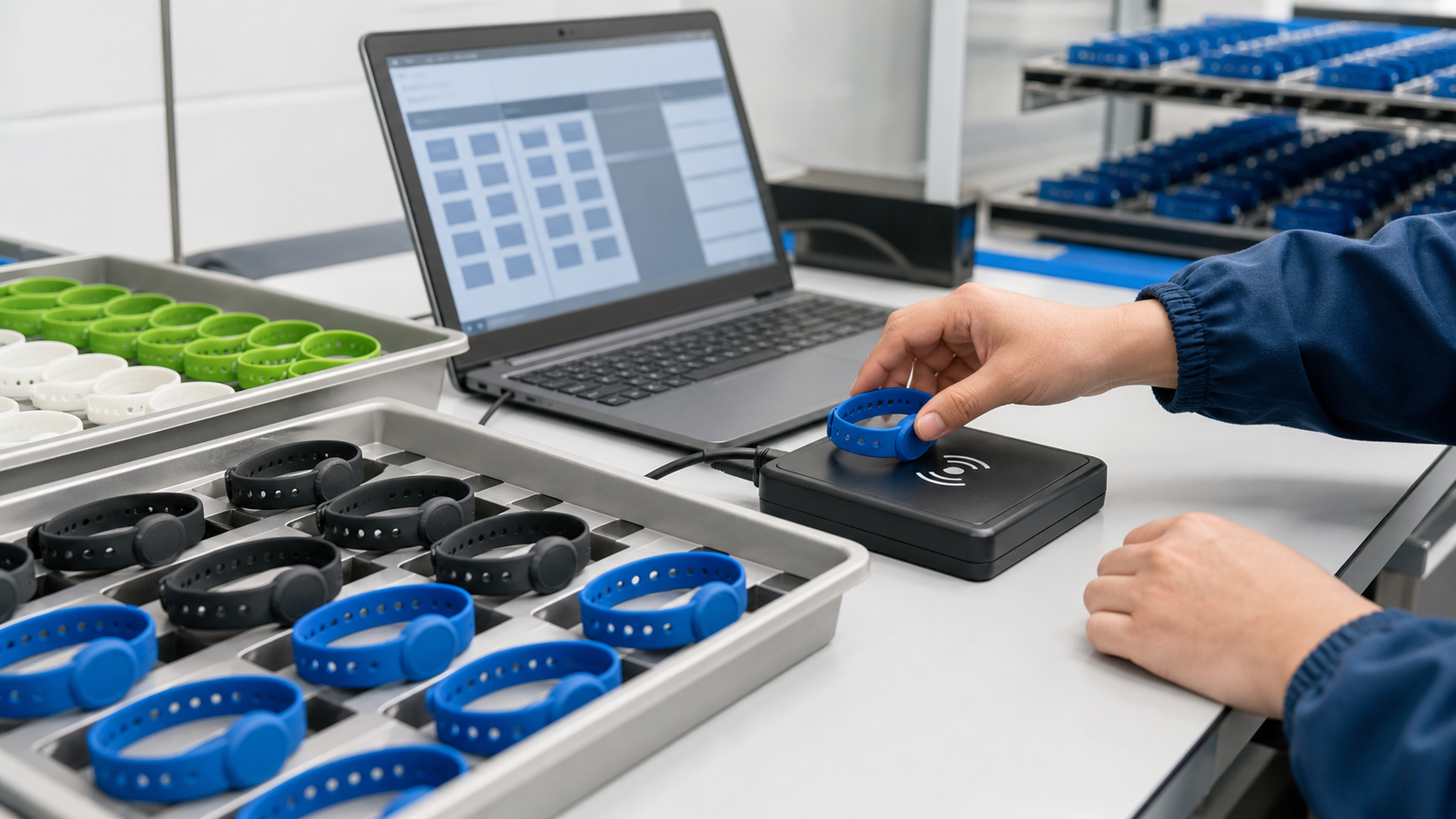
How to Encode and Program RFID Silicone Wristbands in Bulk

Technician bulk encoding colorful RFID silicone wristbands on a desktop RFID reader.

Bulk encoding RFID silicone wristbands is not just placing a wristband on a reader and clicking “write.” A reliable process starts with the right chip, a clean data file, compatible software, controlled tag handling, and a verification record.

For events, gyms, spas, hotels, hospitals, amusement parks, and access-control projects, every wristband should match the correct user, serial number, URL, access level, or account before deployment. This guide explains how to prepare, encode, verify, and hand off RFID silicone wristbands in bulk.

Quick Answer: What Does Bulk Encoding Mean?

Bulk encoding means writing planned data to many RFID wristbands in a controlled sequence, then reading each wristband back to confirm it is correct. The data may be an NFC URL, membership ID, access credential, EPC number, User memory value, or database reference.

A safe workflow is simple: confirm the chip, prepare one clean CSV row per wristband, write one controlled record at a time, verify the read-back value, lock or secure data only after testing, and keep UID, printed number, and encoded value mapped in one file.

Step 1: Confirm the RFID Chip and Frequency

The encoding method depends on the chip inside the silicone wristband. A reader for one frequency cannot program every wristband type.

Wristband type Common chips What can usually be encoded
LF 125 kHz wristbands TK4100, EM4100, EM4305, T5577 Fixed UID or simple rewritable ID, depending on chip
HF 13.56 MHz wristbands MIFARE Classic, MIFARE Ultralight, NTAG213/215/216, DESFire Access data, NDEF records, sector data, application data
UHF 860-960 MHz wristbands EPC Gen2 / RAIN RFID chips EPC memory, sometimes User memory, depending on chip

For many silicone wristband projects, HF 13.56 MHz is common because it fits access control, membership ID, event check-in, hotel or spa workflows, and NFC phone interactions. NTAG wristbands are often used for URLs or app links. MIFARE or DESFire wristbands are more common when the wristband must work with a closed access-control or payment system.

If your project needs longer read distance, review whether a UHF RFID tag format is suitable. If the project is NFC or access-control focused, start with 13.56 MHz RFID tags and confirm reader compatibility.

Step 2: Decide What Data Should Be Written

Before programming begins, decide whether the wristband will use the factory chip UID, a custom encoded value, or both. The chip UID is commonly used as a database key. Your software reads the UID and connects it to a user profile, ticket, room, locker, or membership account.

Custom encoded data is useful when the wristband must store a specific value, such as a membership number, NFC URL, access-control credential, UHF EPC number, User memory value, batch code, project code, or location code.

Avoid writing private customer data directly to the wristband unless your system, chip security, and privacy policy are designed for it. For secure access or payment, work with your system provider to define the correct chip type, keys, and authentication method.

Step 3: Prepare the Encoding File

Bulk encoding is easiest when the data is structured before production. A CSV file should contain one row per wristband. Useful columns include visual serial number, chip UID if already captured, encoded value, NDEF URL, EPC value, access group, printed QR or barcode, lock status, batch number, and packing sequence.

This file becomes the bridge between production, quality control, and your software import. If WXR pre-encodes wristbands before shipment, the same file can match printed serials, encoded values, and packing order.

Step 4: Set Up the Bulk Encoding Station

For LF and HF wristbands, use a desktop RFID or NFC reader that supports the target chip. A basic NFC writer may handle NTAG NDEF writing but may not support a secure MIFARE sector workflow. For UHF wristbands, use a UHF reader and software that can write EPC memory and verify the tag after writing.

The physical setup matters. Keep unencoded and encoded wristbands in separate trays. Present only one LF or HF wristband to the reader field at a time unless your system is designed for multi-tag handling. For UHF, control the read zone carefully because nearby tags may be detected unintentionally.

Step 5: Write, Read Back, and Verify Every Wristband

A practical workflow looks like this:

  1. Import the CSV file into the encoding software.
  2. Place one wristband on the reader or encoding fixture.
  3. Write the planned data to the correct memory area.
  4. Read the wristband back immediately.
  5. Compare the read-back value with the source file.
  6. Mark the record as passed, failed, or rewritten.
  7. Move the wristband to the correct output tray.

Verification is the most important part of bulk programming. A wristband that writes successfully but is mapped to the wrong printed number can still fail in the field. For printed serials, QR codes, or barcodes, verify the visual ID and encoded value together.

Step 6: Lock or Secure the Data at the Right Time

Many chips can be locked, password-protected, or configured to prevent unwanted rewriting. This is useful for event admission, cashless payment, and access-control projects, but it should happen only after sample testing.

Do not lock a full batch too early. First test the wristbands with real readers, gates, kiosks, mobile phones, POS terminals, or access-control panels. Once certain memory areas are locked, changing the data may be impossible or may require a predefined key process.

For NFC tags, confirm whether the NDEF data should remain rewritable, be soft locked, or be permanently locked. For MIFARE, confirm sector keys and access bits with the system provider. For UHF, confirm whether EPC, TID, and User memory are required. The GS1 EPC Tag Data Standard is a useful reference for EPC-based structures.

Step 7: Run Quality Control Before Shipment

Quality control should include sample inspection for color, size, logo printing, and silicone finish; reader compatibility testing; data read-back checks; duplicate-value checks; lock-status checks; and packing checks by serial number, color, or batch.

For high-risk projects, 100% electronic verification is recommended, especially when the wristband is linked to payment, personal access, paid tickets, or guest identity.

Common Bulk Encoding Mistakes

The most common mistake is choosing the wristband before confirming the reader system. A silicone wristband may look correct but contain the wrong chip. Other avoidable problems include assuming the UID can be changed, writing multiple wristbands at once, using duplicate CSV values, locking memory before testing, mixing batches after encoding, and skipping real-system testing.

Should You Encode In-House or Ask the Factory?

In-house encoding makes sense when you need last-minute user assignment, daily membership updates, or direct control inside your software. Factory pre-encoding is better when the data is known before production and you want wristbands delivered ready for deployment.

WXR can customize RFID wristbands with chip selection, silicone color, logo printing, UID or serial printing, QR/barcode printing, and data encoding. For projects that need controlled matching between printed numbers and encoded values, factory pre-encoding can reduce setup time and error risk.

What to Send Your RFID Wristband Supplier

To avoid delays, send your application, frequency, chip requirement, reader model, encoding format, CSV data file, printing needs, quantity, packing sequence, deadline, and lock requirement.

If you are not sure which chip fits your system, contact WXR with your reader model, application, and sample data requirement. The team can recommend a suitable wristband chip and prepare samples before mass production.

FAQ

Can RFID silicone wristbands be programmed in bulk?

Yes. RFID silicone wristbands can be programmed in bulk if the chip is writable and the encoding station uses a compatible reader, software, and verification process. Some chips are read-only, so confirm the chip type before ordering.

Can I change the UID of an RFID wristband?

Usually no. The manufacturer UID is normally fixed. Some special rewritable or clone-style chips exist, but they should be used only when the system specifically supports them and the security implications are understood.

Which chip is best for NFC wristband programming?

For simple NFC phone interactions, NTAG213, NTAG215, and NTAG216 are common options. NXP documents these as NFC Forum Type 2 Tag compatible chips with different user-memory sizes, so choose based on data length and project requirement.

How do I avoid duplicate encoded values?

Use a controlled CSV file, check for duplicates before writing, and read back every wristband after encoding. Keep the final mapping file with UID, printed serial number, encoded value, and packing sequence.

Should RFID wristbands be locked after encoding?

Locking is useful when the data should not be changed after deployment. However, lock only after sample testing, full data verification, and confirmation from the software or access-control provider.

Conclusion

The best way to encode RFID silicone wristbands in bulk is to treat encoding as a production workflow, not a manual afterthought. Confirm the chip, prepare clean data, write one controlled record at a time, verify every wristband, and lock data only after testing.

For event, gym, spa, hospital, hotel, and membership projects, WXR can help match the wristband chip, material, printing, encoding, and packing sequence to your deployment workflow. Share your reader system, data format, and quantity to request samples or a custom quote.

Ask For A Quick Quote

Your inquiry will be replied within 24 hours! Please pay attention to the email with the suffix “@tag-rfid.com”. If not received, please check your spam email.