RFID race timing tags are usually small UHF RFID labels or transponders attached to a runner’s bib, shoe, ankle strap, or event credential. They help a timing system identify each participant as the person crosses a start line, finish line, split point, or checkpoint. For buyers, the important decision is not only “Which RFID tag is cheapest?” It is “Which tag format will read reliably with our timing mat, side antenna, runner density, weather, and event workflow?”
Most race timing projects use disposable or low-cost passive tags because they can be issued with bibs and do not need batteries. The final performance depends on tag antenna design, spacer material, attachment position, encoding accuracy, reader antenna placement, crowd flow, and how the timing company validates missed reads before race day. A good RFQ should describe the race environment and timing equipment, not just ask for generic RFID stickers.
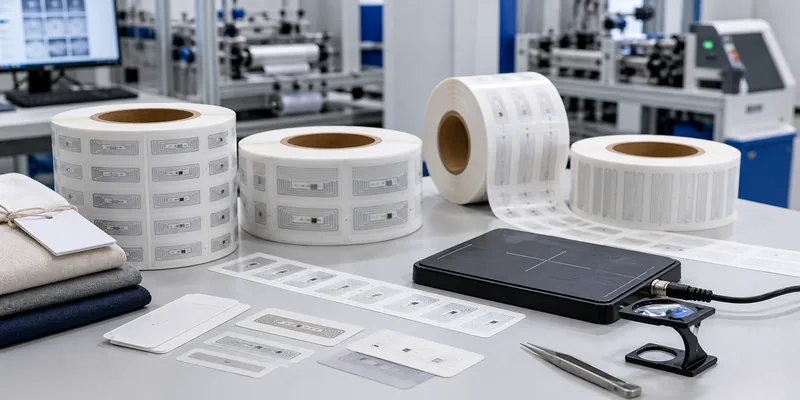
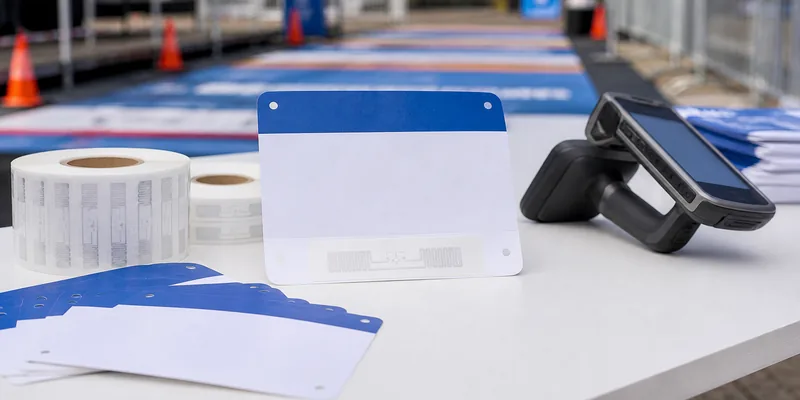
RFID race timing tags are RFID identifiers prepared for sports timing systems. They may be supplied as UHF inlay labels, foam-backed bib tags, shoe tags, wrist or ankle credentials, or custom labels converted into race-number packs. Each tag stores an ID that the timing software maps to a participant record.
For mass running events, UHF / RAIN RFID is common because it supports longer read zones and multi-tag reading compared with short-range NFC-style phone interactions. The tag still has to be designed for the real placement. A flat label on a table is not the same as a label against a moving body, wet clothing, shoe laces, safety pins, folded bib stock, or a crowded finish line.
If you are new to the technology, WXR’s guide to what RFID tags are is a useful starting point. For race timing procurement, however, move quickly from definitions to sample testing.
Bib Tag, Shoe Tag, or Wrist/Ankle Tag?
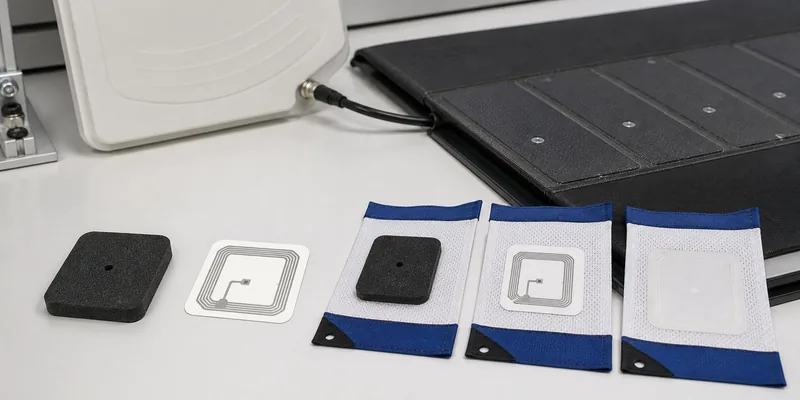
| Tag format | Best fit | What to test before bulk order |
|---|---|---|
| UHF bib tag | Marathons, charity runs, road races, high-volume disposable credentials | Bib paper, foam spacer, tag orientation, timing mat or side antenna setup, folding during packing |
| Shoe tag | Smaller runs, reusable timing programs, low-to-ground mat reading | Lace attachment, runner comfort, water exposure, return process, tag orientation |
| Ankle or wrist tag | Triathlon, obstacle events, reusable sports credentials | Strap material, sweat and water exposure, body position, check-in and return workflow |
| RFID sticker/inlay | Custom race packs, sponsor cards, checkpoints, equipment tagging | Adhesive, printable surface, antenna size, conversion tolerance, encoding file match |
Bib tags are often practical when the organizer wants disposable race numbers with minimal return handling. Shoe or ankle tags may be useful when the timing setup expects the tag close to a ground mat or when reusable hardware is already part of the operating model. Wristbands can work for event access, participant ID, or checkpoints, but they should not be assumed to replace a purpose-built race timing tag without testing.
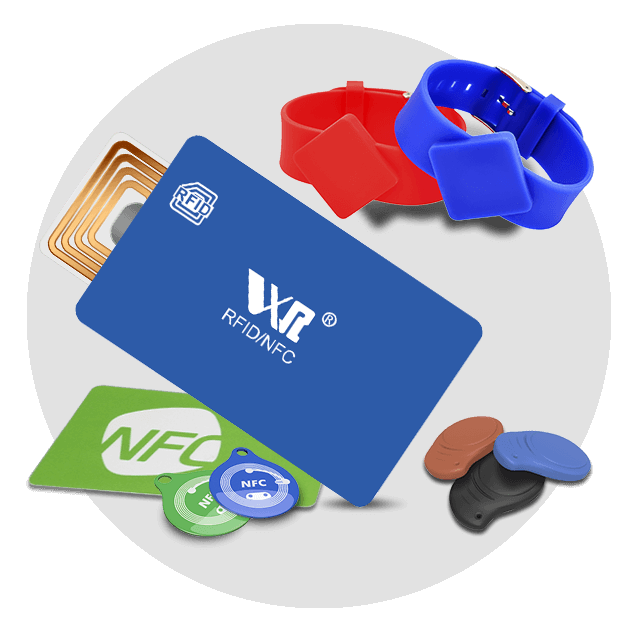
WXR can support custom RFID inlays, RFID stickers and labels, and RFID wristbands when the project needs a converted tag format instead of a standard off-the-shelf credential.
Why UHF Setup Matters More Than the Chip Name
Chip selection matters, but race timing is a system problem. A UHF chip with good sensitivity can still miss reads if the antenna is too small, the tag is placed against the body without spacing, the bib is folded over the inlay, or the read zone is poorly tuned. Conversely, a well-matched tag and antenna setup can be more reliable than a premium chip placed in the wrong position.
For bib timing, ask whether the tag needs a foam spacer or a specific distance from the body. Human tissue and sweat can detune UHF performance. For shoe timing, confirm whether the tag will pass over a mat antenna at a consistent height and orientation. For side antennas or overhead antennas, test runners moving at realistic speed and density instead of testing one stationary bib.
The relevant WXR category for most passive race timing labels is 860-960 MHz UHF RFID tags. If the event also needs short-range phone tap experiences, registration pages, or sponsor engagement, those may be separate NFC or QR workflows, not the primary timing identifier.
What to Include in an RFID Timing Tag RFQ
Send the supplier enough detail to choose the right tag construction:
- Event type: marathon, fun run, triathlon, cycling, obstacle race, school sports day, or checkpoint-based event.
- Timing hardware: ground mat, side antenna, overhead antenna, reader model if known, read-zone width, and expected reader power settings.
- Tag position: bib back, shoe lace, ankle strap, wristband, event card, or equipment label.
- Participant volume: total participants, expected peak density at start and finish, and whether wave starts are used.
- Tag format: disposable label, foam-backed bib tag, reusable shoe tag, wristband, or custom converted inlay.
- Encoding needs: participant ID format, EPC range, printed number matching, barcode or QR pairing, and data file format.
- Packaging: roll, sheet, pre-applied bibs, sorted race packs, sequence control, and spare-tag plan.
- Environment: rain, sweat, mud, water stations, body contact, folding, safety pins, transport, and storage conditions.
Avoid vague requests such as “long-range race tag, best price.” Read reliability depends on the tag, reader, antenna, mounting, human body position, local UHF regulation, and timing software. The supplier needs the deployment context to recommend a practical sample.
How to Test Samples Before Race Day
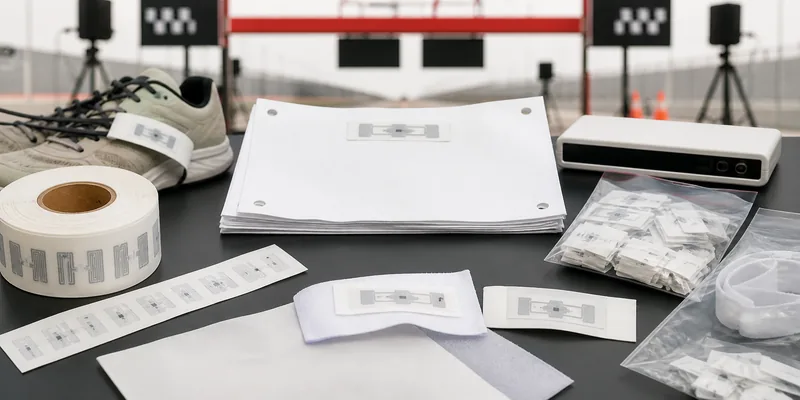
Start with basic encoding and readback. Confirm that every sample has the expected EPC or ID, and that printed bib numbers or participant files match the encoded values. Then test loose tags, attached tags, packed tags, and worn tags separately.
For bib tags, place the sample on the final bib material with the planned foam spacer and packing method. Test whether folding, stacking, safety pins, moisture, and body contact affect reading. For shoe tags, test different lace positions and running styles. For wrist or ankle tags, test wet use, strap tension, and whether the tag rotates away from the antenna.
A pilot should include the actual timing hardware and race-day geometry. Walk tests are not enough. Have several people cross the line together at jogging and sprinting speeds. Include starts, finishes, dense groups, children if relevant, wheelchairs or strollers if allowed, and edge positions near barriers. Record missed reads, duplicate reads, time stamps, tag orientation, and any repeated failure pattern.
The goal is not to prove that one sample reads once. The goal is to define the tag placement, read-zone setup, encoding file, spare-tag plan, and race-day handling rules before production.
The first mistake is buying a generic UHF label without explaining that it will sit on a moving human body. A standard logistics label may not be the right structure for a bib tag. The second mistake is approving artwork before confirming where the antenna should sit. If a sponsor block, fold line, hole punch, or safety-pin area crosses the inlay, the tag may be damaged or detuned.
Another mistake is separating tag procurement from timing software. Encoding, participant files, printed numbers, backup timing, and exception handling should be agreed before production. If the organizer receives tags that read correctly but do not match the registration database, the RFID hardware is not the only problem.
Also avoid overpromising accuracy based on tag specs alone. Timing accuracy comes from the complete timing system: tag, reader, antenna, software, timing mat, backup process, race rules, and operator setup. Tag samples should be tested with the same timing partner or equipment that will be used on race day.
How WXR Can Support Sports Timing RFID Projects
WXR can help buyers compare UHF inlays, printed RFID labels, foam-backed tag structures, and custom converted tag formats for sports timing and event ID projects. If the project also needs participant access, sponsor engagement, or reusable credentials, WXR can compare RFID labels with wristbands, cards, or NFC tags.
Send WXR your event type, timing hardware, tag position, participant volume, encoding rules, packing plan, and sample testing conditions through the contact page. The team can recommend a practical tag structure and prepare samples for testing before mass production. For broader implementation reading, WXR’s older article on RFID timekeeping during sporting events can support the initial planning discussion.
FAQ
Many disposable race timing systems use UHF RFID because it supports longer read zones and multi-tag reading. The final choice should match the timing reader, antenna setup, local frequency rules, and tag placement.
Neither is automatically better. Bib tags simplify issuing disposable race numbers, while shoe tags may work well with certain mat-based systems. Test both formats with the actual timing equipment and runner movement before deciding.
Some bib tag designs use foam or spacing to reduce body interference and improve UHF performance. Whether it is needed depends on the antenna design, bib placement, read-zone setup, and race conditions.
Yes, if the buyer provides a clear data file, sequence rules, print-matching requirements, and readback verification plan. The supplier should confirm encoded values before packing.
What should organizers test before bulk ordering?
Test encoding, printed-number matching, tag placement, folding, moisture, body contact, group crossings, runner speed, antenna position, missed reads, duplicate reads, and backup timing workflow.