Quick answer: the best RFID sticker is not chosen by size alone. Buyers should match the face material, inlay, adhesive, mounting surface, frequency, print method, and test environment before ordering. A paper UHF logistics label may work well on cartons, while plastic containers, glass, curved products, outdoor assets, or metal surfaces often need a different adhesive, antenna format, or anti-metal construction.
This checklist is for distributors, system integrators, warehouse teams, and brand owners comparing RFID stickers and labels for real projects. It focuses on quote preparation and sample testing, not generic RFID theory. If you are still comparing basic frequency options, read WXR’s guide to LF, HF, and UHF RFID before locking the label structure.
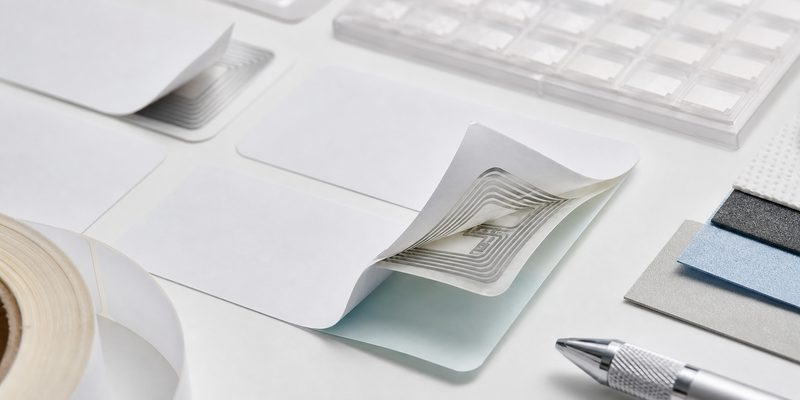
What Is Inside an RFID Sticker?
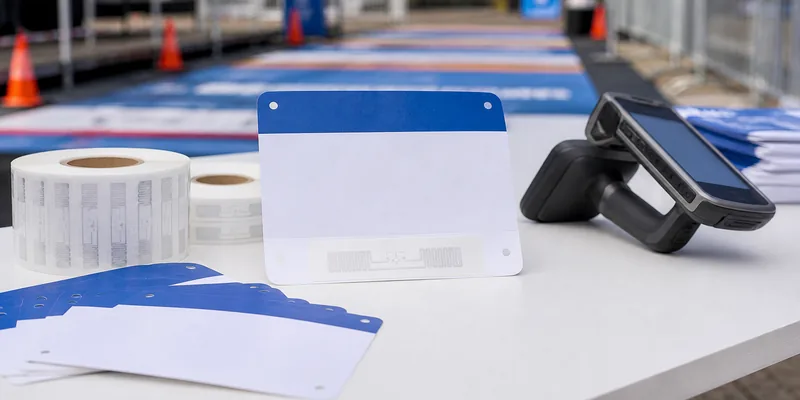
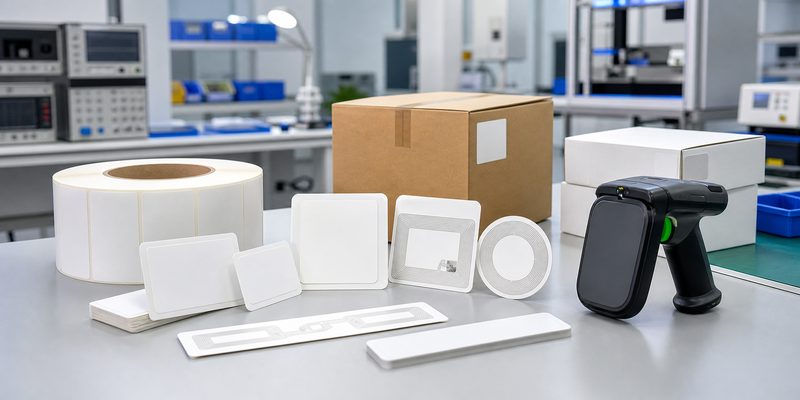
An RFID sticker usually combines a printable face layer, an RFID inlay, adhesive, and a release liner. The inlay contains the chip and antenna. The face layer handles printing and surface durability. The adhesive decides whether the label stays attached during packing, shipping, cleaning, handling, or storage. These parts have to work together, because a strong chip cannot compensate for the wrong antenna position or an adhesive that lifts from the asset.
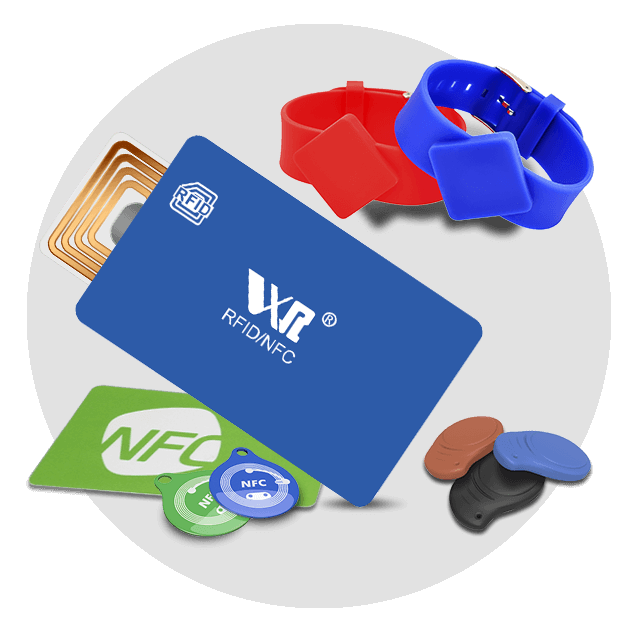
For many packaging and inventory projects, the starting point is a wet inlay or converted label from the RFID inlay family. For finished labels, WXR can help compare paper, PET, PVC, synthetic paper, printable NFC labels, UHF logistics labels, and special constructions such as flexible anti-metal labels. The right structure depends on the surface and reader setup more than on the product photo.
RFID Sticker Material Selection Table
| Project condition | Label direction to consider | What to confirm before ordering |
|---|---|---|
| Cartons, paper packaging, shipping labels | Paper or synthetic UHF RFID label | Printer type, label size, roll direction, read zone, EPC encoding |
| Plastic bins, reusable totes, curved bottles | PET, PVC, or flexible label with stronger adhesive | Surface energy, curve radius, cleaning method, edge lifting risk |
| Metal tools, racks, IT equipment, machinery | Flexible anti-metal label or hard on-metal tag | Spacer thickness, mounting method, read distance target, impact risk |
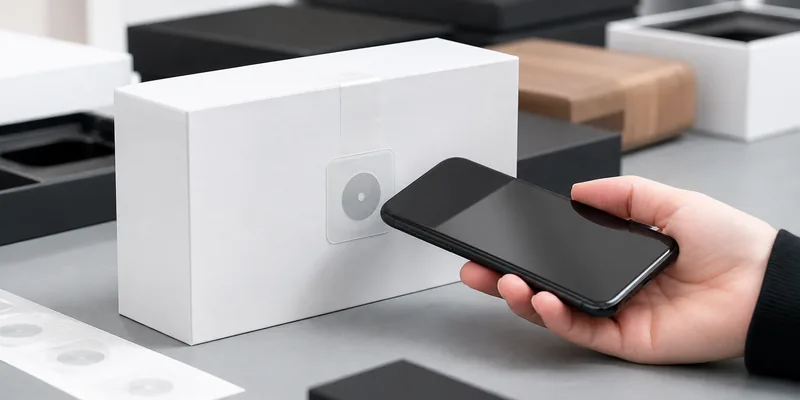
| Phone interaction, packaging authentication, marketing | HF/NFC sticker, often NTAG or MIFARE based | Phone compatibility, memory size, NDEF content, lock or rewrite policy |
| Outdoor or humid storage | Water-resistant face stock and adhesive | UV exposure, condensation, cleaning chemicals, temperature range to test |
Start With the Surface, Not the Chip
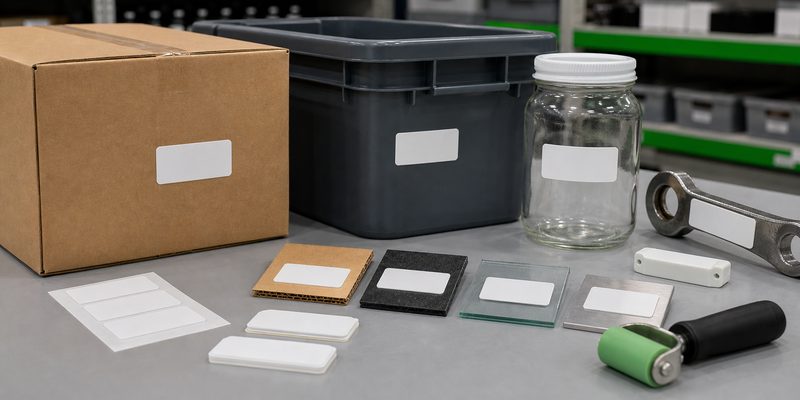
A common RFQ mistake is asking for a chip model first and discussing the asset later. The surface changes both adhesion and RF performance. Cardboard is forgiving. Low-energy plastics can reject ordinary adhesives. Curved glass can pull label edges upward. Liquids near the tag can detune some UHF labels. Metal can block or reflect RF energy unless the label is designed for on-metal use. For metal assets, compare options under anti-metal RFID tags instead of applying a normal logistics label and hoping the reader power solves it.
Prepare surface samples before you request pricing. Include the real carton coating, tote plastic, bottle curve, metal finish, paint layer, or asset housing. If the item will be cleaned, frozen, handled with gloves, stacked, or exposed to sunlight, say that early. The supplier can then recommend a face material and adhesive that matches the job instead of quoting the cheapest standard roll.
Choose Frequency Around the Workflow
HF and NFC labels are usually selected for close-range interaction, access, product information, and smartphone reading. UHF labels are usually selected for logistics, apparel, warehouse inventory, and longer-range scanning. If the project needs bulk reading at a dock door or conveyor, look at 860-960MHz UHF RFID tags. If the label is meant to open a URL on a phone or support customer interaction, review NFC tags and confirm the memory and lock requirements.
Do not treat read range as a fixed catalog value. It depends on the reader, antenna, tag orientation, surface, nearby material, radio regulations, and software filtering. For many projects, the practical target is not maximum range; it is stable reads at the real choke point without duplicate or missed events.
Placement and Application Checklist
- Clean the surface and let it dry before applying samples.
- Keep the label away from heavy folds, box seams, sharp curves, and crush zones.
- For UHF labels, test orientation against the reader antenna instead of assuming any angle works.
- Avoid placing ordinary labels directly on metal, liquid-filled areas, or dense foil packaging unless the label is designed for that surface.
- Record the exact placement location so operators can repeat it during rollout.
- After application, check edge lift, wrinkle formation, and label damage after normal handling.
For printed labels, confirm whether the artwork leaves enough space around the chip bump and antenna area. Heavy ink coverage, cutting pressure, lamination heat, or aggressive bending can damage the inlay. If the label will be printed and encoded in the same workflow, confirm printer compatibility, roll core size, winding direction, pitch, and rejected-label handling.
How to Test RFID Sticker Samples Before Bulk Orders
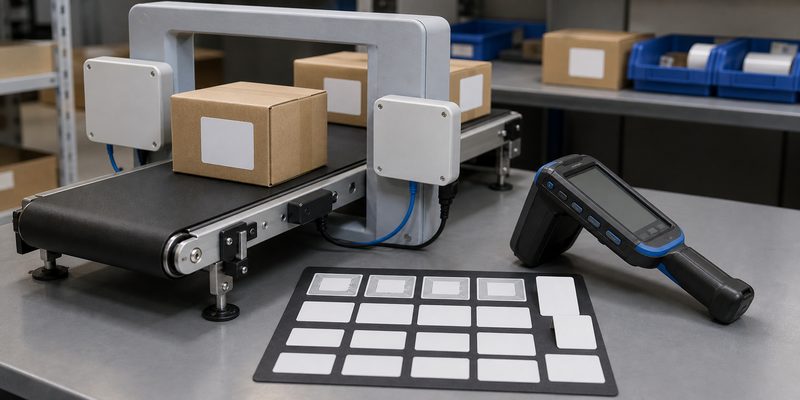
Sample testing should include both physical adhesion and read performance. Apply labels to real items, wait long enough for the adhesive to settle, and then test the same movement that operators will use: handheld scan, shelf scan, tunnel reader, conveyor gate, doorway, or phone tap. For UHF projects, test several orientations and multiple items together. For NFC projects, test common iPhone and Android positions, not only a desktop NFC reader.
Track failures by cause. Did the label peel off, wrinkle, detune near the surface, collide with other tags, or read only when the operator touches a perfect spot? Each failure points to a different fix. You may need a different antenna size, a stronger adhesive, a flexible anti-metal construction, a new placement location, or a reader antenna adjustment. That is why samples are more useful than a catalog read-range number.
What to Send WXR for a Faster Quote
For a practical quote, send the application, item material, label size, frequency or reader system, chip preference if known, print design, encoding data, operating environment, sample quantity, and the read point you want to test. Photos of the asset and the proposed label position are especially helpful. If you are unsure which RFID sticker material fits, contact WXR with the surface and workflow details, and the team can suggest label structures for sample testing before mass production.
FAQ
Are paper RFID stickers durable enough?
Paper RFID stickers can be a good fit for dry cartons, retail hang tags, and short-to-medium logistics workflows. They are not the first choice for heavy abrasion, frequent washing, outdoor exposure, or curved reusable assets unless the full label structure is designed and tested for that environment.
Can normal RFID stickers work on metal?
Usually not reliably. Metal can detune or block ordinary RFID labels, especially UHF labels. Use an anti-metal label or tag and test it on the real metal surface with the actual reader setup.
Which is better for packaging, NFC or UHF RFID stickers?
Use NFC when the user should tap the package with a phone at close range. Use UHF when the operation needs inventory, logistics, or bulk scanning. Some packaging projects use both, but the cost, space, and data plan should be justified.
What should be tested before ordering custom RFID labels?
Test adhesion, edge lift, printing, encoding, read range, orientation, item stacking, nearby materials, cleaning or handling conditions, and software event filtering. A small sample test can prevent expensive label failure after rollout.
Fact and assumption note: material durability, adhesive strength, read range, and compatibility depend on the exact label construction, reader, surface, and environment. Confirm these with samples before bulk production.